
Here is a question worth sitting with.
A man and a woman walk into a gallery. They stop in front of the same painting — a nude, a woman on marble, beautifully lit, beautifully made. They stand there together. They're both looking. They can both describe what they see: the shoulder, the light coming from the left, the cold stone beneath warm skin.
Are they looking at the same thing?
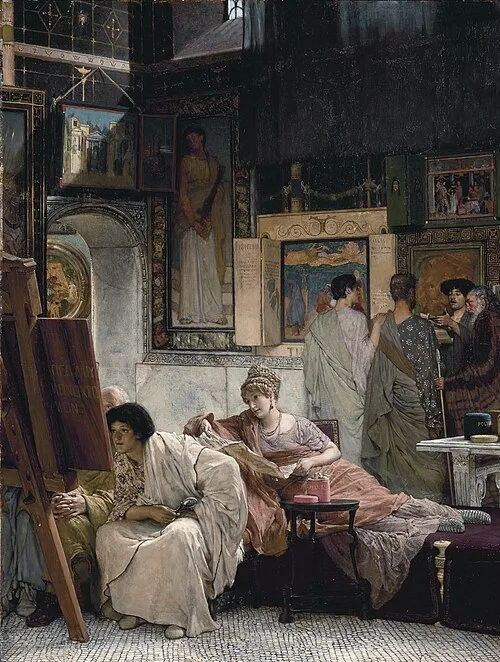
They see the same canvas. The same light, the same shoulder, the same cold stone beneath warm skin. But seeing is only the beginning. The real question is what happens next — what the image becomes once it travels inside. Whether the word beautiful, when each of them says it, means the same thing.
There is good reason to think it doesn't. And if it doesn't, then what has been going on in galleries for a very long time is, at least in part, a swindle. Something that was never quite explained. Something that was allowed to go on, quietly, because explaining it would have made things awkward.
What the word "Art" actually does
Art is not just a label. It's an instruction.
When something is called Art — when it gets the gold frame, the hushed room, the little card on the wall — it tells you how to look at it. It says: slow down, step back, engage your brain, not your gut. It says: this is for appreciating, not for wanting. This is a painting, not a person. Look, but look properly.
That instruction is real, and it matters, and for one of the two people standing in that gallery, it worked pretty well.
For the woman, looking at a painted nude was more or less what the instruction said it was. She saw the craft — the skill in the brushwork, the way the painter made stone look cold and skin look warm. She might have noticed the model's pose, thought about the way her own body compared, felt something complicated or nothing complicated at all. But the painting was not, in any deep biological sense, aimed at her. It was not her desire being managed. She could look at a painted woman and think about light. The instruction to appreciate rather than want was one she could actually follow.
The man beside her was doing something harder.
His response to that image didn't wait for the instruction. Something older moved first — before the education kicked in, before the gold frame could do its job — and what followed was not quite pure appreciation. It was appreciation and something else. The something else was the part nobody mentioned. It was the part the whole room was quietly organized around, without anyone saying so.
This is not a judgment. The response was not chosen. Biology doesn't care about gallery etiquette. What is worth looking at is what was built around that response — centuries of rules and titles and Latin names and grave critical language, all working together to give the act of looking a respectable costume to wear in public.
The problem that "Art" was invented to solve
Victorian England had a specific problem. Men wanted to look at female bodies. Polite society required them not to. Not openly. Not in front of their wives and daughters. Not without consequence.
The solution was a category. A magic word that could transform looking into something that could be done in daylight, in company, without shame.
Art.
But this category needed exactly three things to work.
The body in the painting had to look less like a person and more like a statue — smooth, perfect, hairless, the kind of body that exists in marble but not in bedrooms. The setting had to be somewhere far away — ancient Rome, mythological Greece, anywhere sufficiently distant that the woman on the wall was clearly not anyone's neighbor. And the woman herself had to be someone from that other world — a goddess, a nymph, a figure from myth or antiquity — someone whose presence carried no knowledge of the world the viewer actually lived in.
Venus has been looking directly at the viewer since Botticelli painted her in 1485. Titian's Venus of Urbino gazes out with an expression that is frankly more knowing than most, and she has hung in the Uffizi for centuries as an unquestioned masterpiece. Their gaze is perfectly acceptable because it arrives from eternity. It implies nothing about you personally. It makes no demands. It recognises nothing specific about the man standing in front of it.
What the arrangement could not survive was a woman looking at you from this world. A recognisable world, a contemporary world — a world where her gaze meant something specific, and where what it meant said something uncomfortable about why you were standing there looking at her.
In Paris, in 1865, Édouard Manet found out exactly what happened when the arrangement fell apart.
He painted a nude woman lying on a bed — Olympia, he called her.
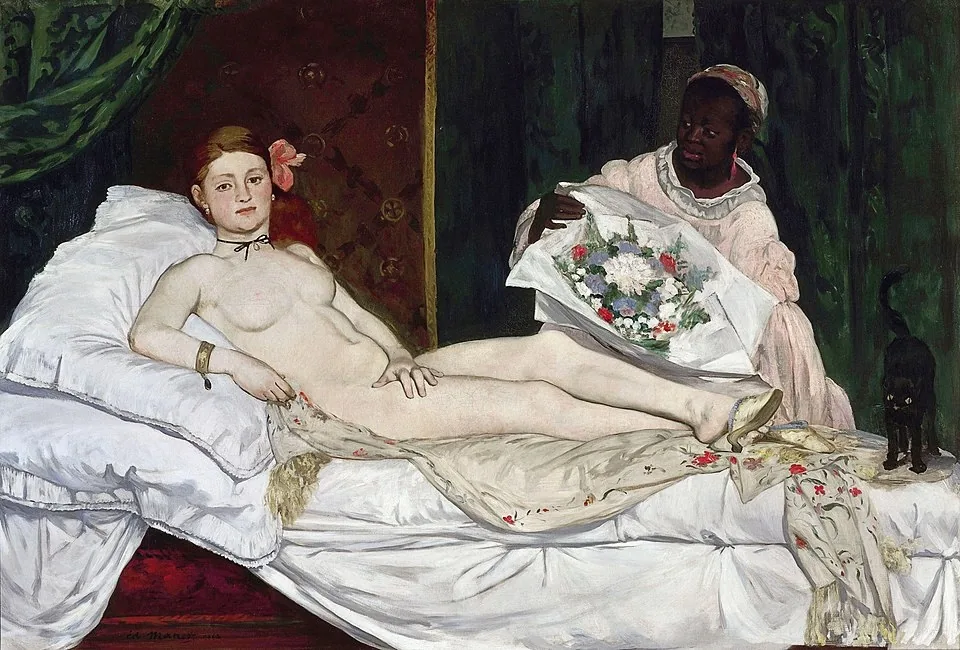
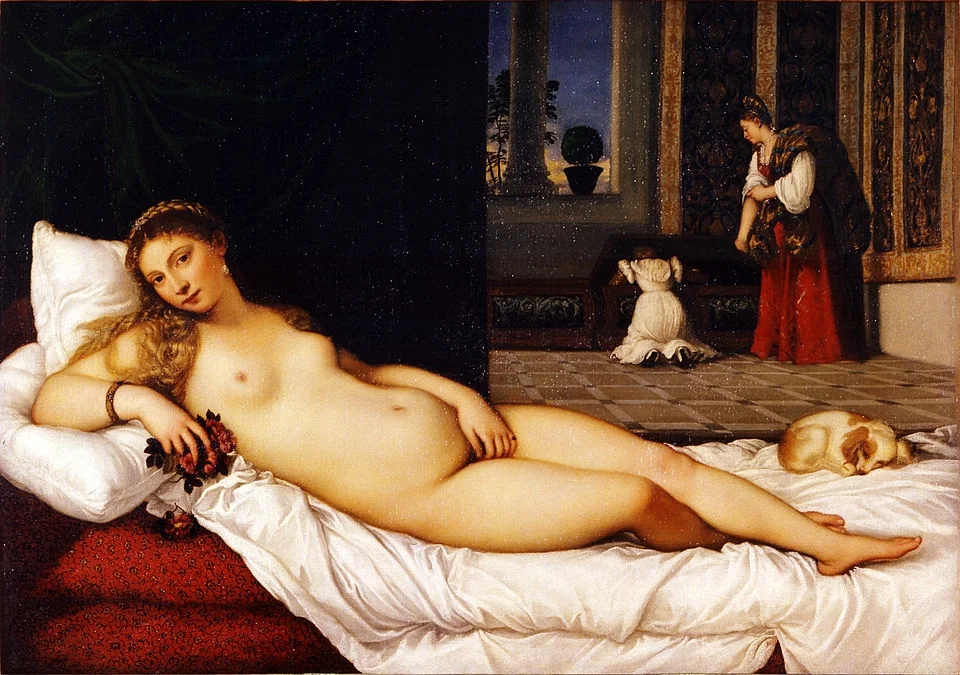
The pose was borrowed from Titian's Venus of Urbino. The body was not so different from dozens of nudes already hanging in the Salon that year. But Olympia was not mythological. She was not ancient. She was Tuesday afternoon in Paris. Her skin was the specific pallor of a specific woman. Her orchid, her black velvet ribbon, her maid holding real flowers from a real client — everything in the painting was contemporary, particular, datable. She was not a goddess. She was a courtesan, and everyone in that Salon knew exactly what that meant, and exactly what kind of establishment she worked in.
And she looked straight at the men looking at her. Not from eternity. From full knowledge of the situation.
The Venus gaze says: I am beauty, looking at you from eternity.
The Olympia gaze says: I know why you're here. And so do you.
That second gaze didn't just break the fiction. It named it. It looked at the men in that room and acknowledged what they were actually doing there — and that was the unforgivable act. Not the nudity. Not the gaze itself. The acknowledgment. She had seen through the gold frame, the Latin title, the whole elaborate courtesy of the arrangement — and she was letting them know she had.
The critics lost their minds. They called her "a female gorilla." They called the painting "a bundle of laundry." One critic described it as "that yellow-bellied odalisque" and demanded it be removed. Toward the end of the exhibition, the threat of actual physical violence against the canvas forced the Salon to station guards beside it and move it high up on the wall, out of reach.
The painting was not more explicit than its neighbors. The body was not more naked. What had been destroyed was not decency but deniability — and deniability, it turned out, was the load-bearing wall.
But Olympia was at least a nude. What happened nineteen years later with a dressed woman was somehow even more revealing.
A shoulder strap, and the world ends
In 1884, the American painter John Singer Sargent exhibited a portrait at the Paris Salon. The subject was Virginie Gautreau, a celebrated beauty of Parisian society — full dress, fully clothed in a black satin gown.
Her arms were bare from the shoulder. She was posed in profile, chin up, looking away. She was not naked.
Except that one strap of her gown had slipped down her shoulder. Just one. A few inches of fabric sitting where it shouldn't.
Paris erupted.
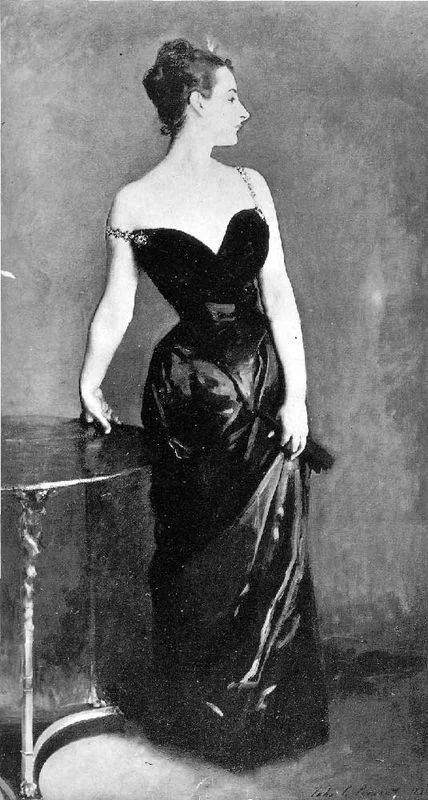
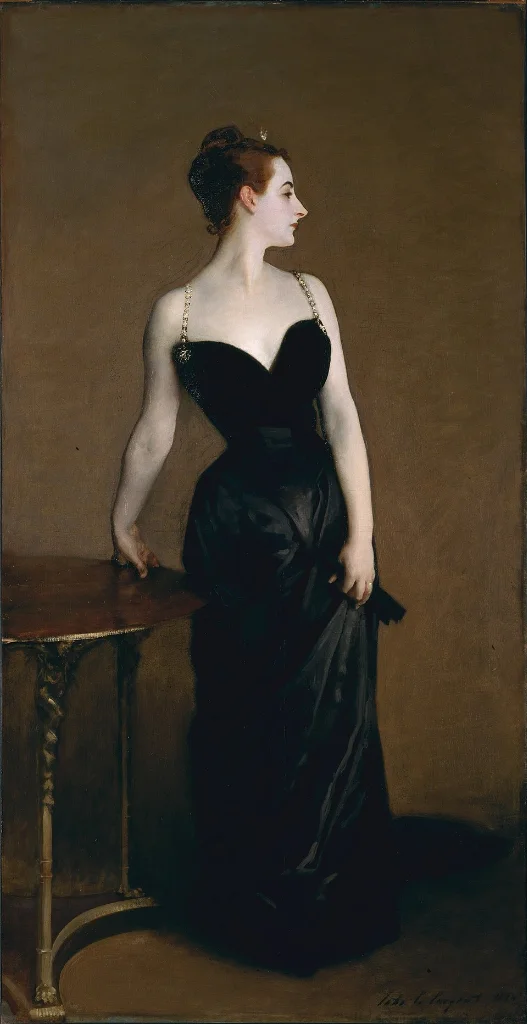
One critic wrote in Le Figaro: "One more struggle, and the lady will be free." Women attending the Salon reportedly hissed and jeered, "Oh quelle horreur!". Gautreau's mother arrived at Sargent's studio in tears, demanding he withdraw the painting. "All Paris is making fun of my daughter," she told him. "She is ruined. She'll die of chagrin."
What the Madame X scandal reveals is that the system was not really about nakedness at all. It was about which world the woman on the wall belonged to. The rules weren't "no skin" — there was skin everywhere in the Salon that year, acres of it, on goddesses and nymphs and classical maidens. The rule was: she must come from somewhere else. From myth, from antiquity, from eternity — anywhere that placed her safely outside the world the viewer actually lived in.
Madame X broke that rule without removing a single item of clothing. She was not ancient. She was not mythological. She was a specific, recognisable woman at a specific Paris party, in a contemporary dress, with a contemporary shoulder. She belonged to this world. And in this world, a slipped strap meant something. Everyone in that room knew exactly what it meant. That was the problem.
Sargent eventually repainted the strap, put it back on the shoulder, and fled Paris for London. The painting — which he called "the best thing I have done" — sat in his studio for thirty years, unsellable, before he finally sold it to the Metropolitan Museum of Art.
A woman from another world may be as naked as Venus and hang in any museum in the world. A woman from this world cannot even let her dress strap slip.
Most painters navigated this system carefully. One man mastered it completely.
The man who understood the game
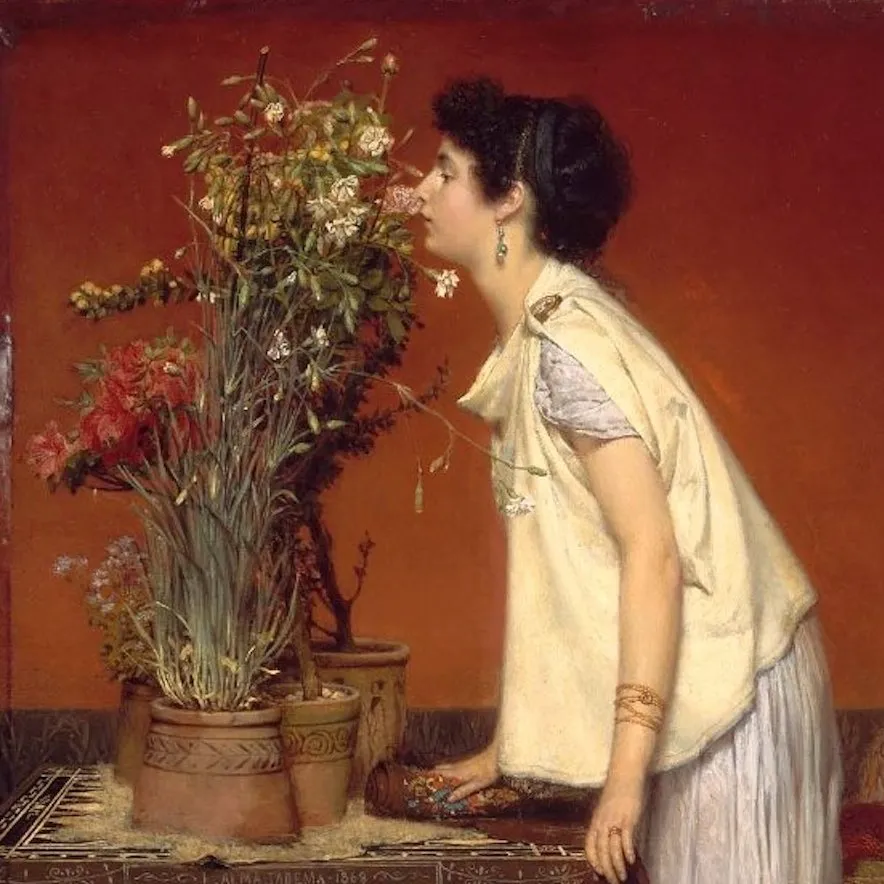
Lawrence Alma-Tadema was the most commercially successful painter in Victorian Britain, and if you look at his work carefully, you can see exactly why.
He was Dutch by birth, self-made, sharp-minded, and he understood his audience in a way that made him very rich. He painted ancient Rome — specifically, the warm, sun-soaked, leisure-filled Rome of baths and marble terraces and women with nothing pressing to do. His paintings are full of female bodies. They shimmer with skin and silk and the particular glow of a warm afternoon.
But here's the thing: out of roughly 500+ paintings he made over his career, fewer than five are what you'd call a straightforward nude.
He didn't paint nudes. He painted baths.
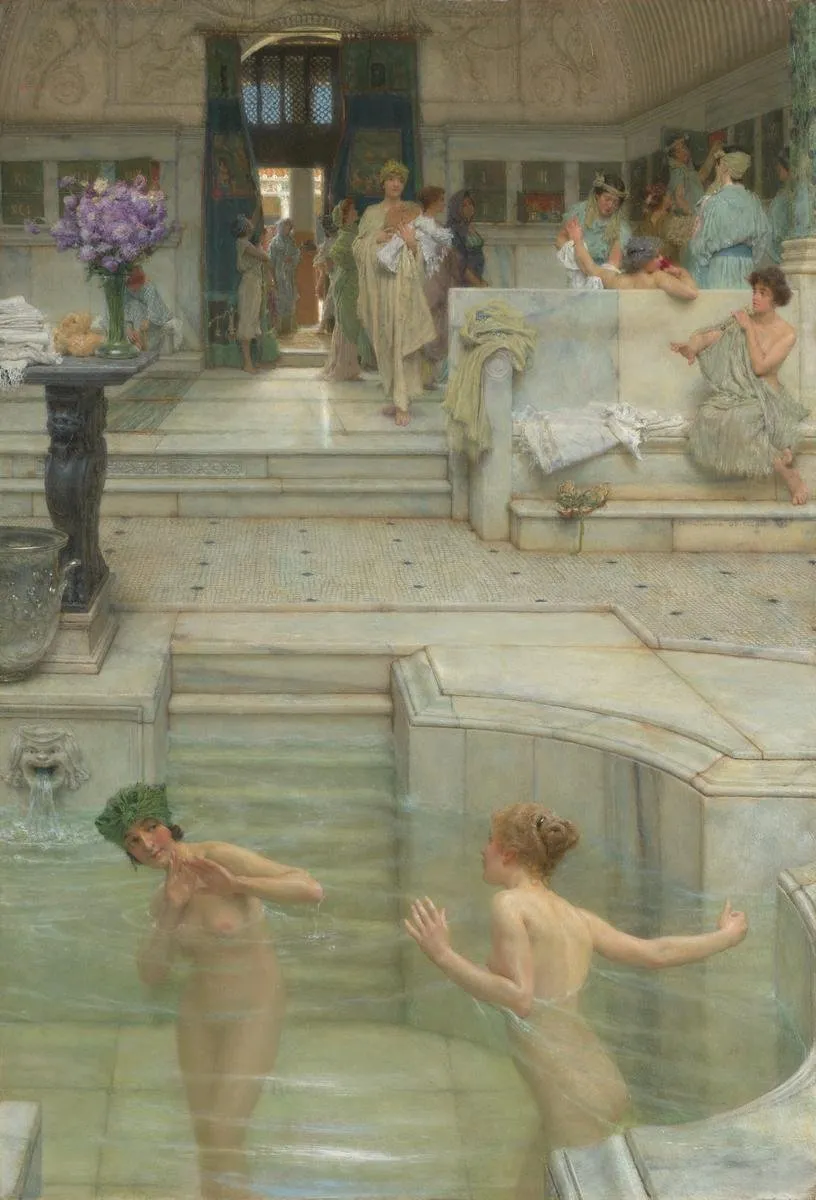
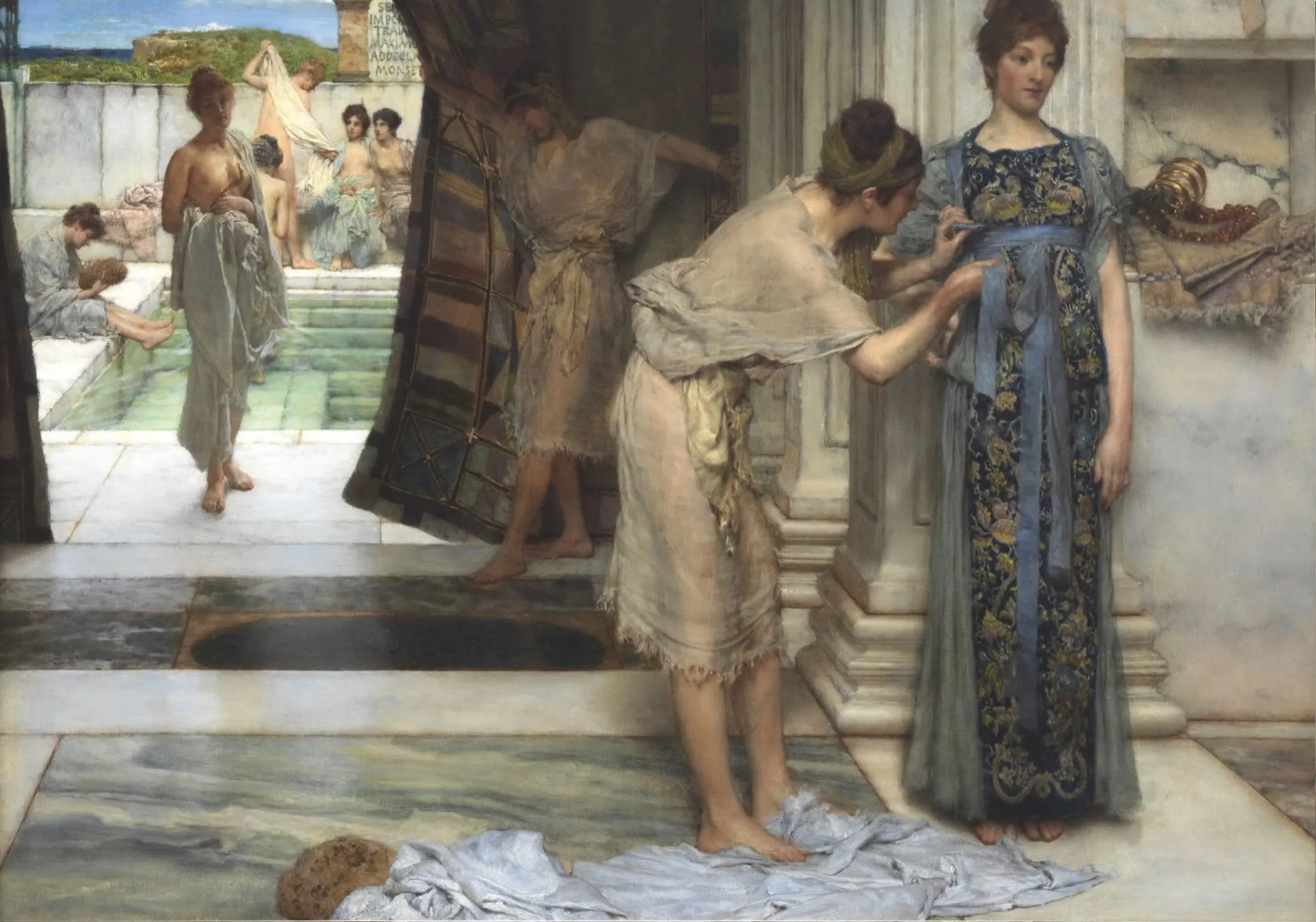
There is a difference, and he knew it precisely. A nude is a statement. It demands to be looked at. A bath is just something people do — Romans did it, everyone knows they did it, here is the archaeologically accurate mosaic on the floor to prove it. If a woman happens to have no clothes on while bathing, that is simply what bathing involves. The history is the excuse. The marble is the alibi.
He would paint women submerged to the waist, or turned away, or draped in fabric so thin it suggested rather than concealed. He would pour his extraordinary skill into the cold stone surrounding them, so that the contrast between marble and skin became the real subject — or appeared to. He gave collectors the warmth of a body wrapped in so much scholarship that no one could call it indecent. You weren't looking at a woman. You were looking at a reconstruction of Roman bathing culture.
Every male collector who bought these paintings knew, at some level, what he was buying. Every collector could also, in complete sincerity, talk about the marble.
Both things were true simultaneously. That is the trick — and it's a remarkable one. The craft was real. The history was real. The pleasure of owning the painting was genuinely more than one thing at once. Alma-Tadema gave his buyers the experience they wanted and the language they needed to describe it, and he packaged them so neatly together that they became, officially, the same thing.
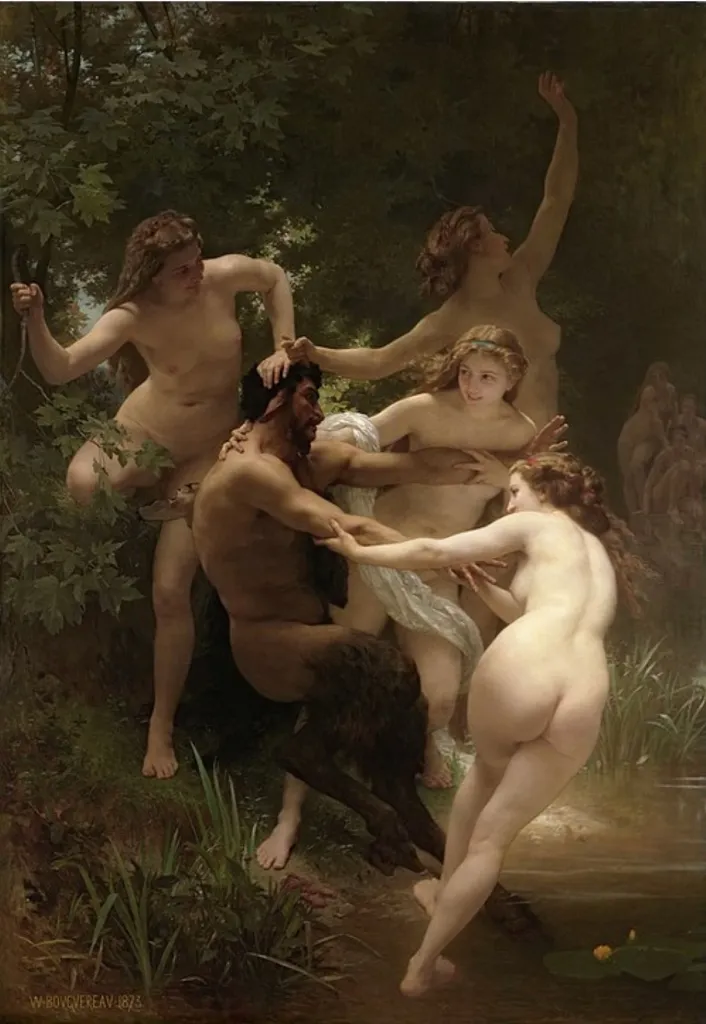
Alma-Tadema was not alone in this game, but he was the most elegant player. His French contemporary William-Adolphe Bouguereau played the same game with considerably less disguise. Where Alma-Tadema built elaborate archaeological scaffolding around his bodies — the correct mosaic, the documented artifact, the historically verified bath — Bouguereau offered a single word. Nymph. Sometimes naiad. Sometimes just Spring. Underneath it was a painting of a very specific, very warm, very present young woman, rendered with a technical mastery of skin that has never quite been matched. You could feel the temperature of his figures. And then he put the mythological title on it and called the transaction complete.
Ruskin, predictably, found it "painful." The mythological title was supposed to do what all such titles did — lift the image out of the body and into the realm of the spiritual, the pure, the elevated. For Ruskin, who believed in that transformation more fiercely than anyone alive, it simply didn't work. The skin was too warm. The presence too immediate. The nymph label was asking him to see a goddess and his eyes kept finding a woman. If the title couldn't work on the era's most passionate believer in Art as spiritual experience, that tells you precisely how thin the disguise actually was.
The corset, the silk, and the desire of the almost
There is something else Alma-Tadema understood that is worth pausing on, because it goes deeper than the bath loophole. It is the difference between what his paintings showed and what Victorian women actually wore — and what each of those things did to the people looking at them.
Outside the gallery, the Victorian woman was corseted. Laced, stiffened with whalebone, compressed into a specific silhouette that announced her social standing and her submission to its demands. The corset was not about hiding the body — it was about controlling it. Shaping it. Presenting it on society's terms. A corseted woman was a woman who had been prepared, armoured, made acceptable.
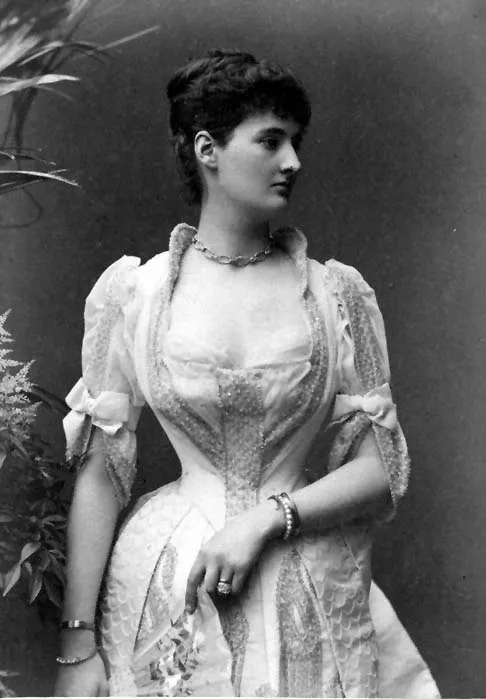
For men, the corseted body produced a very specific kind of desire — desire built around a barrier. The corset said: this is not for you. Which, as anyone who has thought about desire for five minutes knows, is one of the most powerful things a garment can say. The wanting was shaped entirely by the obstacle. The obstacle was the point.
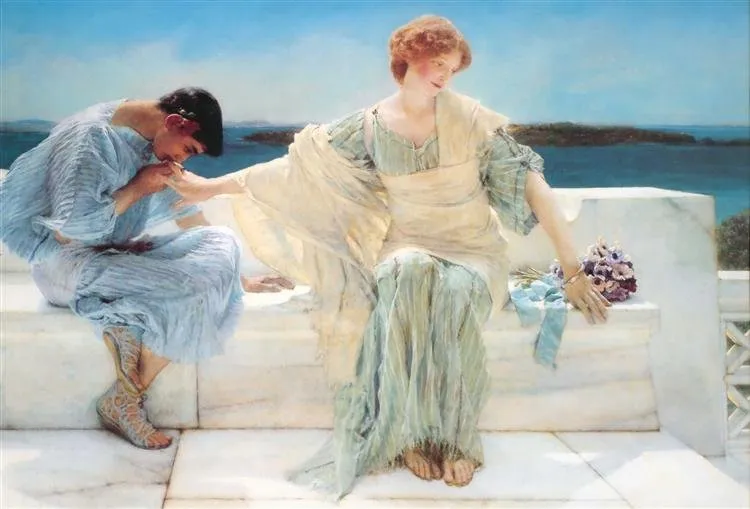
Alma-Tadema's women wear none of this. They wear light, unstructured clothing — draped fabric that moves when they move, that follows the body rather than restructuring it. They are not underdressed. They simply look comfortable. Unconstrained. As though the rigid social architecture of the Victorian world does not apply to them. After a lifetime of looking at corseted women in ballrooms, that ease alone was its own kind of provocation.
This is the third position. Not naked. Not armoured. Somewhere in between — and that in between is where Alma-Tadema spent his entire career.
You might assume it was the clothing doing the work. The light fabric, the easy drape, the absence of the corset's armour. But the evidence says otherwise. What his male collectors were actually buying was not a garment. It was a world.
One critic described the recipe plainly: alluring women in chiffon and sandals, bright marble benches, azure seas, flower petals falling like rain. Ruskin, furious as always, accused him of making it his heavenly mission to portray Rome in its "last corruption and Bacchanalian frenzy" — which tells you exactly what Ruskin saw when he looked at even the most clothed and respectable of these paintings. Not fabric. Not archaeology. A world of warmth, leisure, and beautiful women with nothing pressing to do and nowhere they needed to be. The atmosphere was the provocation. The world was the almost.
His collectors — wealthy Victorian men, almost without exception — were not buying a neckline or a particular drape of silk. They were buying the fantasy of that afternoon. Their own lives, but warmer. Their own leisure, but consequence-free. Beautiful women at ease in a world where the rules had been lifted. That was what hung on their walls — and what the painting quietly offered every time they looked up from their desk or their chair or their glass of port at the end of a long Victorian evening.
And there is something else worth saying plainly. The Victorian woman in daily life was layered, laced, and fortressed. To reach her body required dismantling an architecture. Alma-Tadema's women have one layer of light fabric between them and nothing at all. The distance between dressed and undressed had never been shorter. The imagination did not have far to travel. That is speculation — but it is not a wild one.
It was also rumoured — though nothing has ever surfaced to confirm it — that Alma-Tadema painted a series of explicit private works for King Edward VII himself, kept well away from any gallery wall. Whether true or not, the rumour is revealing. People believed it of him. Which means they understood, even if they never said so out loud, that the respectable paintings in the drawing room and the private desire were part of the same conversation — just kept, as always, in separate rooms.
A woman standing in front of the same paintings saw none of this. She looked at those same women in their easy, unstructured clothing and felt something completely genuine and completely different. Beauty. Comfort. Freedom. Bodies that weren't in pain. An eternal afternoon with no corset, no obligations, no performance of social acceptability for anyone.
The women in these paintings simply existed — at ease, in warm light, belonging entirely to themselves. For the Victorian woman standing in the gallery, laced and boned and scheduled and managed, this was not just beautiful. It was quietly revolutionary.
She and the man beside her were looking at the same painting. She was seeing liberation. He was seeing the fortress, temporarily and beautifully down.
Neither of them was wrong about what they saw. Neither of them knew the other was seeing something different. And the painting hung between them, warm and still and perfectly silent, giving each of them exactly what they needed — and never once admitting it was doing both things at once.
The man who believed it too much
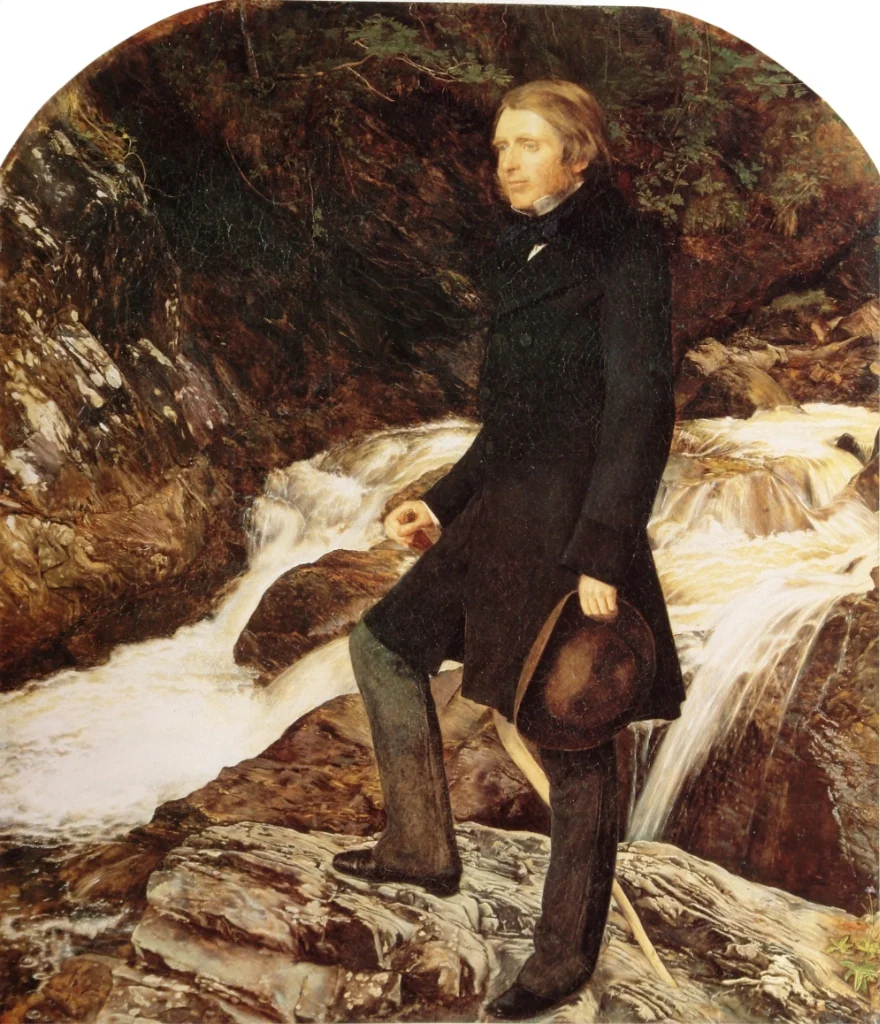
If Alma-Tadema is the man who understood the game, John Ruskin is the man who lost everything by playing it too seriously.
Ruskin was the greatest art critic of the Victorian age. He could write about a cloud or a piece of rock with a passion that made you feel the world had been freshly made. He believed, with his whole heart, that looking at beautiful things properly was a kind of spiritual act. That Art could make you a better person. That beauty and truth were, at the deepest level, the same thing.
He also believed, and wrote down in black ink, that there was something inherently dangerous about painting the female body at all. In his great work Modern Painters, he put it plainly: "from the very fear and doubt with which we approach the nude, it becomes expressive of evil." The nude was a trap, in Ruskin's view. The moment you looked at a body and felt anything other than pure spiritual elevation, you had already fallen. The only safe route was to feel nothing bodily at all — to convert the looking entirely into something celestial.
And this didn't work well when he faced an actual flesh and blood woman.
Ruskin married a woman named Effie Gray, and spent six years in the same house with her without once touching her. The marriage was eventually annulled on the grounds that it had never been consummated. Ruskin's own statement during the legal proceedings acknowledged that something about his wife's physical appearance had prevented him from approaching her.
What that something was has been debated for over a century. Most historians now believe it was simply this: she was a real person. A physical, bodily, biological person, with hair, warmth, skin that was not marble. And Ruskin had spent so many years looking at paintings of idealized, marble-smooth women that he had forgotten — or never properly learned — that real women are something different.
He had believed the instruction completely. He had achieved what the system asked for: perfect looking, without wanting. And what he found, when he was finally alone in a room with his wife, was that he had trained himself out of the ability to meet a person, who is not a goddess.
Effie Gray eventually went through a public and humiliating legal process to prove the marriage had never been real — to prove, in front of lawyers, that she was still a virgin after six years of being someone's wife. She did it to get free. She then married the painter John Everett Millais, had eight children, and got on with her life. Ruskin retreated further and further from London, eventually ending up in a house by a lake in the northern Lake District, writing about rocks and cloud formations and the purity of medieval craftsmanship, while the modern world he disapproved of — warm, fleshy, honest — got on without him.
He is the proof of what happens when the instruction to appreciate rather than want is followed so completely, for so long: the person following it forgets the wanting was ever there. It doesn't disappear. It just goes somewhere else. It becomes something that manifested in thousands of pages about rose petals and alpine glaciers, and never quite finds its way back to a real person in a real room.
The woman who didn't know
Here is the part that matters most, and the part that is hardest to sit with.
The woman standing in the gallery was not just an innocent bystander. She was necessary.
Think about what her presence actually did. A man standing alone in a gallery in front of a nude painting was one kind of thing. A man standing there with his wife and daughters was something else entirely — he was a gentleman, a cultured person, a family man enriching his household with beauty and history. Her presence transformed the experience. It laundered it. Her genuine appreciation of the paintings — and it was genuine, she really was seeing beautiful things — was the alibi that made his experience of the same paintings socially acceptable.
She wasn't incidental. She was load-bearing.
Laura Alma-Tadema is the most vivid example. She was an accomplished painter herself — not a passive ornament but a working artist who understood technique, composition, and the demands of the craft. She stood in her husband's studio and saw, correctly, a great painter at work. She loved the paintings.
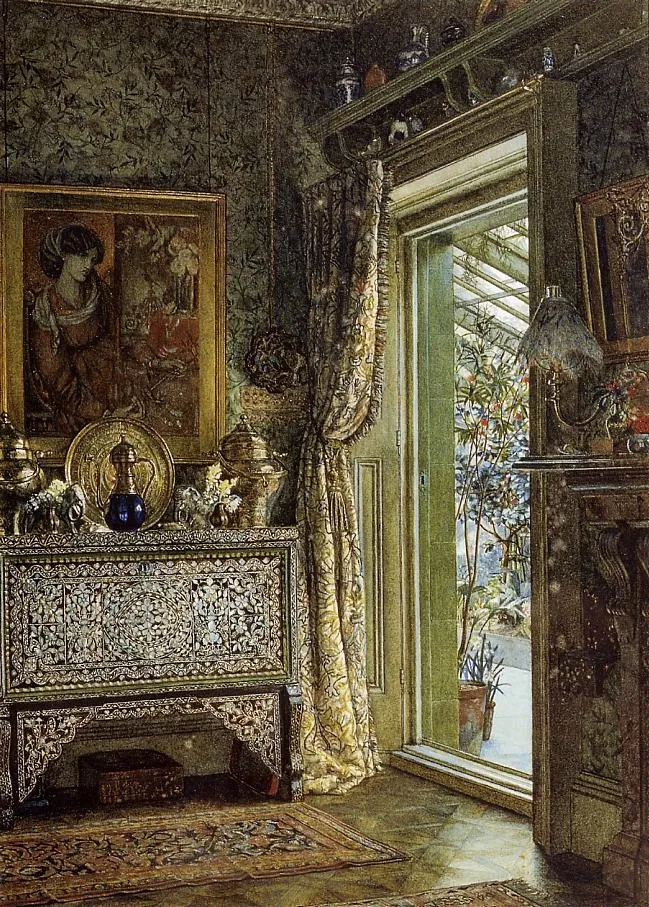
Which is exactly what made her so useful.
The system didn't need a passive woman. It needed an engaged one. An engaged woman on a man's arm was proof — visible, public, unquestionable proof — that what was happening in that room was Art and not something else. The more sincerely she appreciated, the more securely the whole arrangement held.
She was laundering the viewing, without knowing she'd been handed the laundry.
This is why the word swindle feels right, even though no one was consciously swindling anyone. The woman wasn't lied to. She was handed a real thing — genuine beauty, genuine craft — and invited to love it genuinely. She did. And that love, that real and unperformed love, was then quietly put to work in a way she never agreed to and was never told about.
The rules about what counted as Art and what counted as obscenity — those were written mostly by men. The critical language for talking about nudes — "the harmony of the figure," "the purity of line," "the classical ideal" — that was developed mostly by men. The galleries that decided which paintings went on the wall and which were kept in back rooms — run mostly by men. The collectors who bought the paintings and decided where they hung — men.
None of this was a plot. Nobody sat in a room and decided to deceive women. It was simply that the people making the decisions were the same people for whom the category of Art was solving a problem. They built the system from their own experience, and their experience was not everyone's experience, and the difference was never made clear.
So the woman came into the gallery, and she was handed the same word everyone else was handed — Art — and she used it in good faith. She said beautiful and she meant it. She assumed the man beside her was saying the same word and meaning the same thing.
He was not. Or not entirely.
The women who hissed at Sargent's Madame X in 1884 — oh quelle horreur — were reacting to this fracture without quite understanding it. They weren't defending decency. They were defending the arrangement that allowed them to share the gallery on what they believed were equal terms. The slipped strap was a crack in that story — a reminder that the painting was always doing something for the men in the room that it wasn't doing for them.
She wasn't outside the system. She was inside it, holding it up, from a room she believed she shared equally with the man beside her.
What changes, once you know
The painting doesn't change.
That is the strange thing. Once you know all of this — once you see the system, the mechanics, the second signal running beneath the official one — the painting is still there. Alma-Tadema's marble is still extraordinary. The skin is still warm against the cold stone. The light is still doing something that real light rarely manages.
The beauty was always real. Nothing about knowing the history of how it was used makes it less so.
What changes is the company.
When a woman stands in front of one of these paintings now, knowing what she knows, she is standing in a different room than her great-grandmother stood in. Not because the painting changed, but because she knows she wasn't quite getting the full picture. She was a guest at a party where she didn't know the occasion. She was handed a glass and toasted, and she raised her glass back, and nobody mentioned what they were actually celebrating.
She was let into the building. The building was real, and large, and often genuinely magnificent. But it was built for someone else, and the key she was given only opened some of the doors.
Knowing that doesn't make art less worth loving. If anything, it makes the love more honest — and more interesting, because you are now looking at the painting and the room it was built for simultaneously.
It also makes you wonder what else might be in those rooms she didn't have the key to. What the paintings might look like, what beautiful might mean, if the building had been designed from the start for everyone who wanted to walk in.
Manet's Olympia, staring back from the wall, has been waiting for that question for a hundred and sixty years. She does not look like she intends to stop waiting.
A note: In 1972, the art critic John Berger wrote a book called Ways of Seeing. In it he said: "Men act and women appear. Men look at women. Women watch themselves being looked at." He was right, and it was a brave thing to say at the time, and almost nobody outside universities has heard of him. This essay is, in part, an attempt to say what he said — in a room where more people are welcome.
Lawrence Alma-Tadema (1836–1912) produced over 400 catalogued Opus works. He was knighted in 1899. A Picture Gallery (1874) is at Towneley Hall Art Gallery, Burnley. The Frigidarium (1890) and Ask Me No More (1906) are in private collections. A Favourite Custom (1909) is at the Tate, London.
Édouard Manet's Olympia (1863) is at the Musée d'Orsay, Paris. When exhibited at the 1865 Paris Salon, the authorities moved it high on the wall and stationed guards due to threats of damage. Titian's Venus of Urbino (1538) is at the Uffizi Gallery, Florence.
John Singer Sargent's Madame X (Madame Pierre Gautreau) (1883–84) is at the Metropolitan Museum of Art, New York. William-Adolphe Bouguereau's Nymphs and Satyr (1873) is at the Clark Art Institute, Williamstown. John Everett Millais' portrait of John Ruskin (1853-54) is at the Ashmolean Museum, Oxford.
John Ruskin's marriage to Euphemia 'Effie' Gray was annulled in 1854. She later married John Everett Millais. The quote "from the very fear and doubt with which we approach the nude, it becomes expressive of evil" is from Modern Painters, Vol. II (1846). The quote "I always said that no woman could paint" is from his Academy Notes, 1875.
Leave a Visiting Card
Consulting the visiting cards...