
There is something about the way we experience art today that we have never stopped to question, because we have never known anything different.
We buy a ticket, sometimes weeks in advance. We queue. We pass through security. We enter a building specifically designed, lit, and curated to tell us what matters and what does not. We shuffle past three hundred paintings in ninety minutes, reading the plaques obediently, occasionally pausing when a crowd gathers—because if people have stopped, it must be significant.
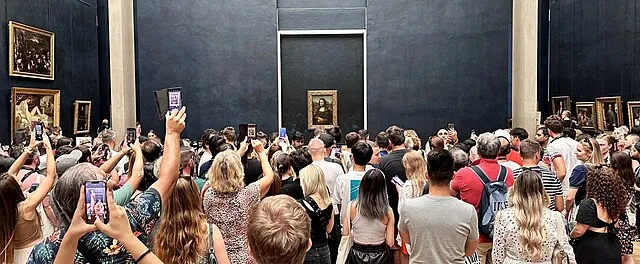
We arrive, eventually, at the gift shop, feet aching, exhausted, with a faint sense of accomplishment that comes from having covered the whole floor. We buy a postcard of the one painting we actually remember.
And then we go home. To our walls. Which are bare.
We call this experiencing art. But if we stop and ask the question—not as a challenge, but as a real inquiry—we find something strange. This is not how a painting was ever meant to be seen. The museum feels like the natural home for art today, but it is a recent invention. Before it existed, people did something so simple it is hard to picture now.
They kept their art at home.
I. The Accomplished Lady and Her Walls
There is a small, easily-missed moment in Jane Austen's Sense and Sensibility that opens a window onto an entire world. When the Dashwood women are forced to leave their comfortable home at Norland and move to the modest Barton Cottage, the first act of making the new house liveable is not furniture. It is not curtains. It is Elinor's drawings, unpacked and hung on the walls. They were made by her own hand, and hanging them is one of the first steps in making the new house truly theirs.
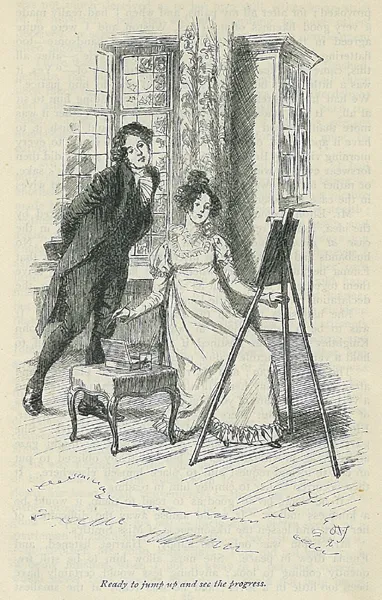
Austen does not linger on this detail because, to her readers, it needed no explanation. Every woman of education and reasonable standing was expected to draw, to paint in watercolour, to produce work of genuine quality—not as a hobby, not as a charming party trick, but as a real skill.
When Caroline Bingley in Pride and Prejudice defines the "accomplished woman," she lists: music, singing, drawing, dancing, and modern languages. Drawing is not listed as a talent. It is listed as a requirement. As basic as literacy.
There was a practical logic to this that we have entirely lost sight of. If your walls were going to have anything on them—and a well-run home absolutely required that they did—then the most natural way to fill them was to make the art yourself. A young woman who could produce a decent landscape in watercolour could contribute directly to the beauty of the spaces she would one day live in. She could give framed drawings as gifts. She could copy favourite engravings, sketch the view from her window.
Her walls told you who she was. And her hands had made them.
II. The Price of Beauty
Of course, one also bought paintings—if one could afford them.
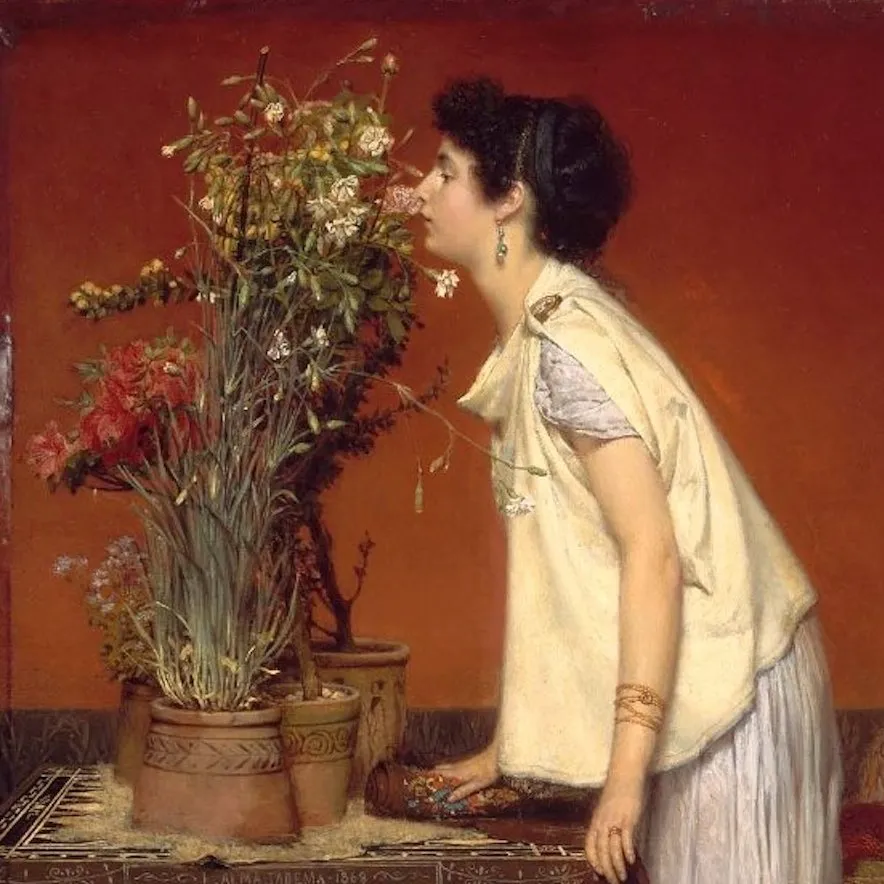
By the 1880s, a major painting by Sir Lawrence Alma-Tadema commanded prices that would leave a comfortable professional family breathless. Typical works sold for between £2,000 and £3,000. His highest-selling canvases reached over £5,000 at auction—in a world where a middle-class family of five might live comfortably on £300 a year. An original Alma-Tadema was not merely an expensive object. It was what a successful industrialist bought to announce, in the most elegant possible way, that he had arrived.
So what did everyone else do? They did something that our current snobbery has quietly demoted to the status of the second-best option: they bought reproductions.
The photogravure. The engraving. The etching. These were the high technologies of their day, and the trade in them was vast. When Alma-Tadema finished a major canvas, the rights to reproduce it were sold separately—and those reproduction rights were, in many cases, worth more than the painting itself. A print of A Reading from Homer or Catullus at Lesbia's could travel into drawing rooms across Britain, across America, across the colonies, finding walls it would never have reached as an original. The image became common property. The story, the beauty, the invitation to imagine ancient Rome—all of it crossed into ordinary homes.
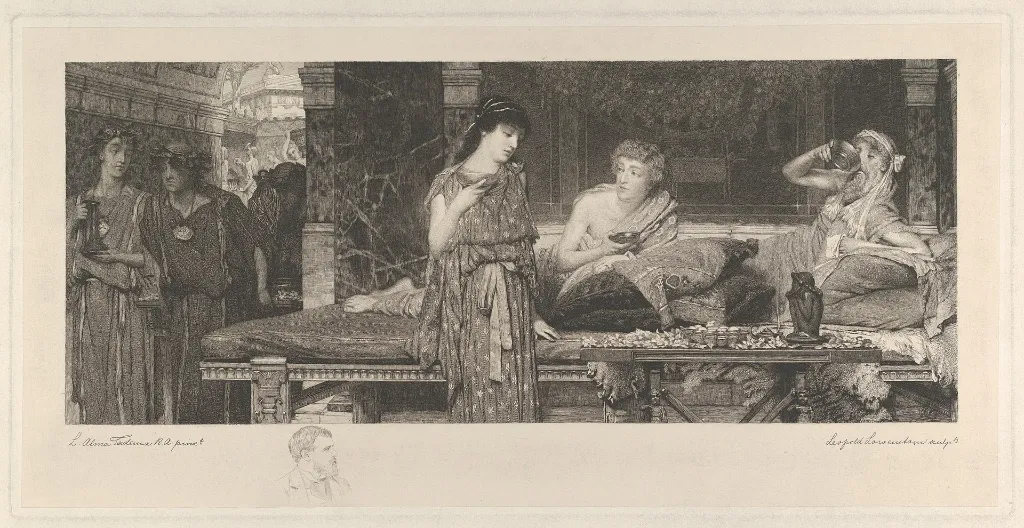
Nobody who hung an engraving after Alma-Tadema on their wall felt they were settling. They were bringing beauty into their daily life, and they knew, without anyone needing to tell them, that this was a serious and honourable thing to do.
III. What the Museum Did to Us
The great public museums of the nineteenth century were built on a good idea: art should not belong only to the aristocracy. The British Museum, the National Gallery, the Louvre—these were genuinely radical. The treasures of civilisation, open to anyone who cared to come.
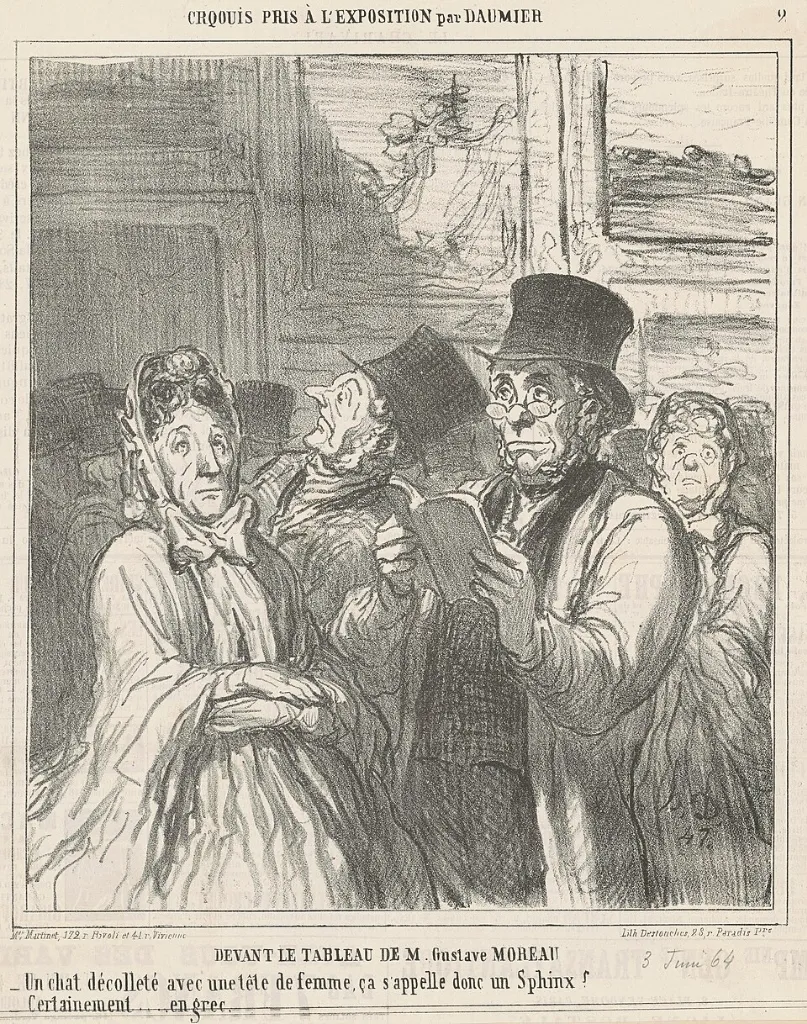
But something else happened alongside this generosity, so gradually we never noticed it: we forgot that art was ever meant to live with us.
When art moved into institutions, the institutions slowly became the authority on what art meant—how it should be approached, how long it deserved your attention, what counted as a real response. The placard replaced personal conversation. The curated sequence replaced the individual relationship. And your wall—the one you had chosen for yourself—became, by implication, a lesser thing.
We absorbed this without protest. We came to think of the museum as the real home of serious art, and our own homes as places where perhaps a print was acceptable, something decorative, something not quite the real thing.
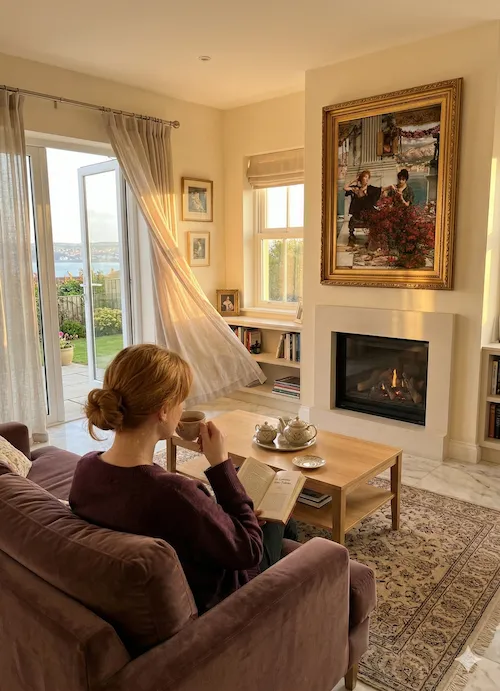
And yet the museum is also a place where you cannot eat, drink, or linger past closing time. The conservationist's fears are real—a spill, the slow creep of humidity, the invisible damage of warmth and breath. These are not invented concerns. But a home is a place where you share a meal, where you have a cup of tea by the fire, where you stay as long as you like. By necessity, the museum keeps art and ordinary life apart. It turns the painting into a specimen in a laboratory, rather than a guest at the table.
For most of human history, this would have seemed like a strange arrangement. A painting was made for a space—a specific space, with specific light, in relationship with specific people who would see it every day. The painting and the room were made for each other. The painting and its owner grew old together.
A curated sequence, no matter how carefully chosen, eventually hits a wall. There is a word for what happens somewhere around the fortieth painting: saturation. The eye stops taking things in. The brain, asked to absorb too much at once, quietly closes the door. You are still walking, still looking—but you are no longer seeing. Painting 200 has cancelled out painting 50. The Rubens and the Vermeer and the Turner have blurred into a vague impression of oldness and gold frames.
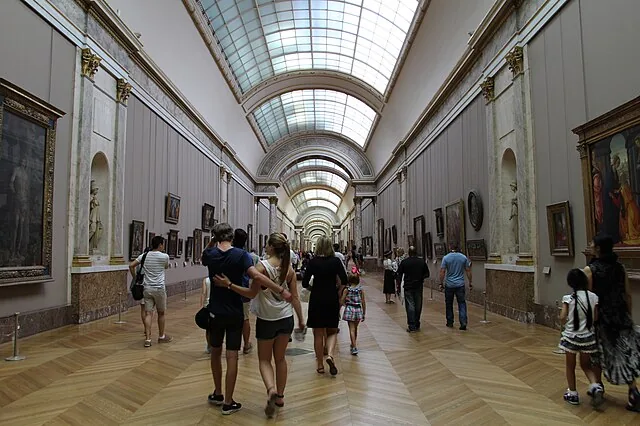
The Louvre deserves a lifetime of visits, not one exhausted afternoon. We have confused access with experience.
IV. The Haystack at Noon
In 1890, Claude Monet painted a haystack.
He painted it in the morning, when the mist sat low and blue over the field. He painted it again at noon, when the summer sun turned the straw to hammered gold. He painted it in autumn, in winter, in snow, at dusk, in the particular violet light that falls just after the sun has gone below the horizon but before the sky goes dark. He hired a boy to carry his canvases back and forth across the field so that he could swap from one to another as the light shifted, catching each hour in its exact quality.
He did this twenty-five times. Twenty-five paintings of the same haystack.
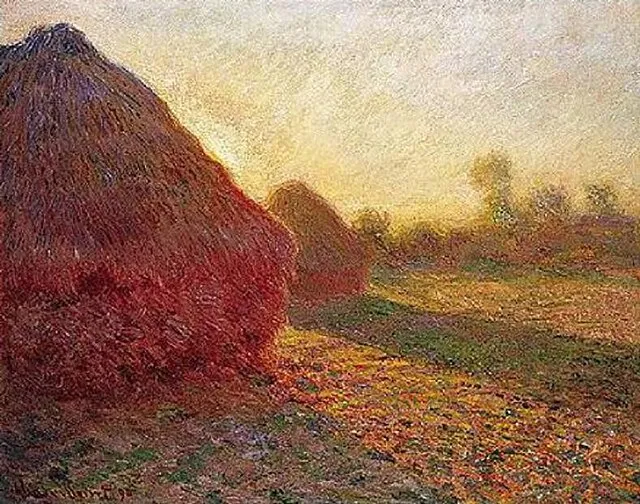
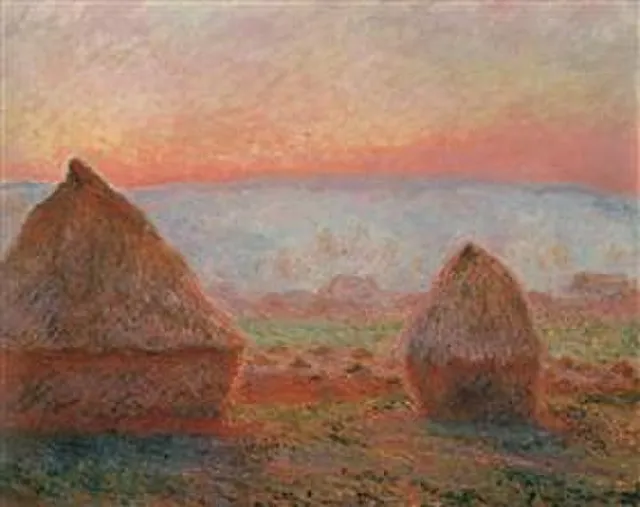
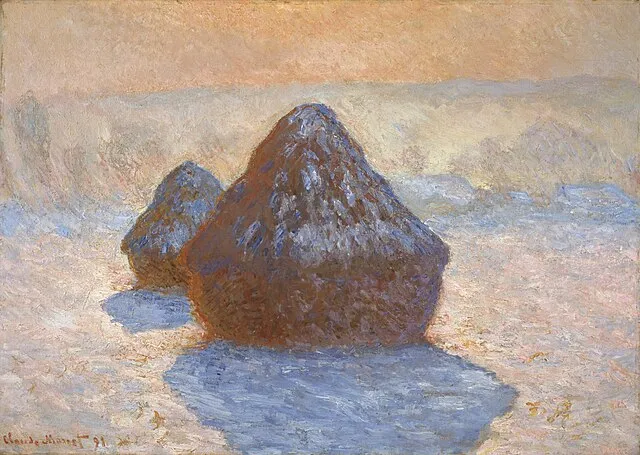
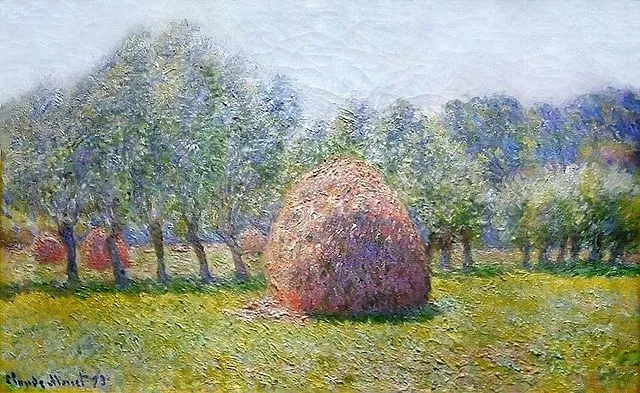
The whole point was that light is not a fixed thing. That what we see is never the object alone, but always the object in the light that is falling on it right now. That the haystack at dawn and the haystack at noon are not the same haystack. That nothing, looked at closely enough, ever holds still.
Monet understood something every painter has always known but museums quietly work against: a painting is not a finished, unchanging object. It is a living thing. And the only place it can actually live is somewhere that light changes—somewhere like a home.
A painting in your home is a different painting every morning. The winter light finds it one way; the summer sun finds it another. You notice things you have never noticed before simply because you have never seen it in quite this light before. This is not a side effect of a home. It is the reason a painting belongs there.
V. The People Who Understood
There have always been a few who knew this—who saw the museum's growing hold over art and quietly refused it. They did not reject museums. They simply understood that there was another way, and they built it.
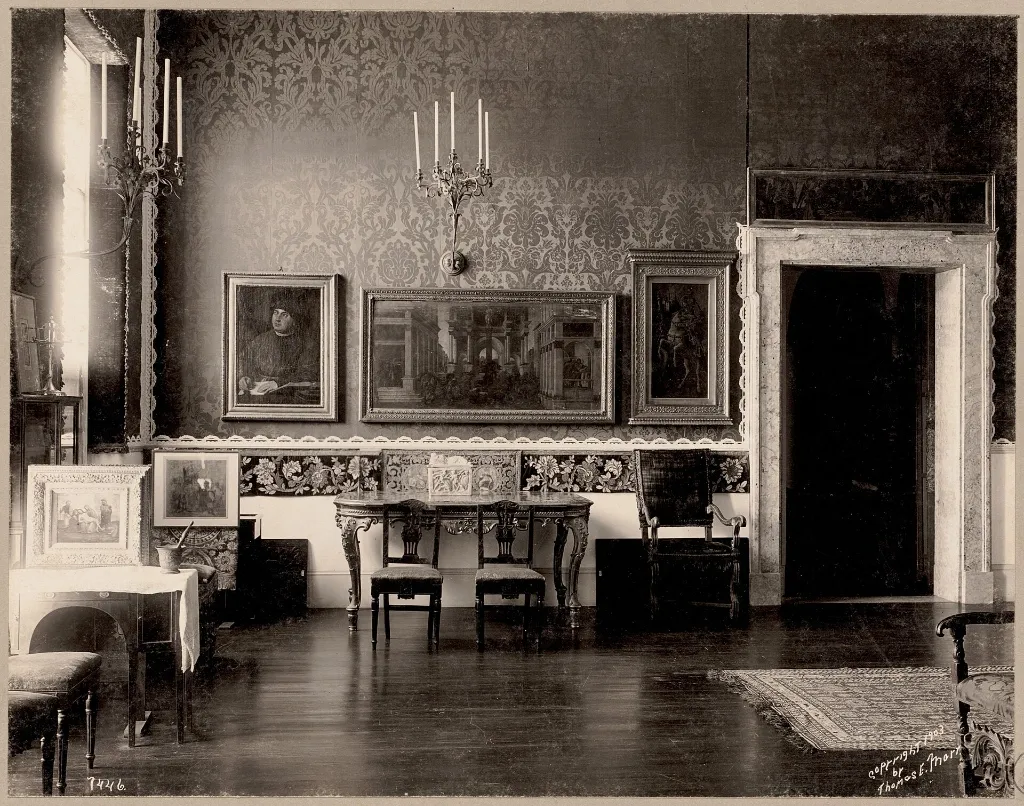
Isabella Stewart Gardner built a palace in Boston and filled it with Titian and Rembrandt and Botticelli and Sargent, arranging them not in historical order, not by school or period, but according to her own deep sense of how beauty talked to beauty. She knew that a painting did not exist alone. It existed in conversation—with the object next to it, the light above it, the flowers in the courtyard below, the visitor standing before it with whatever they had brought of their own life. When she died, she stipulated that nothing could ever be moved. The arrangement was the meaning. To visit the Gardner today is to step into someone's vision, not someone's collection—and the difference is everything.
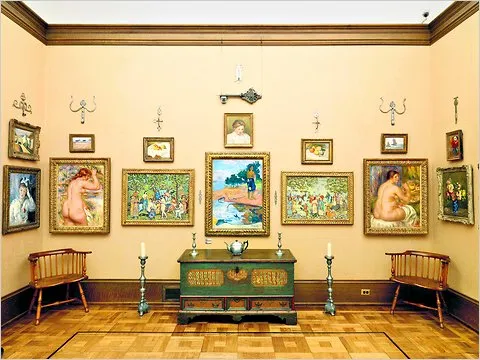
Albert Barnes took a more combative approach, but his instinct was the same. He hung his Renoirs and his Cézannes and his Matisses alongside African masks and wrought-iron hinges and ordinary objects from the world, because he wanted people to see—to actually see—how form and colour and line spoke across objects regardless of where they came from. He posted minimal labels. He did not want you to read about the painting. He wanted you to look at it, slowly, until it started talking to you in its own language.
And in Paris, the Musée Jacquemart-André stands on the Boulevard Haussmann as perhaps the clearest argument of all. It is simply a house. The house of Nélie Jacquemart and Édouard André, left exactly as it was—their art collection still on the walls of the rooms where they lived, their dining table still laid, their winter garden still enclosed in glass. You do not visit a collection there. You visit a life. You walk through rooms where someone ate breakfast looking at Mantegna, where someone read by lamplight under a Tiepolo ceiling, where someone stood at a window in the rain and looked up at a portrait that had watched them grow old.
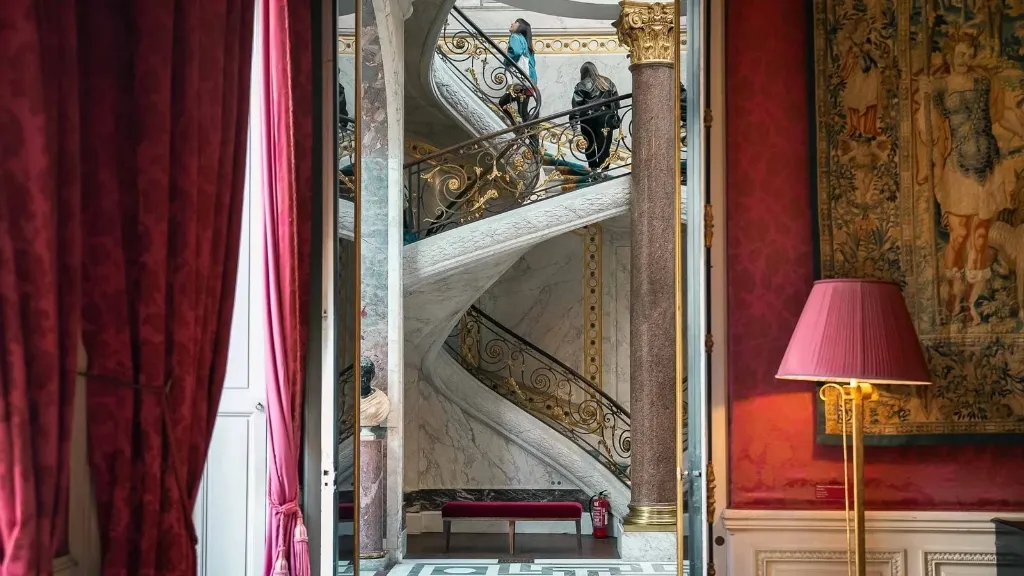
These are the places that stay with you. Not because they have the biggest collections or the best funding. But because they remind you that art was always meant to be lived with—and that living with art is a different thing entirely from visiting it.
VI. The Gift We Mistake for a Consolation
Here is the question that follows from all of this: if the natural home of a painting is a home, and if an original Alma-Tadema costs more than a house—what then?
For a long time, the honest answer was: you make do. You buy the engraving, the photogravure, the black-and-white print, and you live with a ghost of the painting you love. The colour is gone. The scale may be wrong. The brushwork, the actual physical texture of paint on canvas, is absent entirely. You have the image but not the experience. It is—and even its admirers usually conceded this—a consolation prize.
And here is where 2026 is genuinely, quietly extraordinary. Because that consolation prize no longer exists.
The technology that now produces a high-quality canvas reproduction of an Alma-Tadema is not the same as a poster, or a print, or a photogravure. It is spectrographic colour analysis matched against the original. It is giclée printing on archival canvas that captures not just the image but the surface—the texture, the depth, the way paint sits slightly raised and catches light from the side. It is printed at true scale—the actual size of the original, so that you feel what it was like to stand before the real thing. And when it is hanging on your wall, in the light of your own room—it is an encounter with the painting.
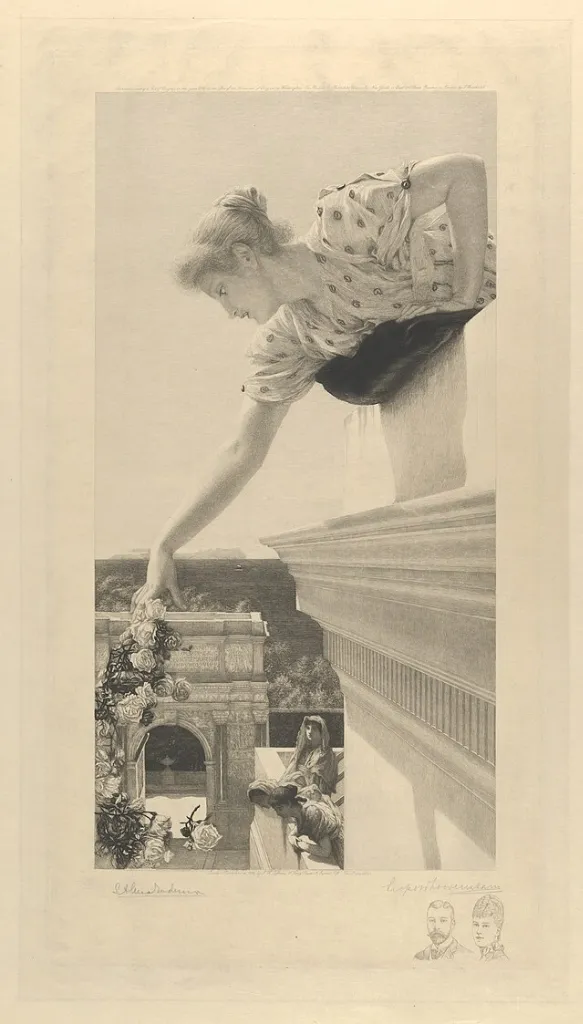
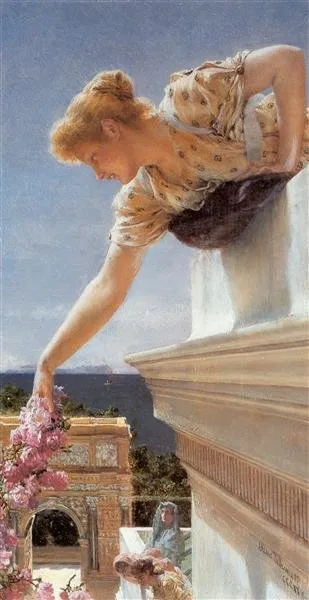
Not the original. There is still something irreplaceable about standing before the physical object that Alma-Tadema touched—the actual paint his brush moved across that specific canvas, on that specific afternoon. That sense of reaching across time is real, and we should not pretend otherwise.
But the Victorian collector who scrimped and saved for an engraving after an Alma-Tadema he loved was not buying a lesser thing. He was buying access to beauty—the right to live in the company of an image that moved him. What we now have is that same right, but with colour, with scale, with texture, with a faithfulness to the original that would have seemed miraculous to someone buying a monochrome print in 1885.
This is not settling. This is an inheritance.
VII. What Grows Between You and a Painting
A painting you have lived with for five, ten, twenty years is not the same painting you brought home. And you are not the same person who chose it.
You have walked past it without seeing it, and then one morning stopped in the doorway because the light caught it differently and you looked, really looked, for the first time in months. You have sat with grief in its presence—not thinking about it, just grateful that something beautiful was there. You have had guests stand before it in a silence longer than they expected.
This slow, patient, entirely personal relationship is what the Victorians built their homes around. They understood that the rooms we live in are not neutral. What you put on your walls says something about what you love, what you value, what kind of life you are trying to build.
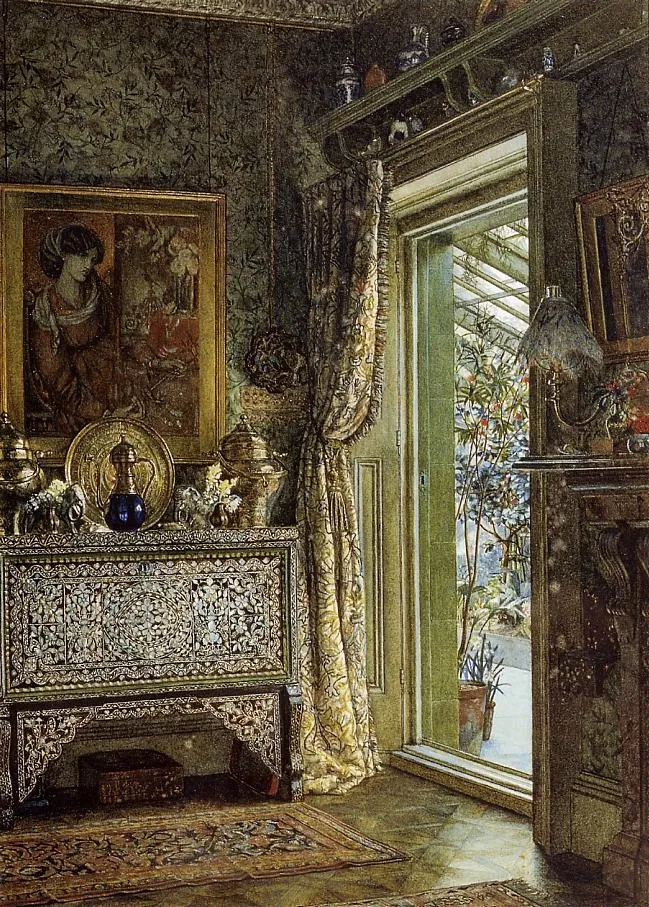
Alma-Tadema understood this instinctively. His home on Grove End Road was not a showcase. It was a life. The studio and the dining room and the marble-tiled hall were all parts of the same vision, inseparable from each other.
Our museums are essential. There is nothing quite like standing before a major work in person—the sheer scale of it, the presence, the strange feeling of being in the same room as something made by human hands a hundred years ago. That encounter is real and worth seeking out.
But that is a visit. An event. A pilgrimage.
What we are talking about here is something quieter and, over the long run, more nourishing. It is the painting that is there when you come downstairs on a grey December morning. The painting that watches you through years you will one day call the important ones. The painting your children grow up looking at, absorbing without knowing it a particular quality of beauty, a particular way of seeing the world.
A well-made, well-framed piece that you truly love is not a substitute for art.
It is art, living where it was always meant to live.
Leave a Visiting Card
Consulting the visiting cards...