
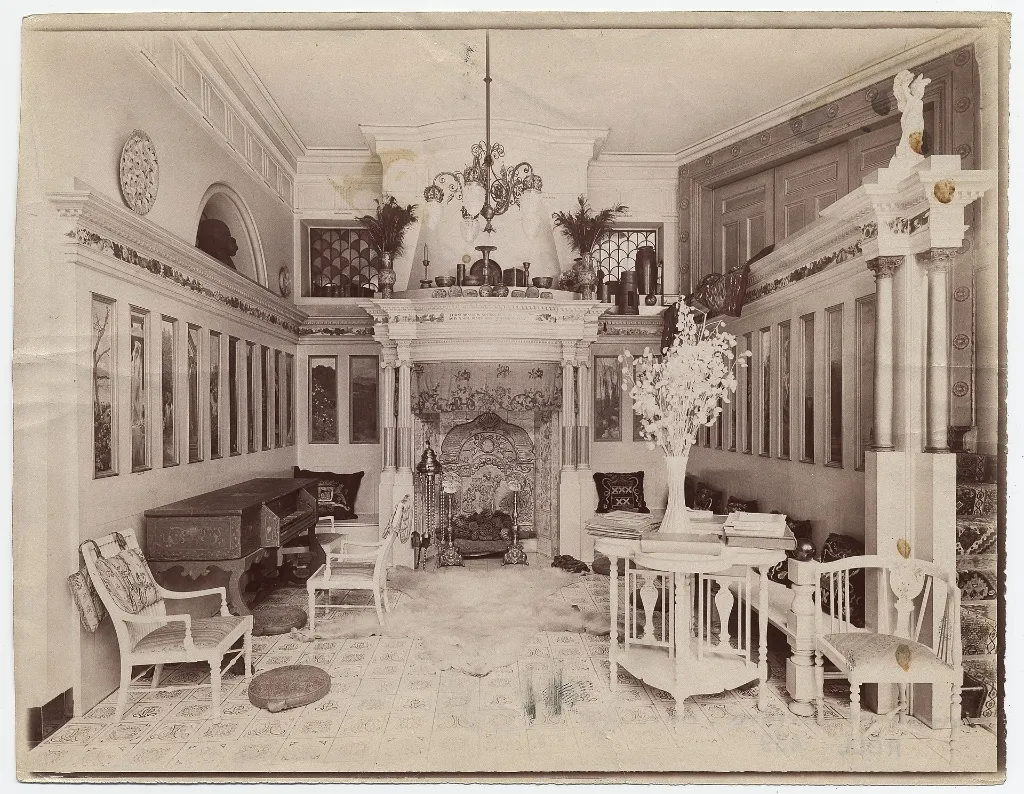
If you were a visitor to 44 Grove End Road in the late 19th century, you did not simply "enter" the house. You were transported.
You would step out of the grey, coal-choked fog of St. John’s Wood and pass through a heavy door faced with a massive shield of beaten brass. Inside, the world changed. The air seemed lighter, warmer. You found yourself in a long, white hallway that glowed with a strange, subterranean gold light—an effect conjured not by the sun, but by the burnished brass of the staircase railing and the yellow silk ropes that guided your hand.
But if you looked closely at the walls, you would see that this was not just a hallway. It was an autograph book.
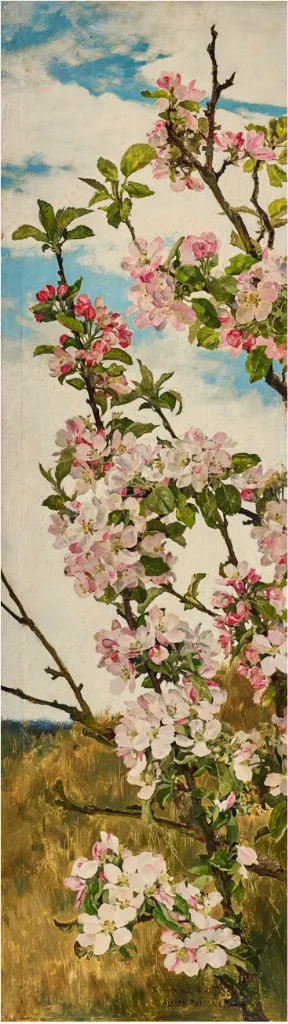
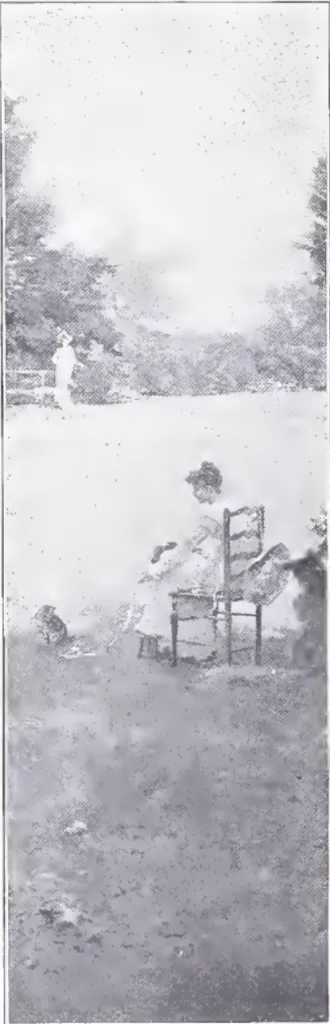
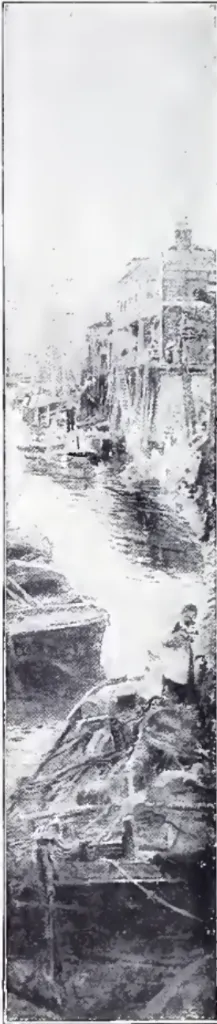
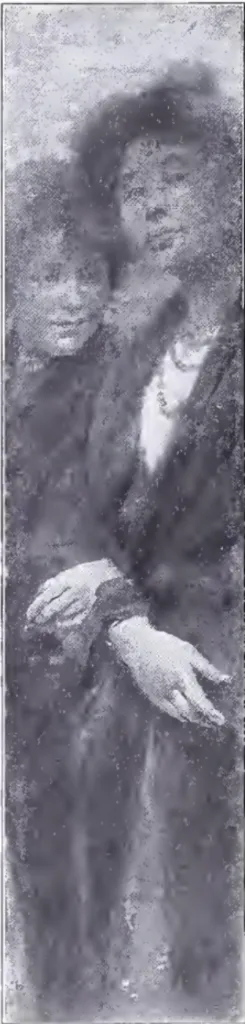
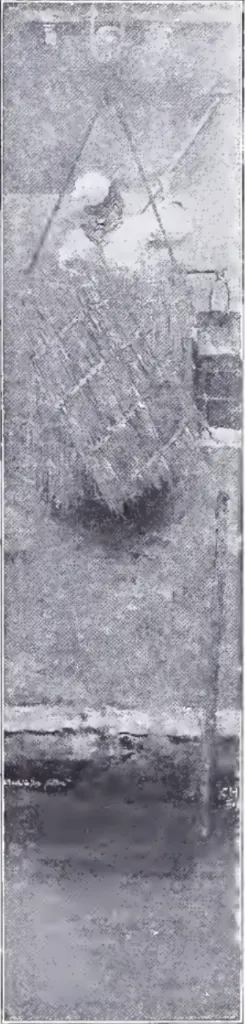
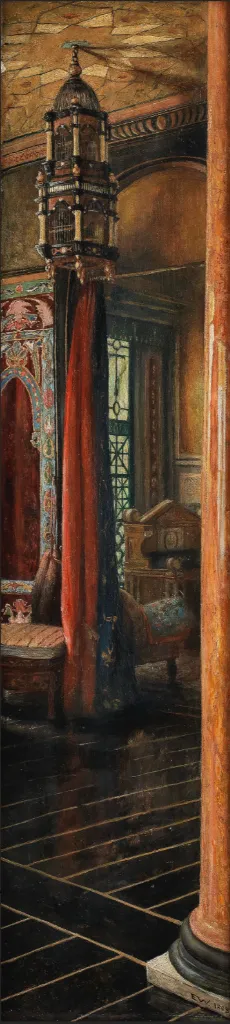
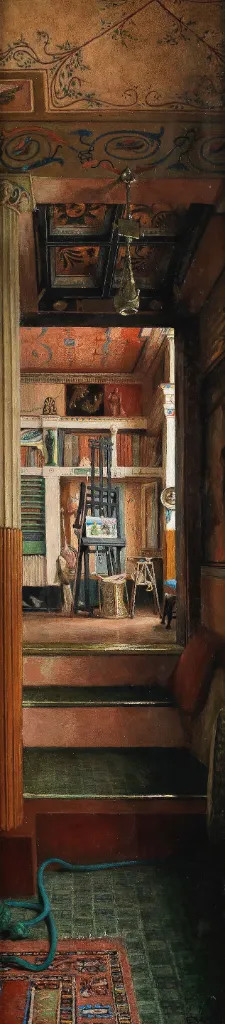
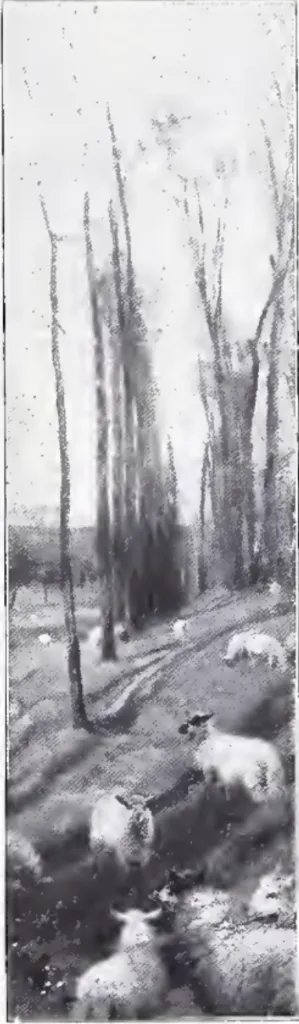
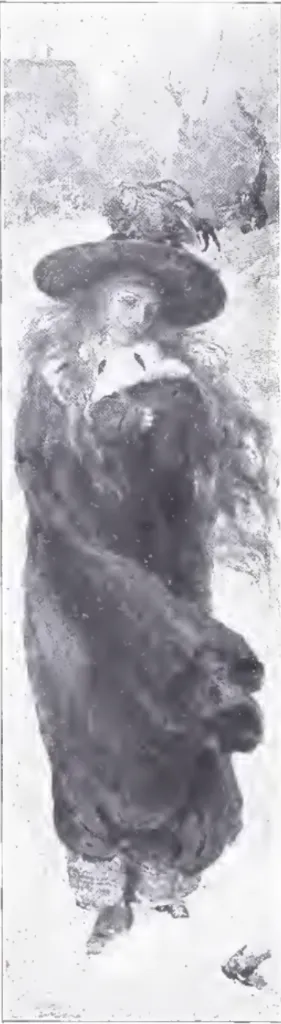
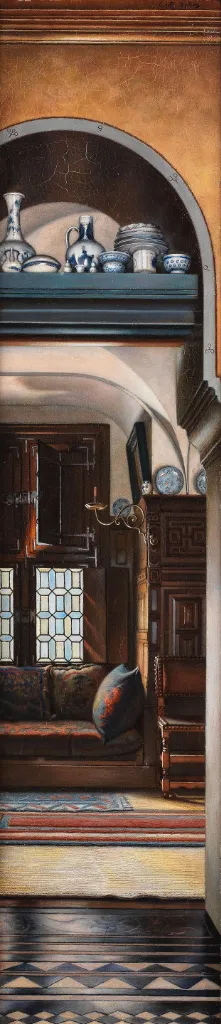
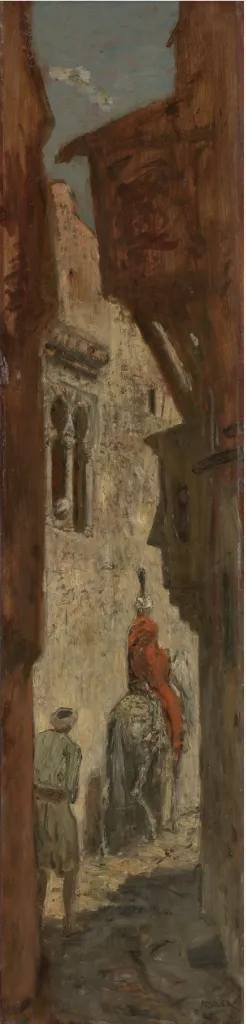
At eye level, inset directly into the white wainscoting, were dozens of tall, narrow paintings. They were like windows looking out onto different worlds: a slice of a Japanese stage, a glimpse of a Greek bath, a single spray of apple blossoms.
This was the Hall of Panels. And every single brushstroke on those walls was a gift.
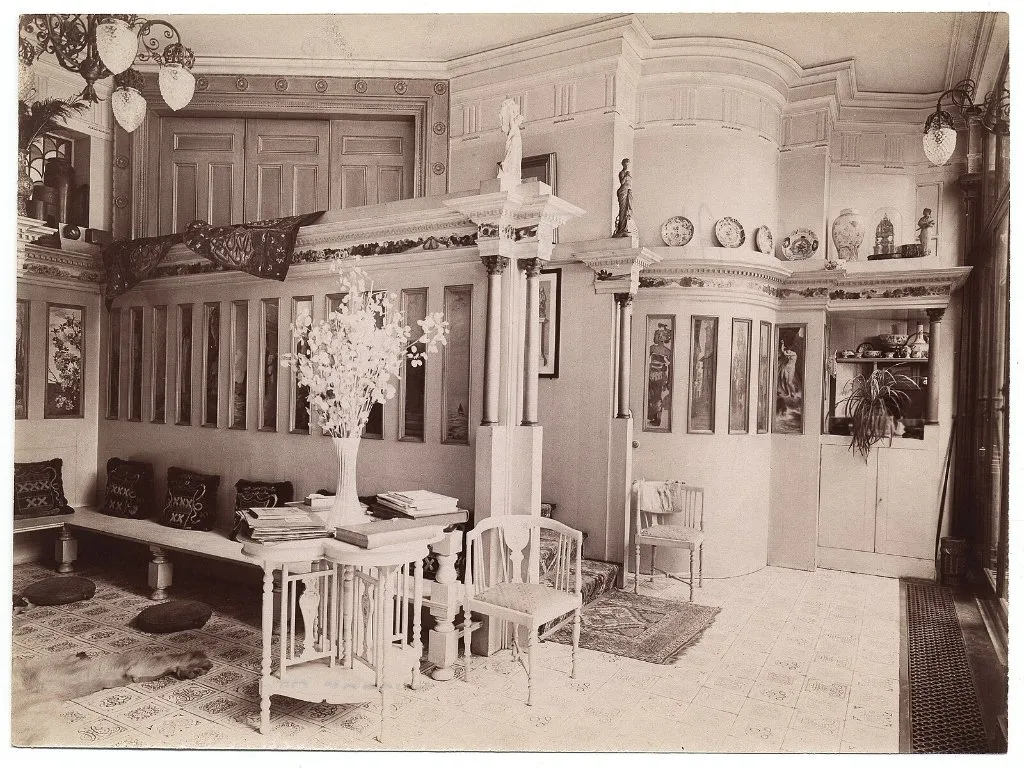
The Rule of the House: The Reciprocal Economy
The room had a formal name, but it might better have been called the Hall of Friendship.
Sir Lawrence Alma-Tadema was a "human firework" of a man—loud, generous, and endlessly hospitable. But he was also one of the most generous artists of his time. He frequently painted portraits of his friends—conductors like Hans Richter, pianists like Paderewski, and singers like George Henschel—often painting them as gifts rather than commissions. These were acts of love, capturing the people he admired not as formal subjects, but as friends.
The Hall of Panels was the world's answer. It was the "return energy."
Above the fireplace, inscribed in gold letters, ran a line from Shakespeare’s Richard II that perfectly captured this spirit:
"I count myself in nothing else so happy
As in a soul remembering my good friends."
This was the governing constitution of the room. Alma-Tadema did not commission these works. He did not buy them. The rule was simple: You had to volunteer.
To have your work on the wall of Casa Tadema was the ultimate badge of belonging. It was an "architectural autograph." It meant you were "in."
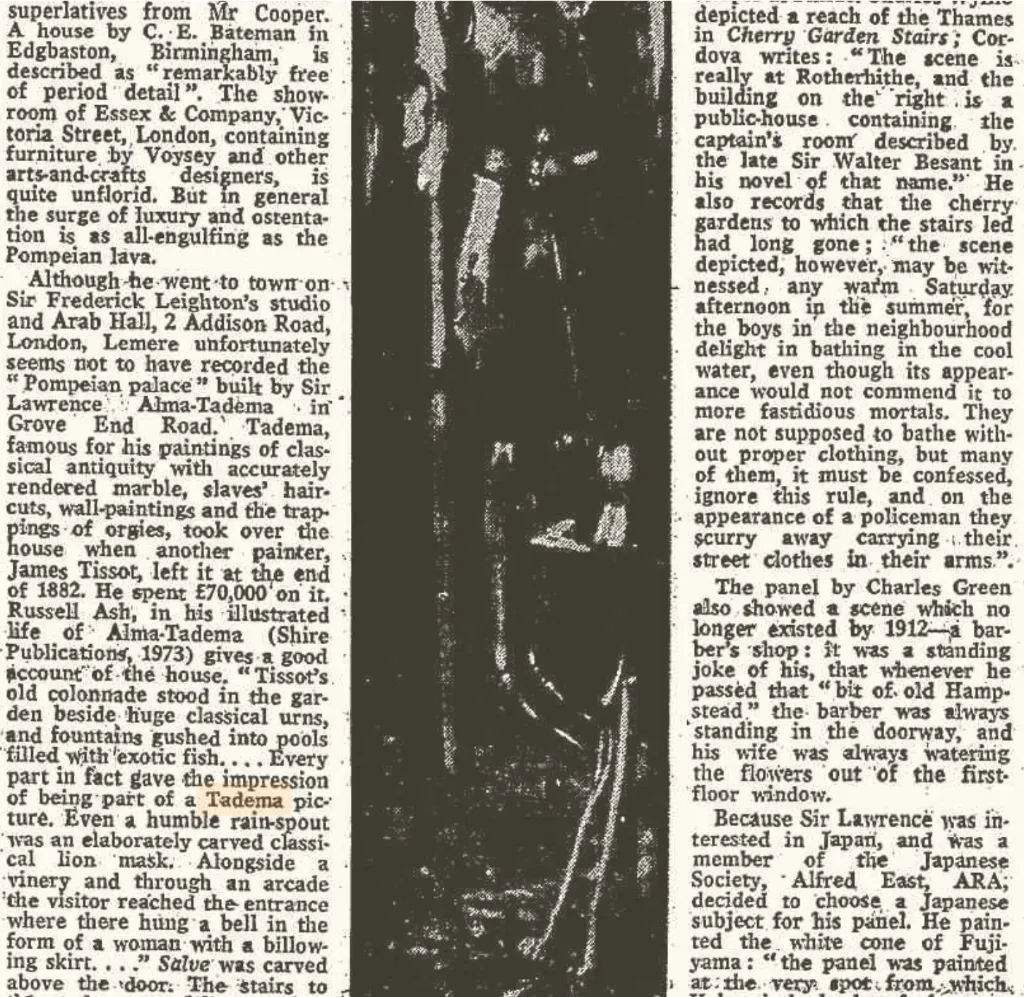
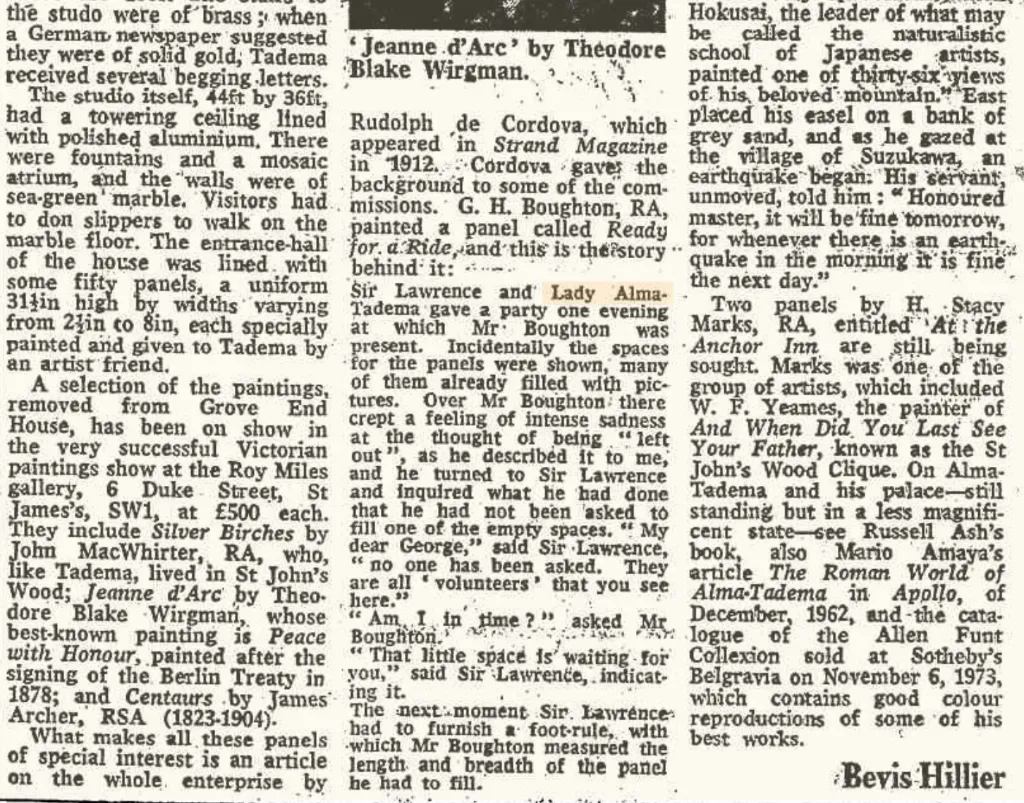
The American painter G.H. Boughton once recalled the anxiety of not being asked. At a party, he cornered the host. "I felt as if I had been left out," he confessed. "I asked Sir Lawrence what I had done that I had not been invited to fill one of the empty spaces."
Alma-Tadema smiled and pointed to a blank slot in the wood. "My dear George," he replied. "No one has been asked. Everybody you see here has been a volunteer. That little space has been waiting for you."
The Gallery of Giants
To walk down that hallway today would be to traverse a "Who's Who" of 19th-century art. These were not sketches; they were finished oils, standardized in height (32 inches) but varying wildly in width to fit the eccentric gaps in the architecture.

There were forty-two panels in total (though press reports from the 1913 auction often cited 45, likely counting the decorative friezes).
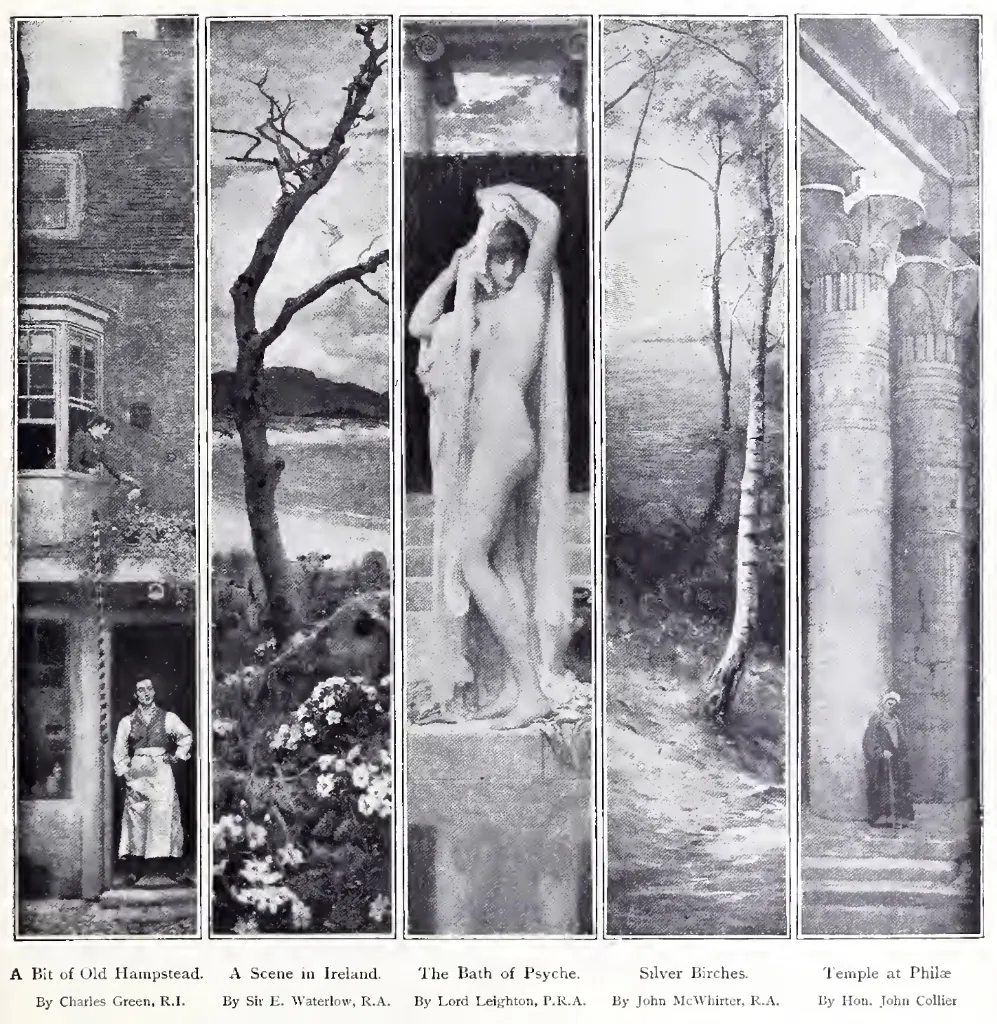
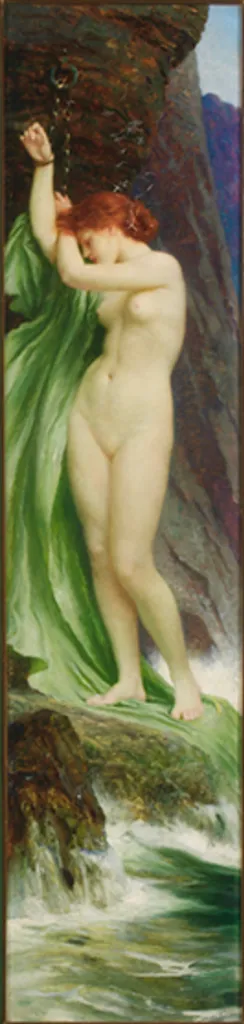
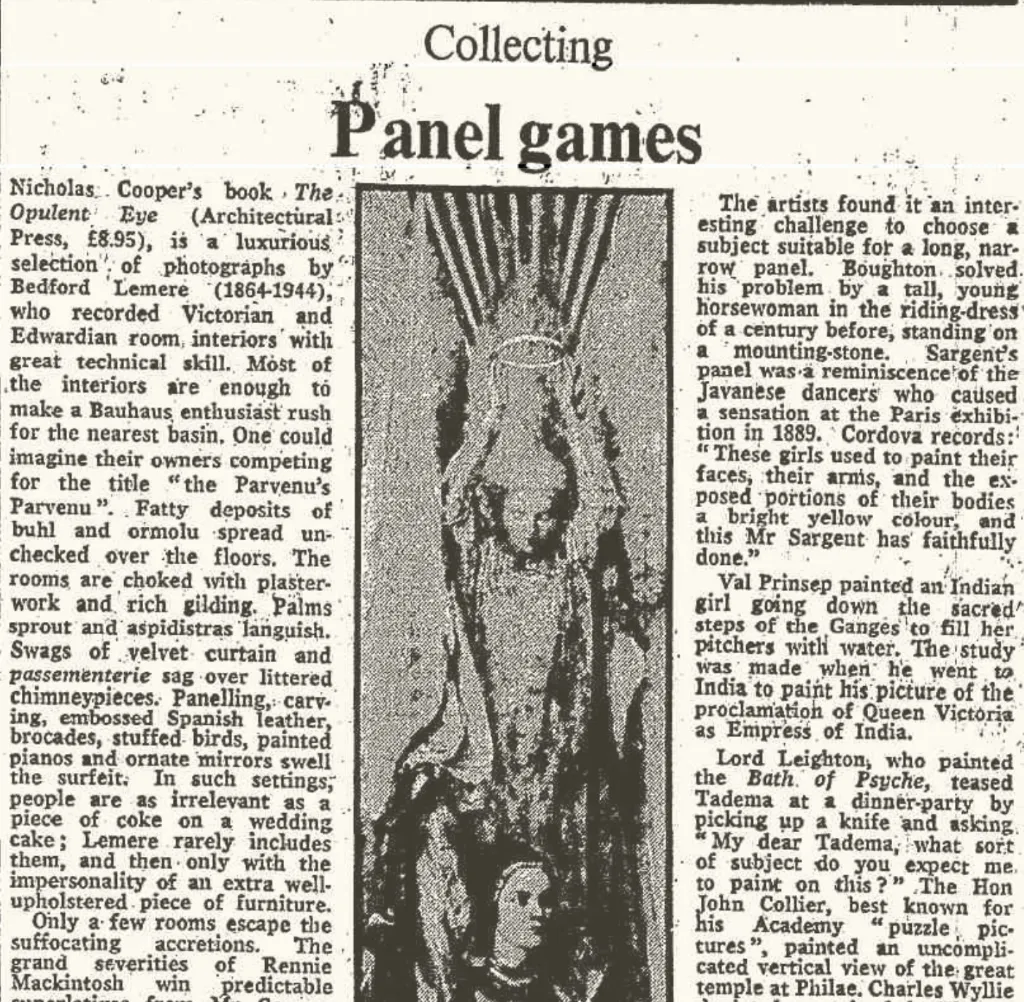
Lord Leighton, the President of the Royal Academy and the god of the Victorian establishment, took up a challenge. At a dinner party, he picked up a dessert knife and held it vertically. "My dear Tadema," he asked, "what kind of subject do you expect me to paint on this?"
The answer was a narrow strip of nudity. Leighton painted a figure of a woman disrobing by a pool—a figure so perfect that he later expanded it into his famous masterpiece, The Bath of Psyche (now in the Tate). The panel in the hallway was the seed from which the masterpiece grew.
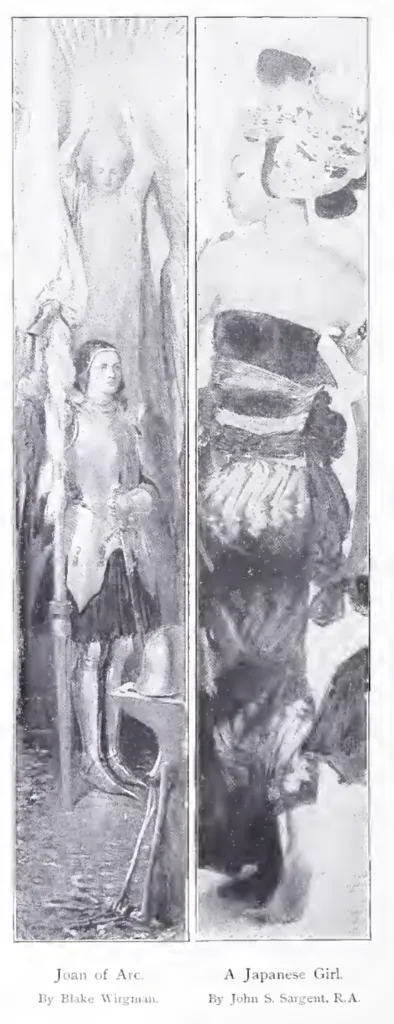
Then there was John Singer Sargent, the wild American bravura painter. He contributed a panel that shocked the polite sensibilities of the English visitors: a study of a Javanese Dancer from the 1889 Paris Exhibition. The dancer was painted not in flesh tones, but in the garish, theatrical yellow body paint of the performance. It was a flash of modernism in a house of classicism, inscribed simply: "To my friend Alma-Tadema."
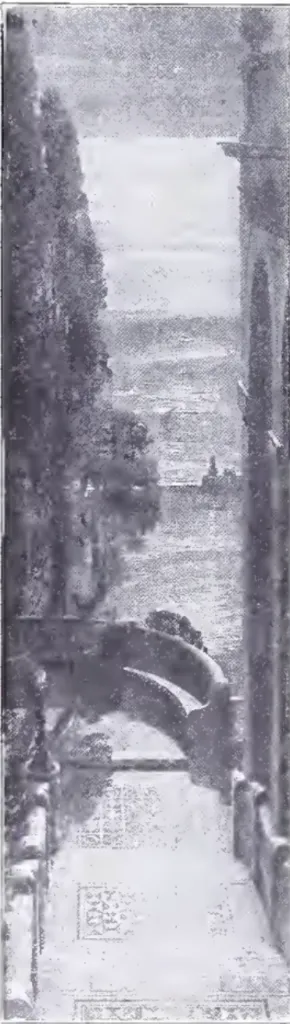
Sir Edward Poynter, Tadema's friendly rival, painted a terrace at night, overlooking a Mediterranean harbor where a lighthouse beacon burned a hole in the gloom. Marcus Stone, the painter of sentimental romances, painted a garden scene and declared that being allowed to do so was "one of the greatest compliments of my life."
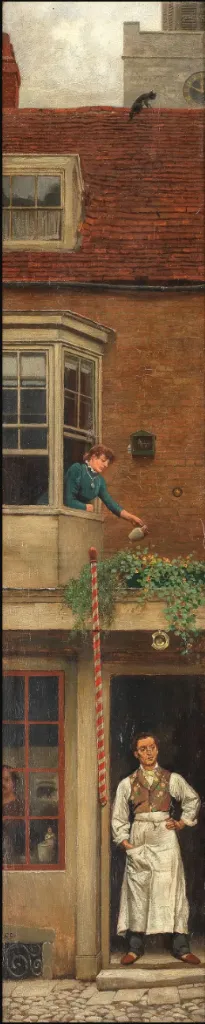
Even the humorists had their place. H. Stacy-Marks, known for his bird paintings, painted a sailor at the door of "The Anchor Inn," taking a pipe from his mouth to say "Good Morning"—a permanent greeting to Tadema every time he walked down the stairs to his studio.
The Family Seal
But perhaps the most touching contributions came from the house itself.
The floor you walked on was a puzzle of black stained boards and white holly wood inlays. The tiles, designed by the musician George Henschel, formed a repeating monogram: L.A.T.
It was a happy coincidence of nomenclature. The initials stood for Lawrence Alma-Tadema. But they also stood for Laura Alma-Tadema (his wife) and Laurence Alma-Tadema (his daughter).
And what of the third L.A.T.? Anna Alma-Tadema, the quiet younger daughter, was legally "A.A.T.", but she found her place on the wall. She painted the narrowest panel in the entire hall—a sliver of canvas only two and a half inches wide.
Titled Flags, it depicted the bunting of the 1887 Golden Jubilee fluttering from a building. At the very bottom, on the Dutch flag (a nod to her father's birth), she painted a laurel wreath enclosing his initials. It was a tiny, private act of devotion from a daughter who would spend her life in his shadow.
The Roll Call of the 45
The sheer scale of this collaboration is staggering. In total, thirty-eight artists contributed forty-five panels to the hall. It was not just a few close friends; it was the entire Royal Academy establishment, plus the European avant-garde, all paying tribute to one man.
While many of the panels are now lost or in private collections, the records from 1913 give us a glimpse of the roster. It reads like a dictionary of Victorian Art:
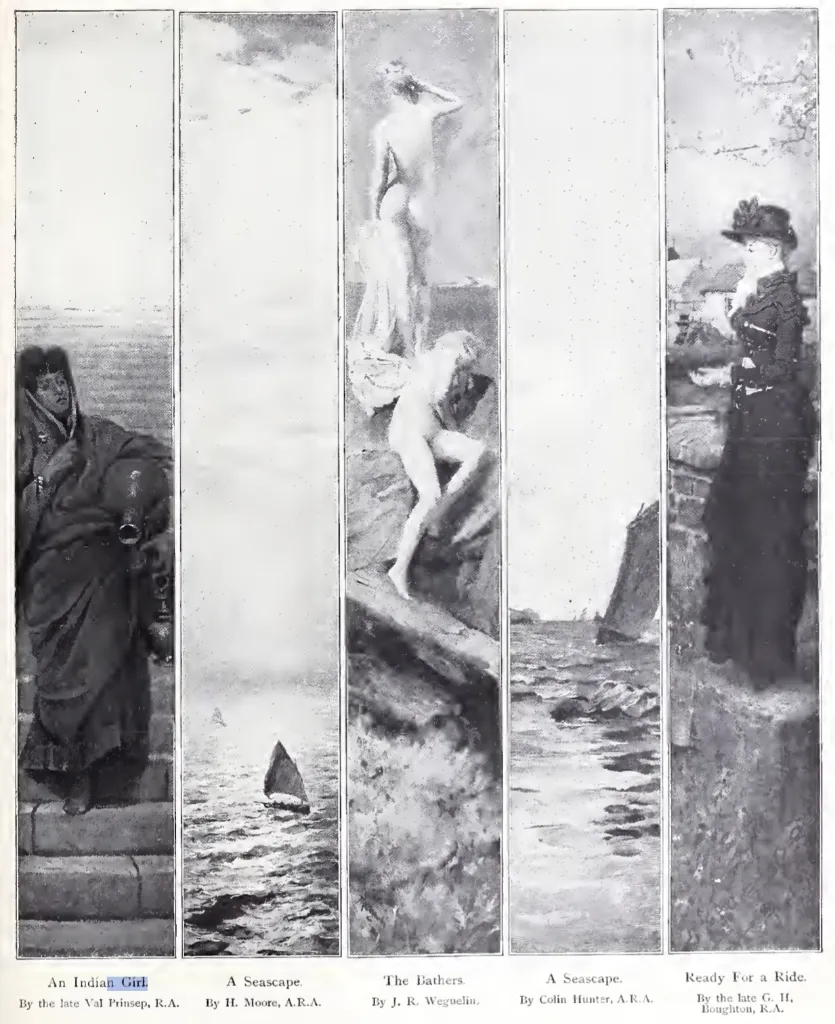
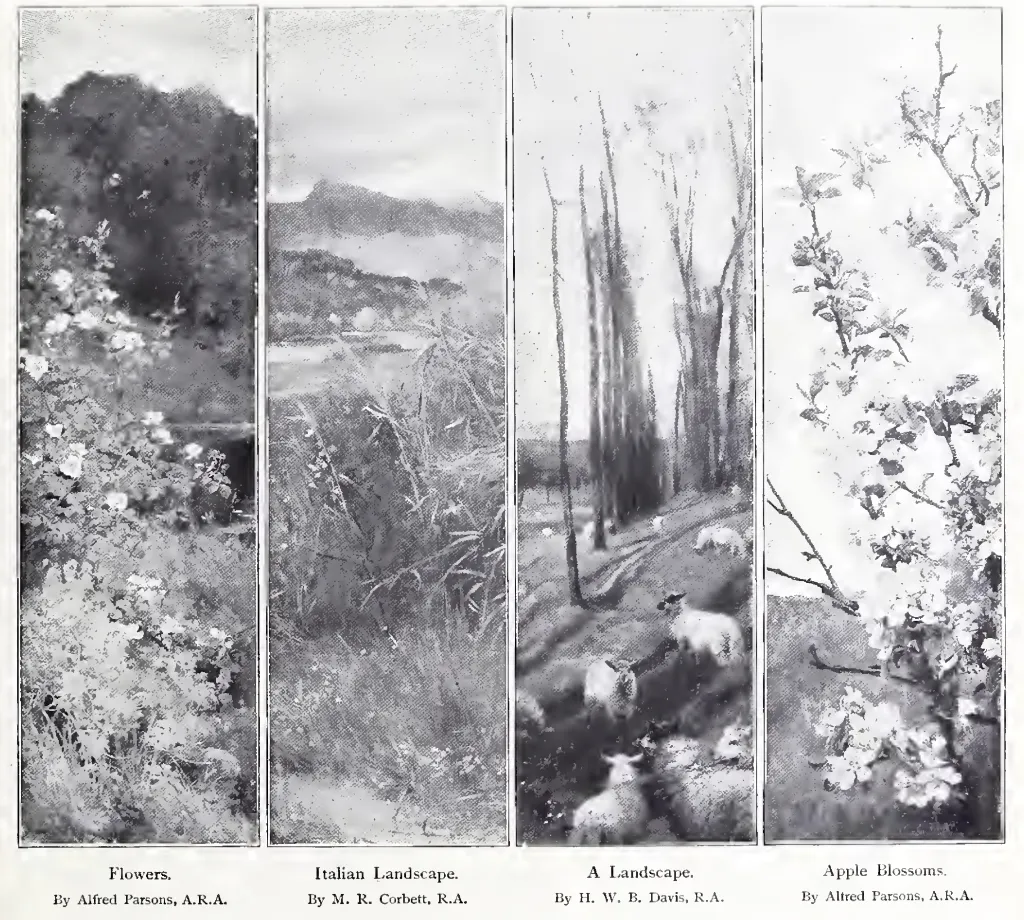
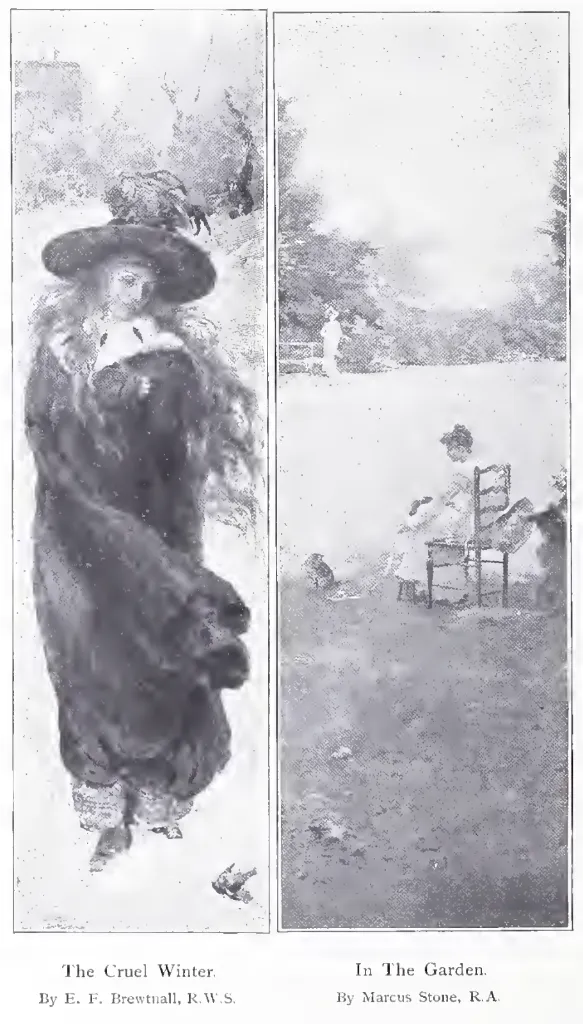
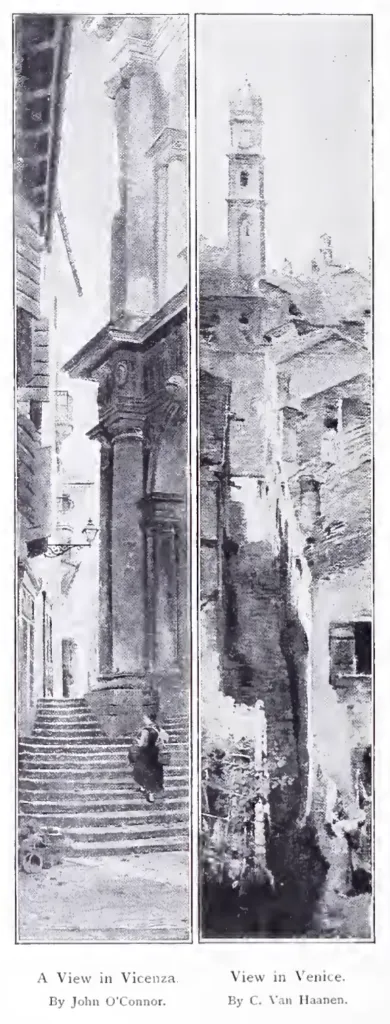
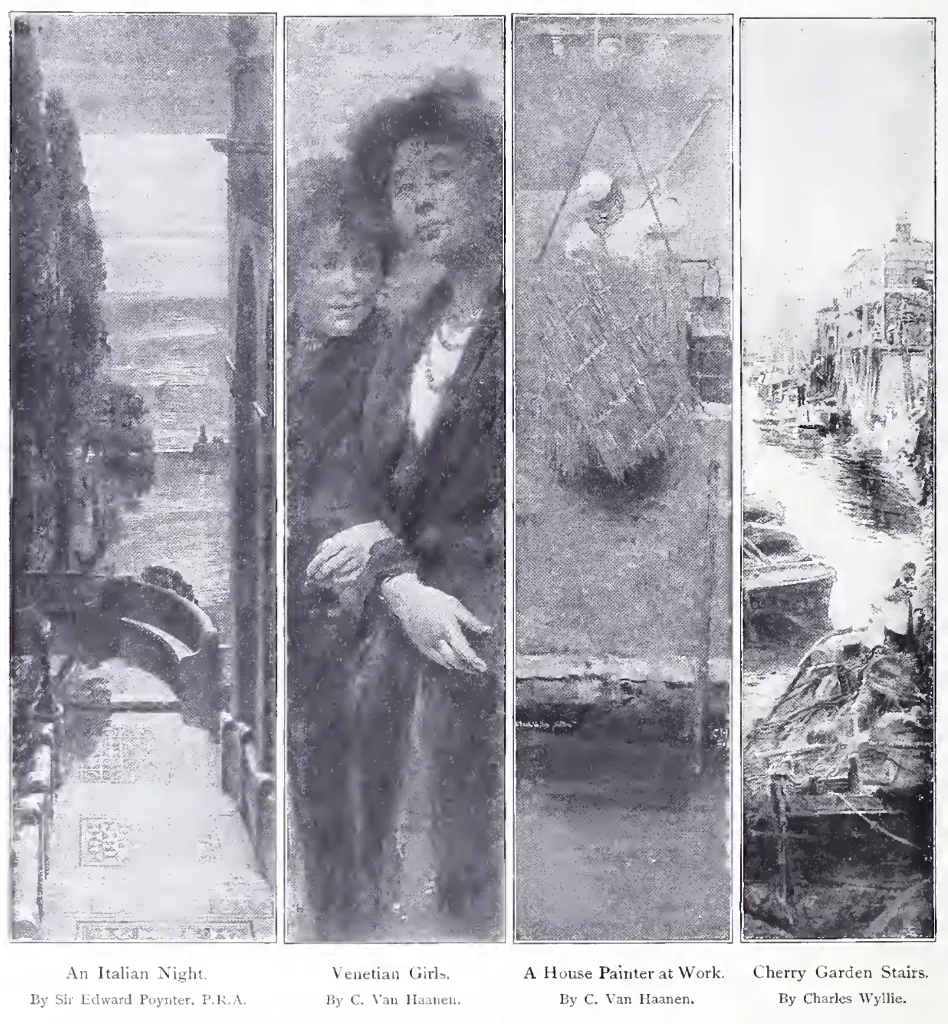
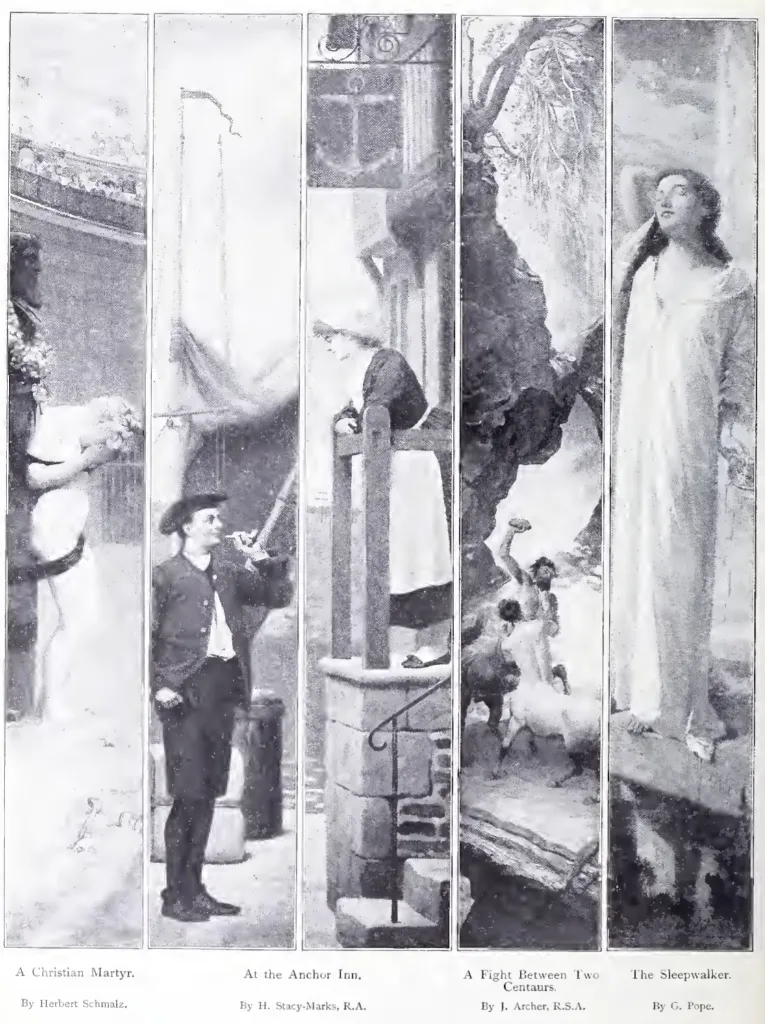
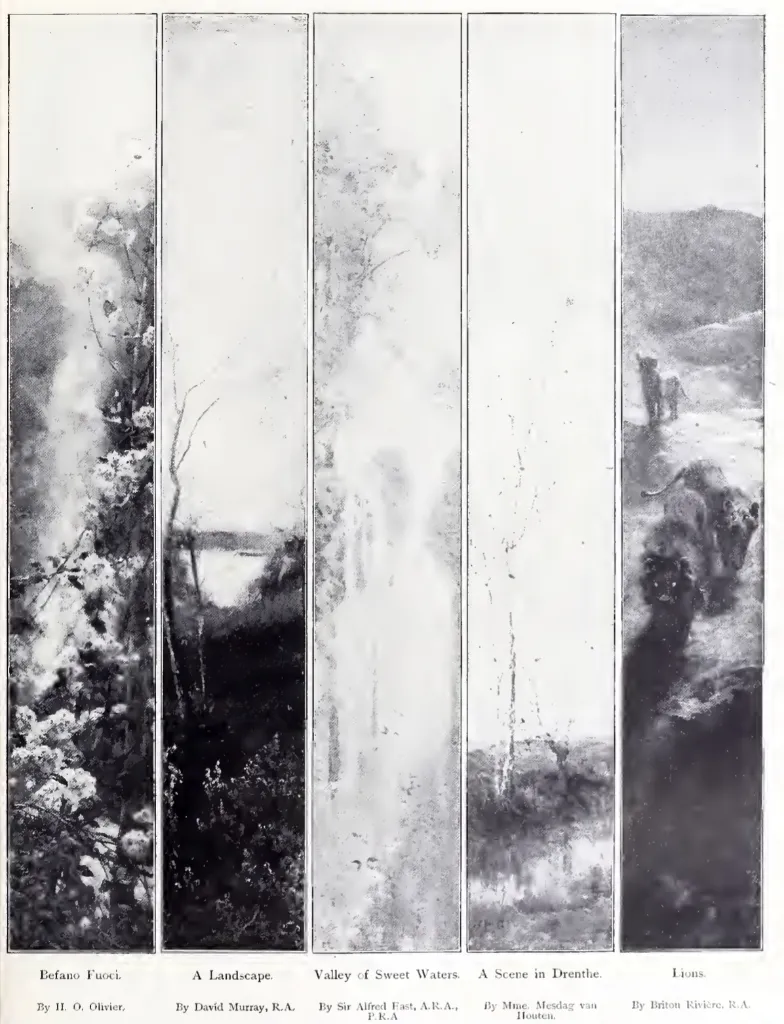
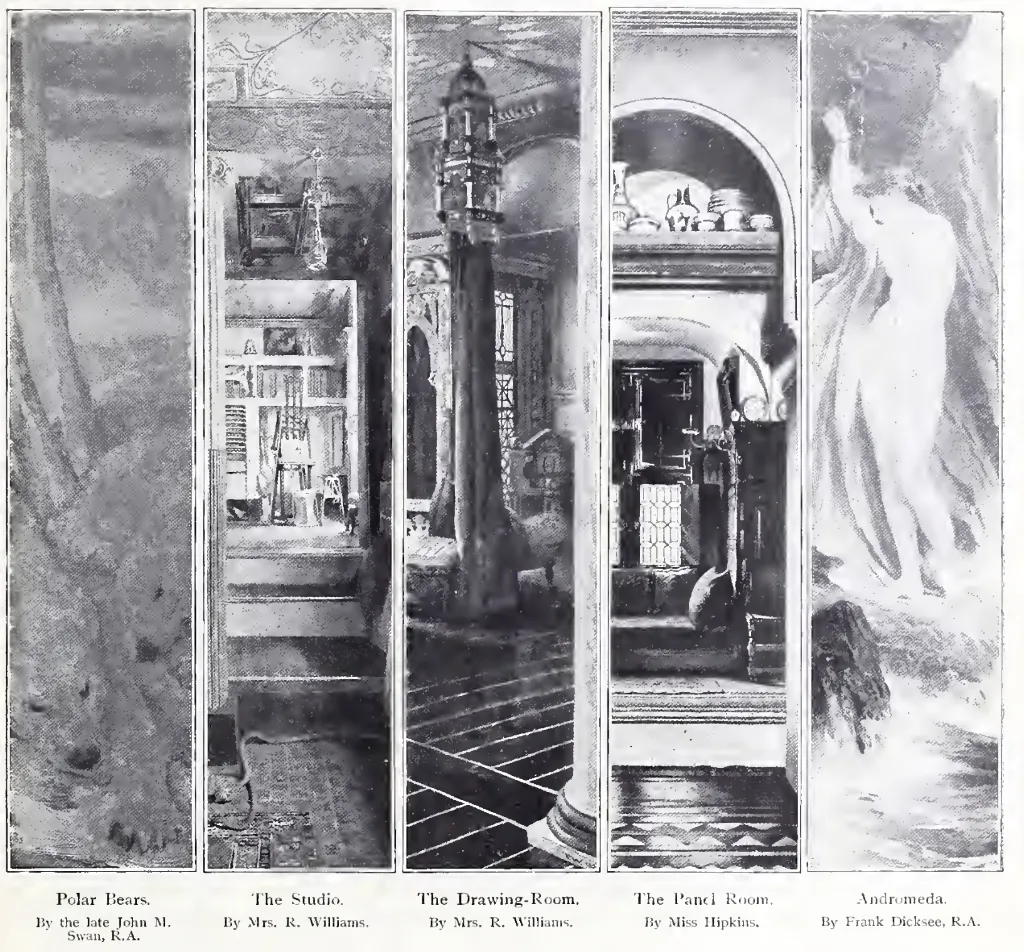
The Contributors
The Presidents & Giants:
- Lord Leighton (P.R.A.): The Bath of Psyche (The centerpiece).
- Sir Edward Poynter (P.R.A.): Grecian Moonlight (A terrace overlooking a harbor).
- John Singer Sargent: A Javanese Dancer (The modern shock).
- Sir Frank Dicksee: Andromeda (The romantic hero).
- Val Prinsep: Indian Water Carrier (Painted on location in India).
- John MacWhirter: Silver Birches (His signature subject).
The Landscape & Genre Masters:
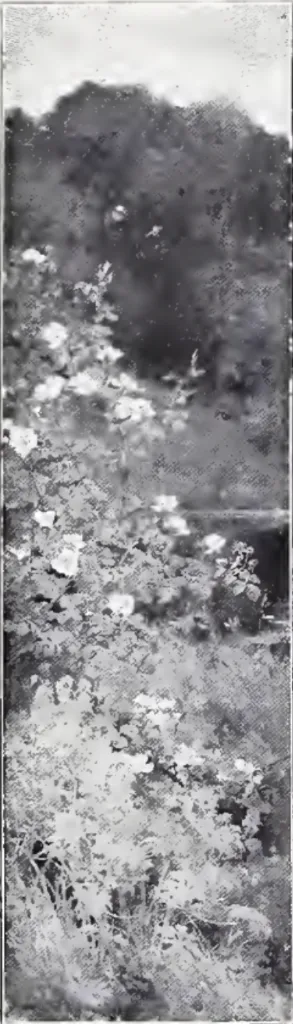
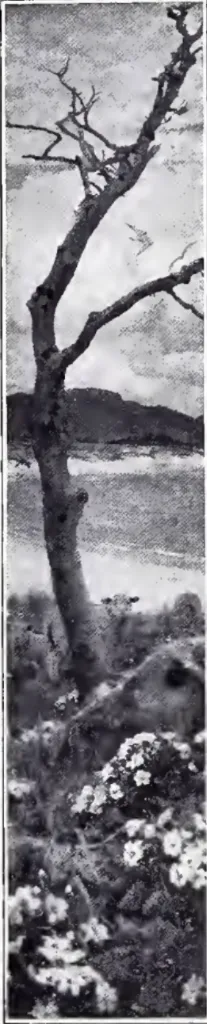
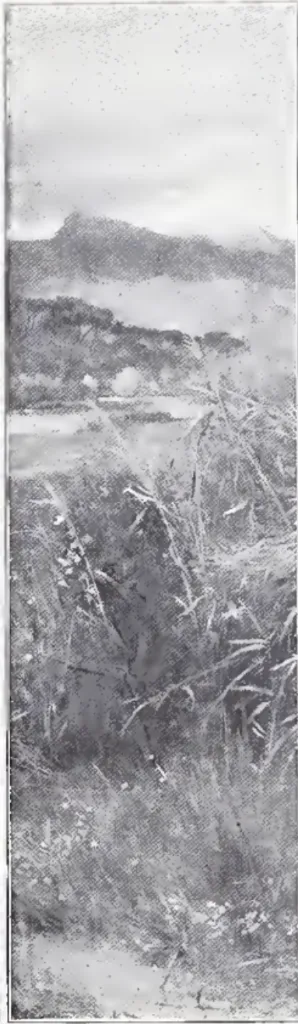
- Alfred Parsons: Two panels: Apple Blossoms (for Lawrence) and Wild Roses (for Laura).
- Marcus Stone: In the Garden (The sentimental favorite).
- H. Stacy-Marks: Two panels: At the Anchor Inn and The Sailor.
- David Murray: A Landscape (Sunset).
- Sir Alfred East: Valley of Sweet Waters (A Japanese landscape with Mt. Fuji).
- Briton Riviere: Lions (Prowling in the desert).
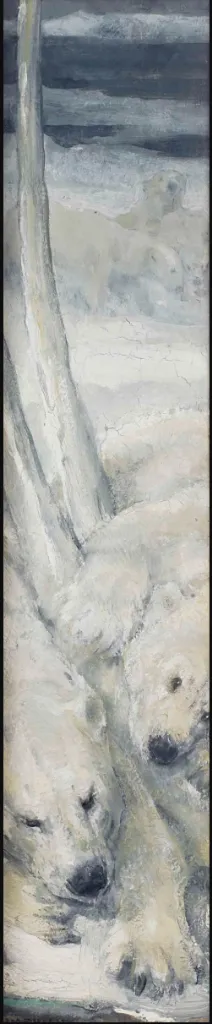
- J.M. Swan: Polar Bears (The last contribution received before the sale).
The European & Family Circle:
- Cecil Van Haanen: Three panels, including a view of Venice.
- Mrs. R. Williams (Tadema's sister-in-law): Three panels, including Switzerland and the floral frieze above the panels.
- Anna Alma-Tadema: Flags (The smallest panel).
- Madame Mesdag van Houten: A Scene in Drenthe.
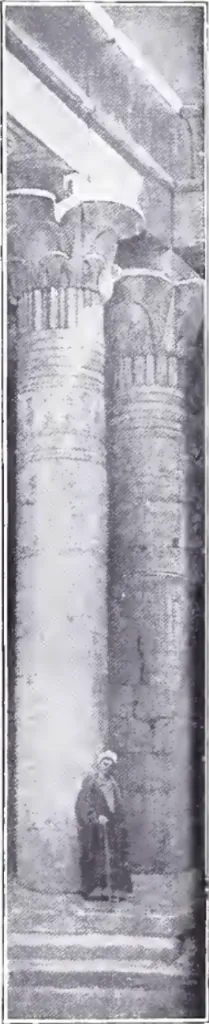
- John Collier: Temple at Philae.
- Herbert Schmalz: A Christian Martyr.
And many others whose names have faded but whose work once held up the walls of the "Palace of the Beautiful." To have 36 professional artists—many of them rivals—agree to a unified scheme in a private home is unprecedented in art history. It was a visual definition of charisma.
The Dismantling
The tragedy of the Hall of Panels is not that it is gone, but how it went.
When Alma-Tadema died in 1912, the house lost its gravity. The "Hall of Friendship" ceased to be a living organism and became a collection of "Lots."
During the devastating auction of June 1913, the panels were not sold as a set. They were pried from the wainscoting one by one. The "guest book" was torn apart, page by page.
- Lot 603: Alfred Parsons' Apple Blossoms.
- Lot 604: A Sargent sketch.
- Lot 605: The Leighton nude.
Bidders did not care about the unity of the room. They wanted a cheap Sargent or a portable Poynter. The panels were scattered to the winds—some to museums, many to private collections, others lost entirely.
Today, if you visit the building at 44 Grove End Road, it is a block of flats. The white walls are gone. The burnished brass staircase, which once made visitors feel as though they were ascending into the sun, has been stripped.
But in the archives, the Hall remains. It stands as a testament to a time when art was not just a commodity to be auctioned, but a conversation between friends. It reminds us that the true value of Casa Tadema was not the marble or the gold, but the people who walked through its doors, looked for a blank space on the wall, and asked: "May I?"
Appendix: The Cordova Inventory (1911)
A reconstructed list of the 42 panels identified by Rudolph de Cordova.






















Leave a Visiting Card
Consulting the visiting cards...