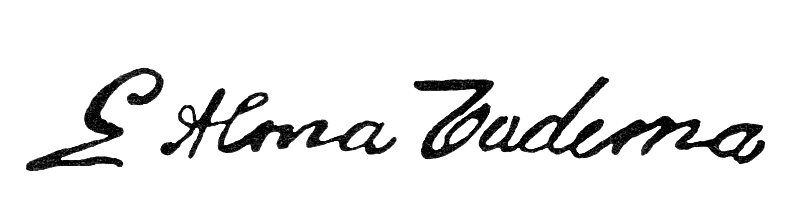
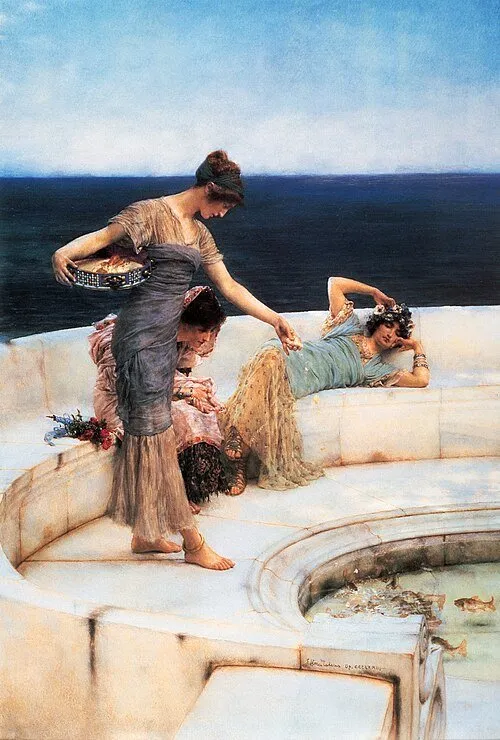
The water of the Roman pond is so clear it seems to vibrate.
In Lawrence Alma-Tadema's 1903 masterpiece, "Silver Favourites," the viewer is drawn not just to the shimmering marble or the sun-drenched terrace, but to the darting life beneath the surface. The fish are not mere decorative smears of paint; they are distinct, silvery bodies that turn and catch the light with a biological truth that feels almost startling.
But Alma-Tadema, the master of this reconstructed dream, did not spend his days crouching by a riverbank with a net. For the life of the pond, he relied on an invisible hand: James Allanson Cull.
The Laboratory of Antiquity
Step inside the studio at 17 Grove End Road, and you step into a factory of precision. By the late 1880s, Tadema had transformed his home into a "Taxonomic Laboratory." Large, leather-bound portfolios—organized with the clinical rigor of a scientist—lined the walls.
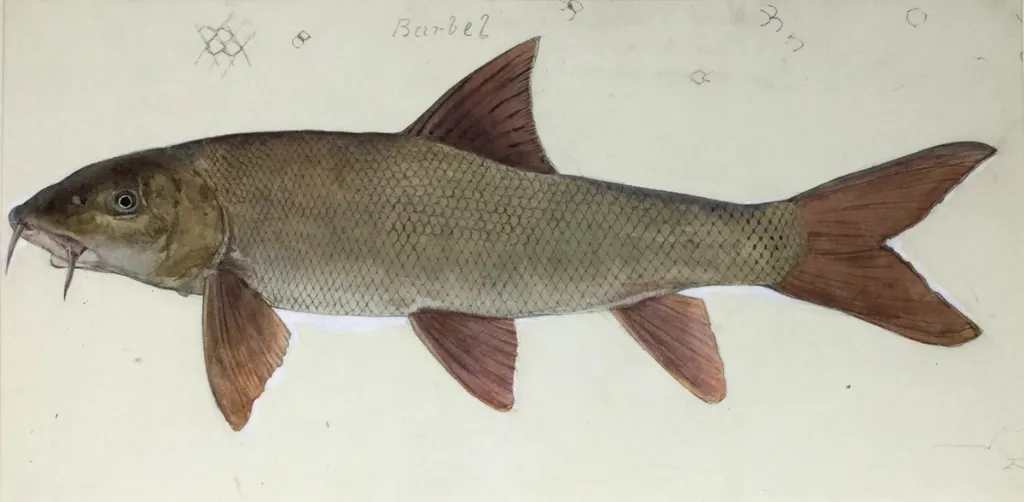
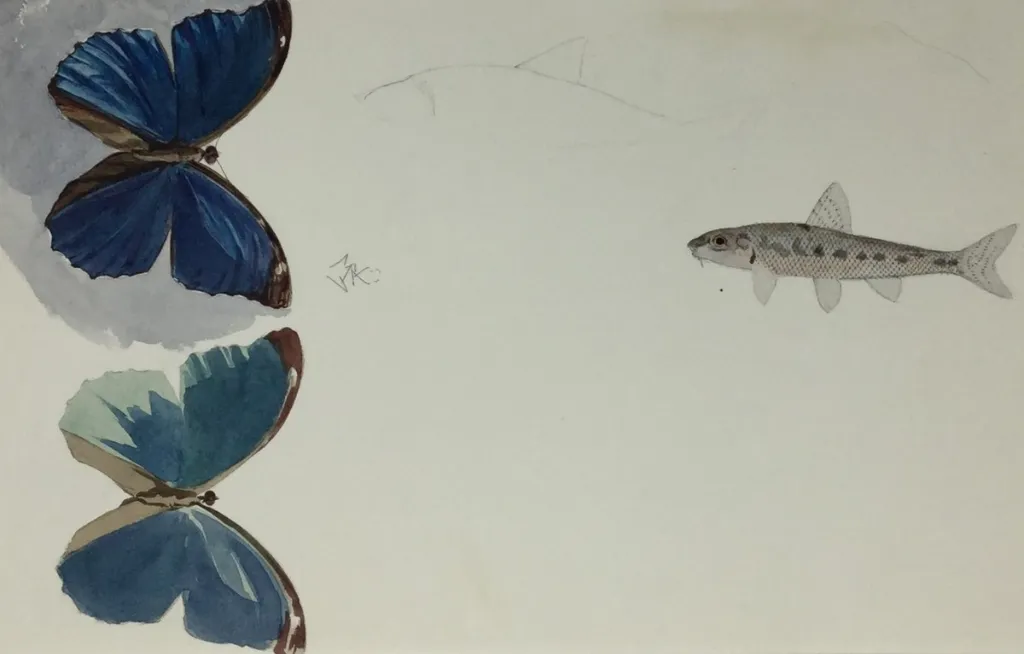
If J.J. Gaul was the surveyor of the "hard" world (the stones and the measurements), then J.A. Cull (c. 1846–1919) was the keeper of the "soft" world. He provided the biological data points: the iridescent scales of a BarbelE1099—the only one of these aquatic studies currently visible to us—and the spectral records of the TenchE1102, CarpE1098, and the red-finned, silver-bellied RoachE1100.
The "Doctor Fish" in the Roman Fountain
Among Cull's studies, the Tench is perhaps the most evocative. Though study E1102 remains a "ghost" in our modern digital view—recorded in the ledger but currently residing beyond our reach—we know it was there, a vital piece of the Tademian puzzle.
In traditional folklore, this golden-olive fish was known as the "Doctor Fish." It was believed that its thick, slimy mucus possessed healing properties—that sick or wounded fish would rub against the Tench to cure themselves, and that even the predatory pike would spare the "Doctor" out of respect.
Whether this creature ever made it onto a final canvas remains one of the archive's lingering mysteries. While we have the record of Cull’s study, we have yet to locate a confirmed Tench in the master’s known works.
However, its presence in the studio portfolios suggests it was at least considered for the classical stage. In the high-Victorian imagination, placing such a creature in a Roman piscina would have been a subtle layering of sentiment—suggesting to a learned viewer that the garden was not just beautiful, but balanced and wholesome. Even if it remained in the ledger, it speaks to the depth of research Tadema was willing to stockpile for the sake of a more "truthful" antiquity.
The Physics of the Pool
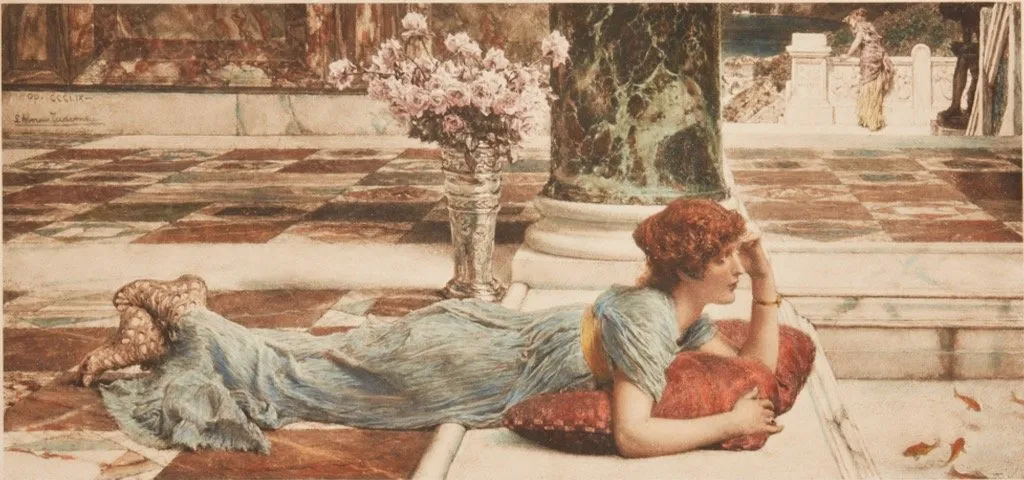
But the true genius of the Cull-Tadema collaboration lay in the intersection of biology and physics. When you look down into a Roman pond, the water acts as a lens. Light bends as it passes from air to water, a phenomenon known as the index of refraction.
Tadema understood that for a fish at a real depth $d$ to look "right," it must be painted at an apparent depth $d'$:
$$d' = \frac{d}{1.33}$$
By utilizing these fixed morphological records—such as the currently unseen watercolor of the CarpE1098—Tadema could bypass the struggle of observing live, darting fish. He could focus entirely on the technical challenge of the water’s surface, calculating the light while referencing Cull's perfect specimens. It was a "Hyper-Reality" where the naturalist provided the truth, and the painter provided the magic.
"Where is My Share?": The Independent Artist
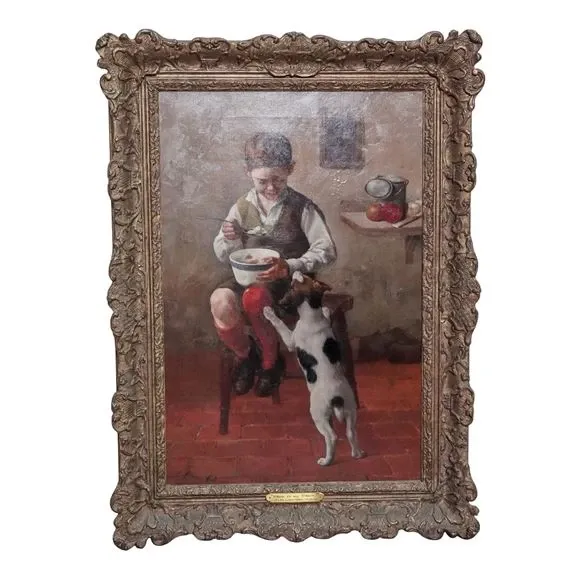
It would be a mistake to see Cull merely as an assistant. He was a successful independent painter whose work reached the Royal Academy and the major galleries of London. In the contemporary market, his pieces like "Where is My Share?" (1887) are recognized as quintessential examples of Victorian genre painting—anecdotal, sentimental, and technically rigorous.
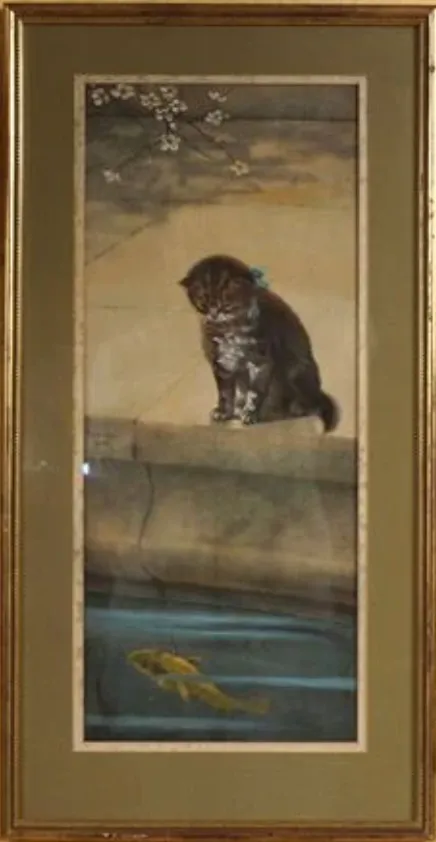
Unlike the silent, sun-baked world of Tadema, Cull's independent work was often anecdotal. His titles alone suggest a man who understood the "Small History" of domestic life: "Portrait of a cat looking at a goldfish" and "Portrait of a pup looking at a butterfly."
Yet, looking at the 1902 finished watercolour of the cat and the goldfish, one sees the bridge between the two worlds. The cat’s intense, unblinking focus is matched by the anatomical correctness of the goldfish below the water’s surface. It was this very obsession—the way a predator eyes its prey, or the specific flick of a tail—that made him so valuable to Tadema. He wasn't just drawing fish; he was drawing the curiosity of the living world.
The Legacy of the "Alma" Name
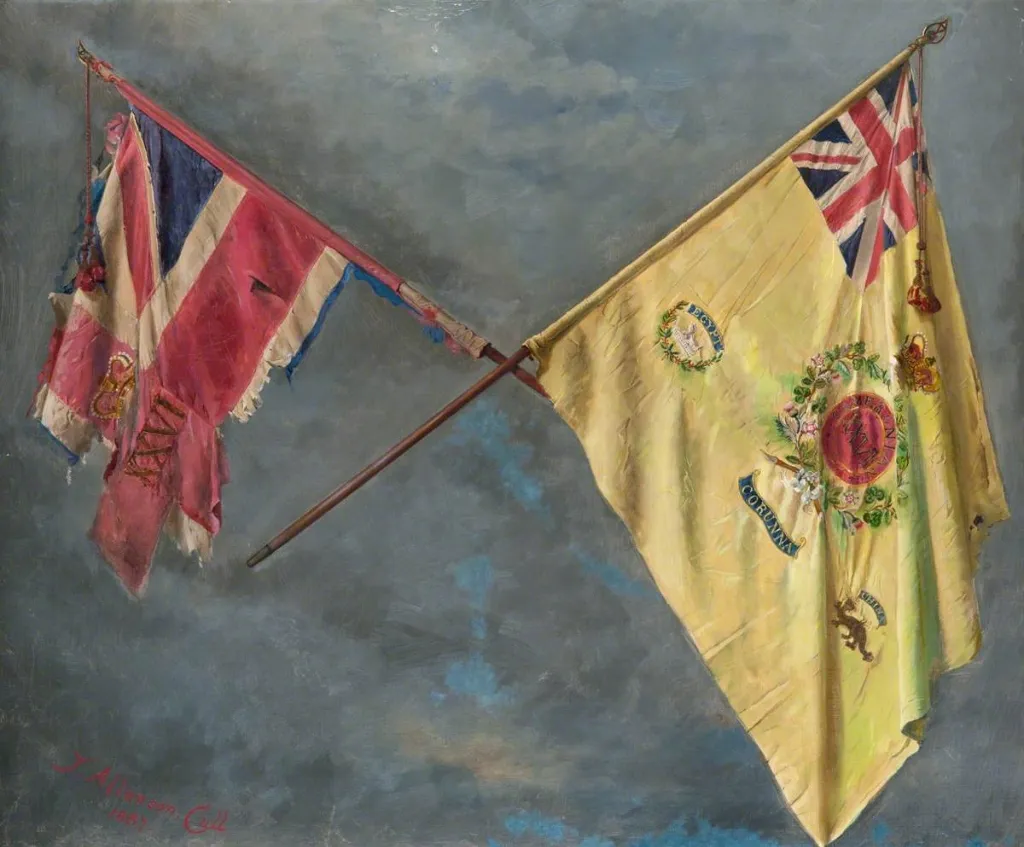
The bond between the master and the naturalist was deeply personal. Cull named his son Alma Claude Burlton Cull (1880–1931) in honor of the painter. The boy would go on to become one of the most celebrated marine artists of his generation, serving the Royal Navy not with a sword, but with a brush.
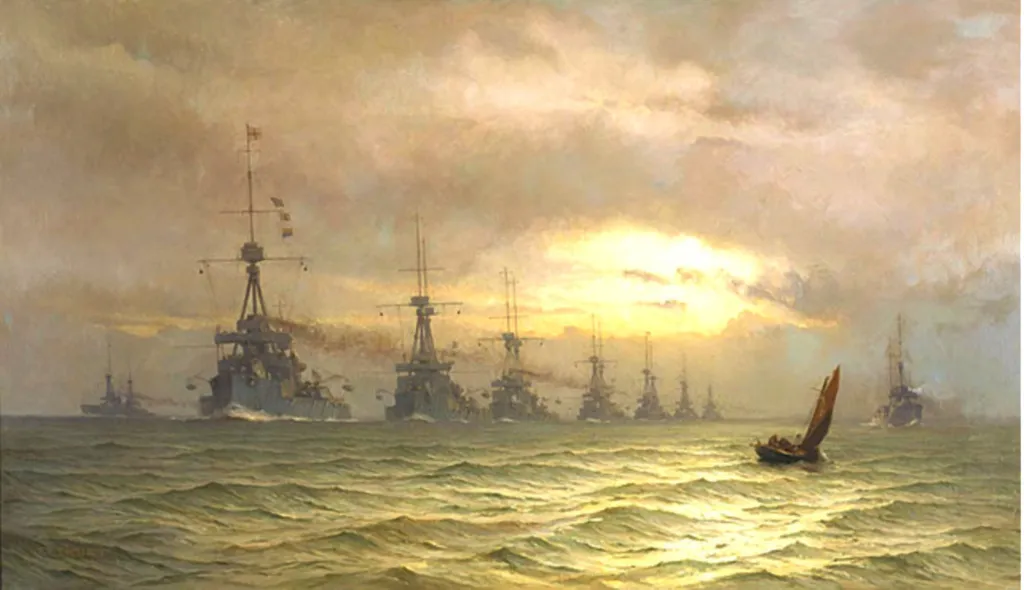
In March 1906, after a lifetime of the elder Cull’s service, Tadema wrote to the young "Alma" Cull: "I shall be so glad to see your work." It was more than a professional courtesy; it was an acknowledgment that the "Invisible Hand" that had contributed so much to his Roman dream was finally being seen in its own right.
The Echo
We often worship the name on the frame, but we forget the hand that mapped the iridescent scales of a fish while the London fog pressed against the studio windows.
Cull provided the life so that Tadema could provide the light. He loved the small, shimmering biological truths enough to vanish into the portfolios of a giant.
Next time a silver fish catches your eye in a painting of ancient Rome, look through the water. Remember the naturalist who sat with the specimen, tracing the mathematical grace of its fins so that a vanished world might finally learn how to breathe.
The Archival Ledger
The research cited in this article is held within the Alma-Tadema Collection at the Cadbury Research Library, University of Birmingham. Technical references as follows:
- E1099: Study of Barbel (Portfolio 21).
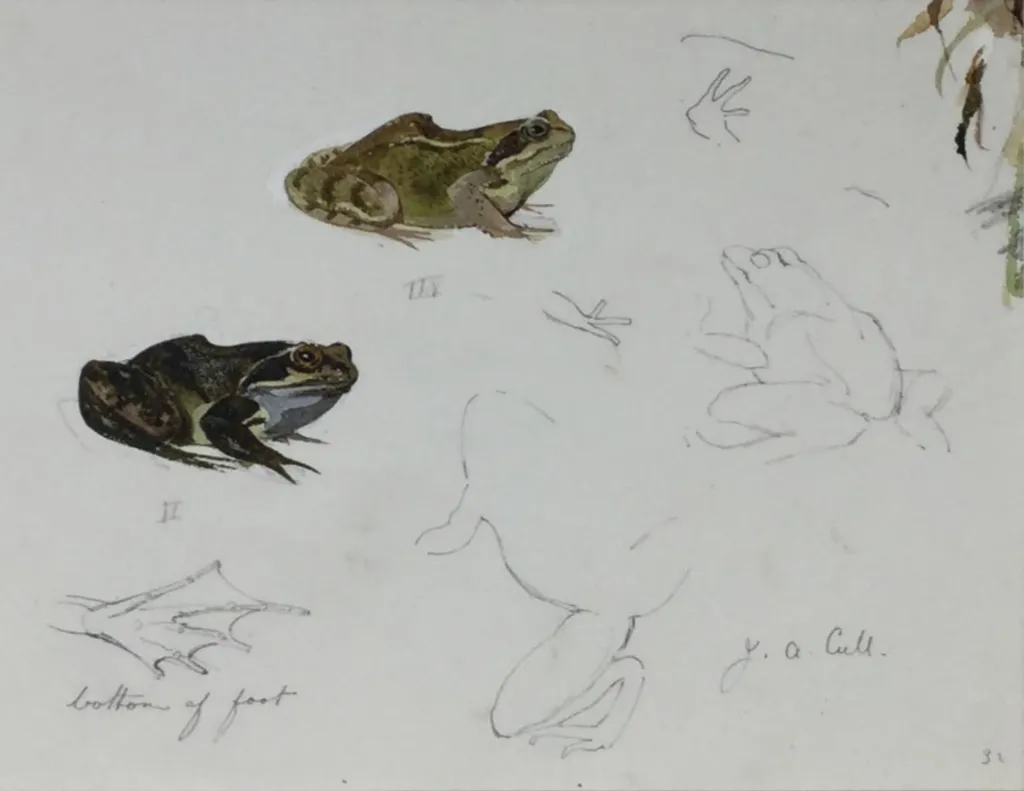
- E1005: Studies of Toads (Portfolio 6).
- E1101: Study of Butterflies and Fish (Portfolio 21).
- E1098: Study of Carp (Portfolio 21).
- E1100: Study of Roach (Portfolio 21).
- E1102: Study of Tench (Portfolio 21).
- XATLAdd/218: Letter from Alma-Tadema to Alma Claude Burlton Cull (March 1906).
Leave a Visiting Card
Consulting the visiting cards...