If you have ever stood before a 19th-century print and found yourself squinting at the fine print in the margins—muttering terms like Chine collé, Remarque, or India Proof—you are not alone. To the uninitiated, the world of Victorian printmaking feels like a secret society with its own impenetrable dialect.
But for Sir Lawrence Alma-Tadema, this jargon was the language of his empire.
In an era before digital files, his fame was carried across the globe on sheets of specialized paper and copper plates. To understand these terms is to understand how art was "translated" for the world. Here is your field guide to the lexicon of the needle.
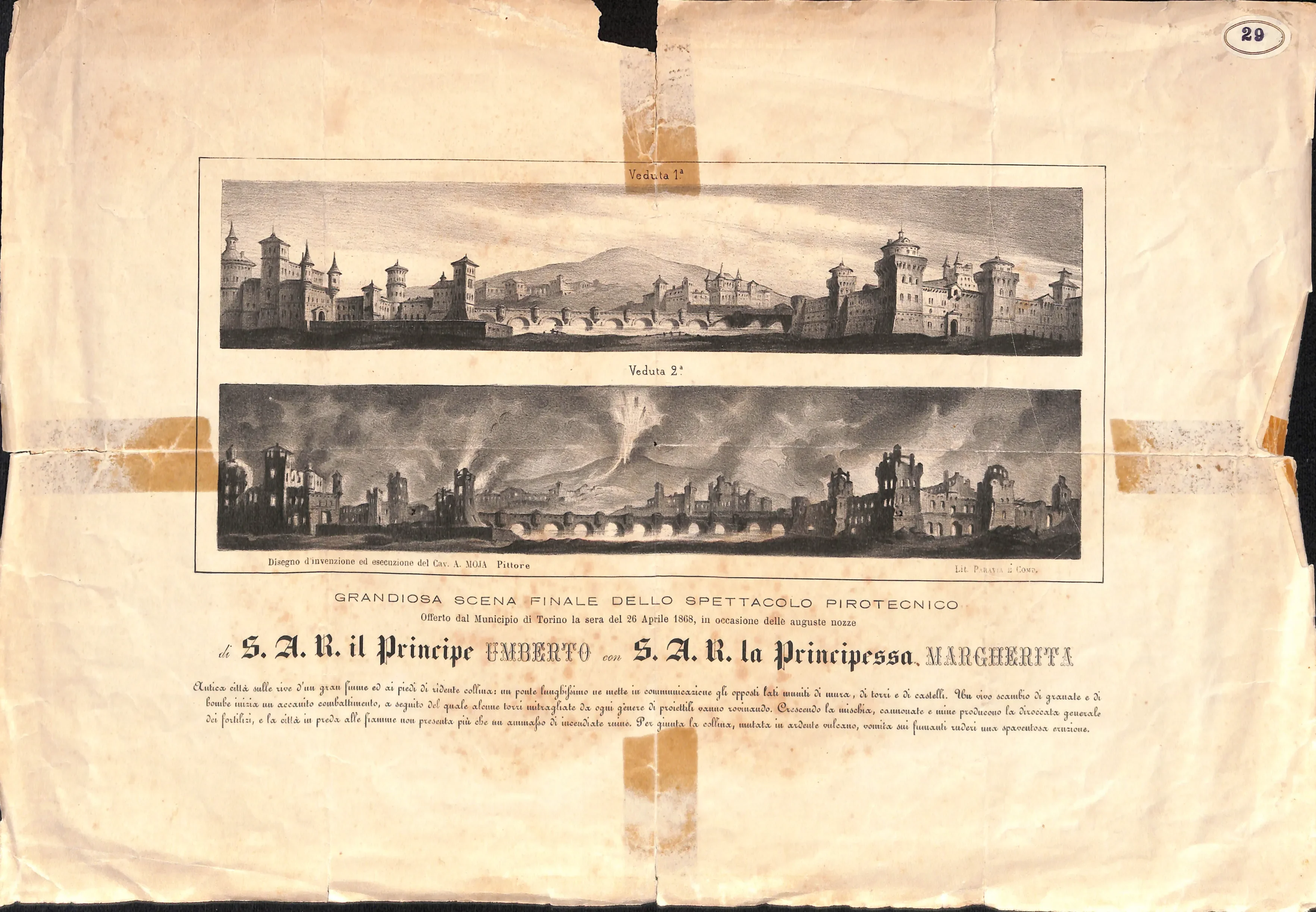
A steel engraving from 1868. Note the incredible fineness of line and detail that steel (or steel-faced copper) allowed compared to softer copper plates.
1. The Substrate: It’s All About the Paper
The first thing a collector looks at isn't the ink; it's the paper. In the Victorian era, paper was a status symbol.
India Paper (The "Chinese" Secret)
You will often see the term "India Proof" on high-end prints. Curiously, this paper had almost nothing to do with India. It was an exceptionally thin, absorbent tissue imported from China. It was called "India Paper" simply because the British East India Company was the primary importer.
- Why it matters: Because the paper is so soft and thin, it can be pressed deep into the microscopic lines of an etched plate, capturing details that standard paper would miss. It gives the shadows a velvety, "sooty" depth.
Chine Collé (The "Ghostly" Border)
Because India paper is as delicate as a butterfly wing, it cannot survive on its own. Chine collé (French for "China glued") is the process of bonding that thin India tissue onto a much thicker, heavier backing sheet (usually Whatman Paper).
- How to spot it: Look for a subtle, recessed "ghost line" around the image. This is the physical indentation where the thin tissue ends and the heavy card begins. It is the hallmark of a premium, high-pressure printing process.
2. The Metal: How the Image is "Born"
The "Original" isn't a piece of paper; it’s a slab of metal—usually copper or steel.
Etching vs. Engraving
These terms are often used interchangeably, but they are cousins, not twins.
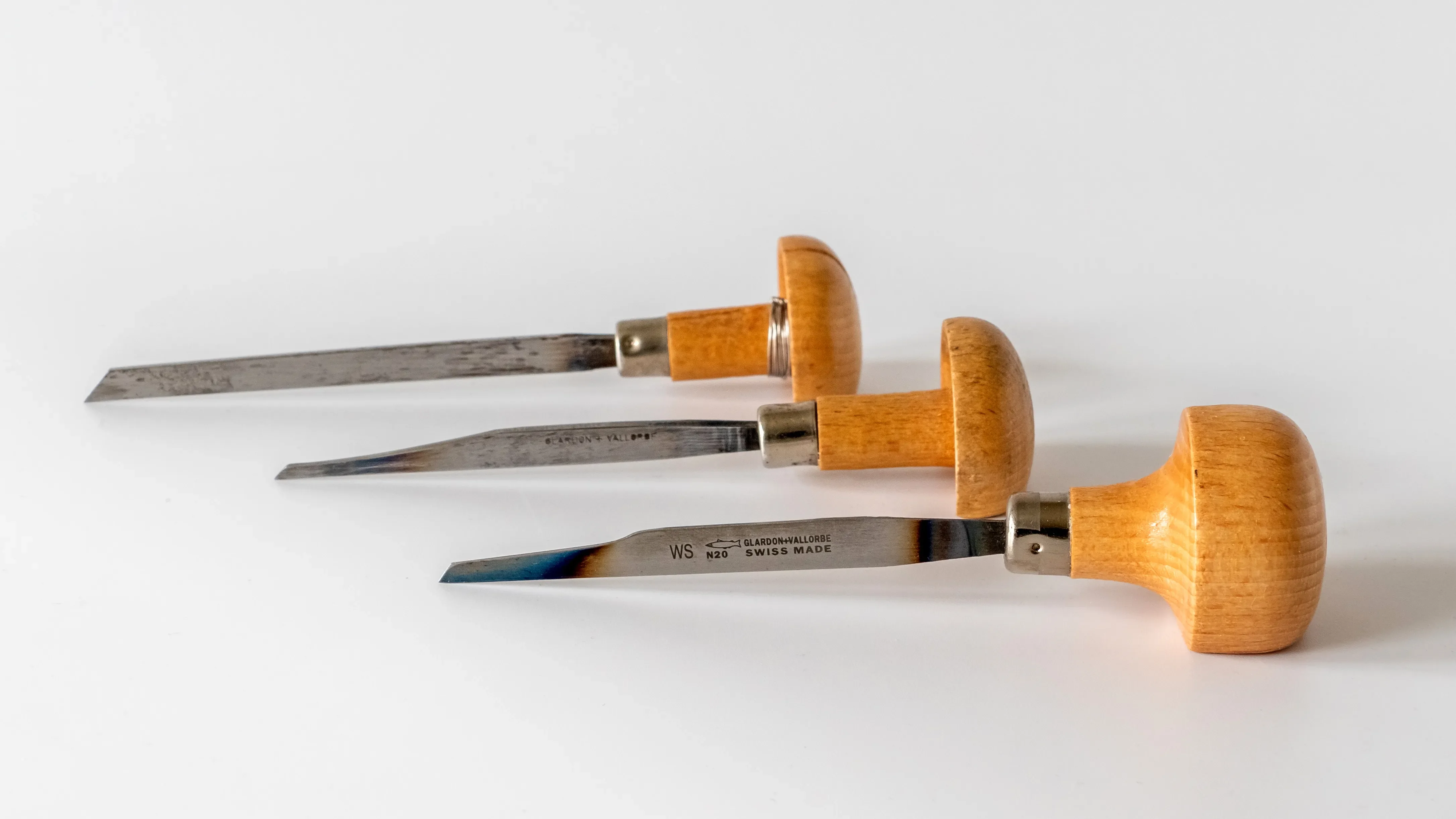
The tools of the trade: Sharp-tipped steel burins used by engravers to cut clean lines directly into the metal plate.
Steel-Facing (The Suit of Armor)
A copper plate is soft. After a few hundred prints, the pressure of the press begins to flatten the lines, and the image becomes blurry. To fix this, Victorians invented Steel-facing. They used electricity to deposit a microscopically thin layer of hard iron (steel) over the copper.
- The Result: It allowed publishers to print 5,000 perfect "Tadema" copies instead of just 500. It was the Victorian equivalent of mass-market "scalability."
- The Master: The undisputed king of this medium was Auguste Blanchard, the French engraver who became Alma-Tadema's "blockbuster" partner. While others etched, Blanchard cut with steel precision.
3. The Wood: Art for the Masses
While etchings were the "Fine Art" format for the wealthy, Wood Engraving was the mass media of the Victorian public.
Relief vs. Intaglio
Etchings and steel engravings are Intaglio processes (the ink sits inside the grooves). Wood engraving is a Relief process (the ink sits on top of the raised surface, like a rubber stamp).
- The Superpower: Because it was relief, a wood block could be locked into the same printing press frame as standard metal type. This meant images could be printed simultaneously with news text in magazines like The Illustrated London News.
The End-Grain Master
This wasn't rough woodcutting. Artists like W. Biscombe Gardner—who famously engraved Alma-Tadema's The Potteries—worked on the super-hard end-grain of boxwood. They cut with such microscopic precision that they could mimic the wash of a watercolor or the texture of oil paint.
- The Legacy: This was the "pixel" of the 19th century. It allowed Alma-Tadema's images to travel to hundreds of thousands of middle-class homes, far beyond the exclusive galleries of Bond Street.
4. The Camera: The Death of the Code
By the 1890s, a new technology arrived that would eventually kill the trade of the engraver: Photogravure.
The Process
Photogravure (or Heliogravure) was a hybrid. It used a camera to photograph the painting, but then used that negative to chemically etch a copper plate.
- The Difference: An engraving is a translation—it relies on the human hand of the engraver to interpret colors as lines. A photogravure is a facsimile—it relies on the unbiased eye of the lens.
- The Look: Photogravures have a soft, continuous tone, almost like a sepia photograph. They lack the sharp, "banknote" crispness of a steel engraving.
Berlin Photogravure
The Berlin Photographic Company became the gold standard for this. They specialized in high-end, large-format photogravures of Alma-Tadema’s later works. If you see a print that looks eerily like a photograph but has a plate mark, it is likely a Berlin photogravure. It was the beginning of the modern era of reproduction.
5. The Collector’s Hierarchy: What Makes it Rare?
Not all prints from the same plate are equal. The "State" of a print tells you where it sits in the hierarchy of the press.
The Remarque Proof (The VIP Tier)
A Remarque is a tiny, often whimsical sketch etched into the far margin of the plate—entirely separate from the main picture. It might be a tiny Roman coin, a profile of the artist, or a stray flower.
- The Trick: After a small number of these were printed, the artist would polish (burnish) the tiny sketch off the plate. This created an artificial "limited edition" within the edition. A "Remarque Proof" is almost always the most valuable version of any print.
The Artist’s Proof (A/P)
Traditionally, these were the first few copies pulled from the press for the artist’s own personal files. They represent the plate at its absolute sharpest, before the metal has felt the weight of a thousand runs.
The "State" (I, II, III)
Every time an artist makes a change to the metal plate and pulls a new print, it is a new "State."
- First State prints are often "before letters"—meaning the title and the publisher’s address haven't been engraved yet. Collectors obsess over these because they represent the pure artistic vision before the commercial labels were added.
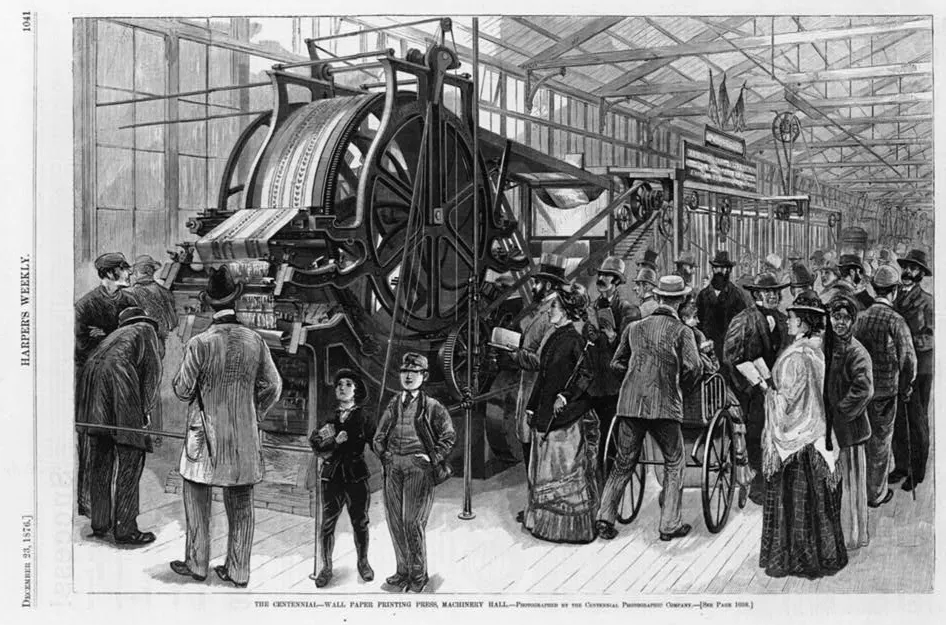
The industrial scale of Victorian art: A massive cylinder printing press from 1876, capable of meeting the skyrocketing demand for art prints.
6. The Marks of Authenticity
The Plate Mark
This is the physical "trench" or indentation left by the edge of the metal plate. If you run your finger over the margin of a genuine Victorian etching, you should feel a distinct drop-off. If the paper is perfectly flat, you are likely looking at a modern photographic reproduction.
The PSA Blind Stamp
If you see a colorless, embossed seal in the lower-left corner, that is the mark of the Printsellers Association. Founded in 1847 to prevent fraud, this was the "SEC" of the art world. It guaranteed the buyer that the edition was strictly limited and the "Proof" status was legitimate.
The Cancellation Mark
When the publisher decided the edition was finished, they would have the artist "cancel" the plate—usually by scratching a massive, ugly "X" across the copper. This "scar" ensured that no more perfect prints could ever be made, protecting the value of the copies already in the world.
A Quick Cheat-Sheet for Collectors:
- Check the Shadows: If they look like charcoal or velvet, look for the Chine collé border. You’ve likely found an India Proof.
- Check the Margin: If there is a tiny, stray sketch of a Roman helmet? You’ve found a Remarque.
- Check the Corner: A PSA blind stamp is a "handshake" from 1880, guaranteeing your print's pedigree.
The next time you encounter an Alma-Tadema print, don't just look at the Roman girls or the marble terraces. Look at the paper. Look at the "states." Listen to the lexicon of the needle—it is telling you the story of how a single copper plate conquered the Victorian world.
Leave a Visiting Card
Consulting the visiting cards...