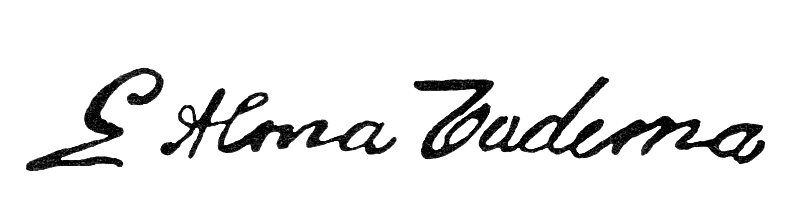
If you look closely at a painting by the Lawrence Alma Tadema artist, specifically near the signature, you will see something unusual directly carved into the paint.
It is a Roman numeral. Opus CCXVII. Opus CCCXX. Opus LX.
This wasn't a pretentious affectation. It was a high-tech security system for the 19th century. And it tells us everything we need to know about the orderly, obsessive mind of the man who painted it.
The Counterfeit Problem
In the late 19th century, the art market was the Wild West.
Copyright laws were weak. Forgeries were rampant. A popular artist could find his style copied by dozens of "hacks" in back-alley studios. Unscrupulous dealers would take a mediocre painting of a Roman girl, slap a fake "Alma-Tadema" signature on it, and sell it to an unsuspecting American millionaire for a fortune.
This drove Lawrence crazy. He was a man of integrity. He hated the idea of someone paying good money for bad art in his name.
The Ledger of Truth
So, he created the Opus system.
From his very first mature work (a portrait of his sister from 1851, labeled Opus I), he assigned a sequential number to every finished oil painting.
He kept a strict ledger in his studio. It recorded the Opus number, the title, the date, the buyer, and often a sketch of the composition.
If a painting appeared on the market claiming to be by the Lawrence Alma Tadema artist, but it lacked the number—or the number didn't match the description in his ledger—he knew instantly it was a fake.
He essentially created a "blockchain" for his art, long before computers existed.
The Mind of an Accountant
This system reveals a lot about the man's personality.
Most artists are stereotyped as chaotic, messy geniuses who paint only when the muse strikes. Lawrence was the son of a notary. He had the soul of an accountant wrapped in the skills of a painter.
He treated his art with professional seriousness. Being a great Lawrence Alma Tadema artist meant being organized. It meant respecting the output. It meant verifying the inventory.
Digging into the Numbers
The Opus numbers allow us to trace his life with incredible precision.
- Opus I (1851): The Portrait of his sister. The start of the journey.
- Opus LX (1868): Phidias Showing the Frieze of the Parthenon. His breakout hit.
- Opus CCLXXXVIII (1888): The Roses of Heliogabalus. The height of his fame.
The numbers don't lie. They show the periods where he worked fast (the early years) and the periods where he slowed down to perfect his technique (the later years).
The Final Number
There is something poignant about the end of the list.
He painted over 400 numbered works in his life. The last one, Opus CCCCVIII (408), titled "Preparation in the Coliseum," was found unfinished on his easel when he died in 1912.
The brush was still wet. The paint was still fresh. But the number had already been assigned.
It was the final entry in the ledger of a man who believed that beauty, like everything else, should be accounted for. In a chaotic world, the Lawrence Alma Tadema artist brought order, one Roman numeral at a time.
Leave a Visiting Card
Consulting the visiting cards...