On a cold October day in 1868, a group of Prussian soldiers were digging on Galgenberg Hill, near the German town of Hildesheim. They were not looking for history; they were building a rifle range.
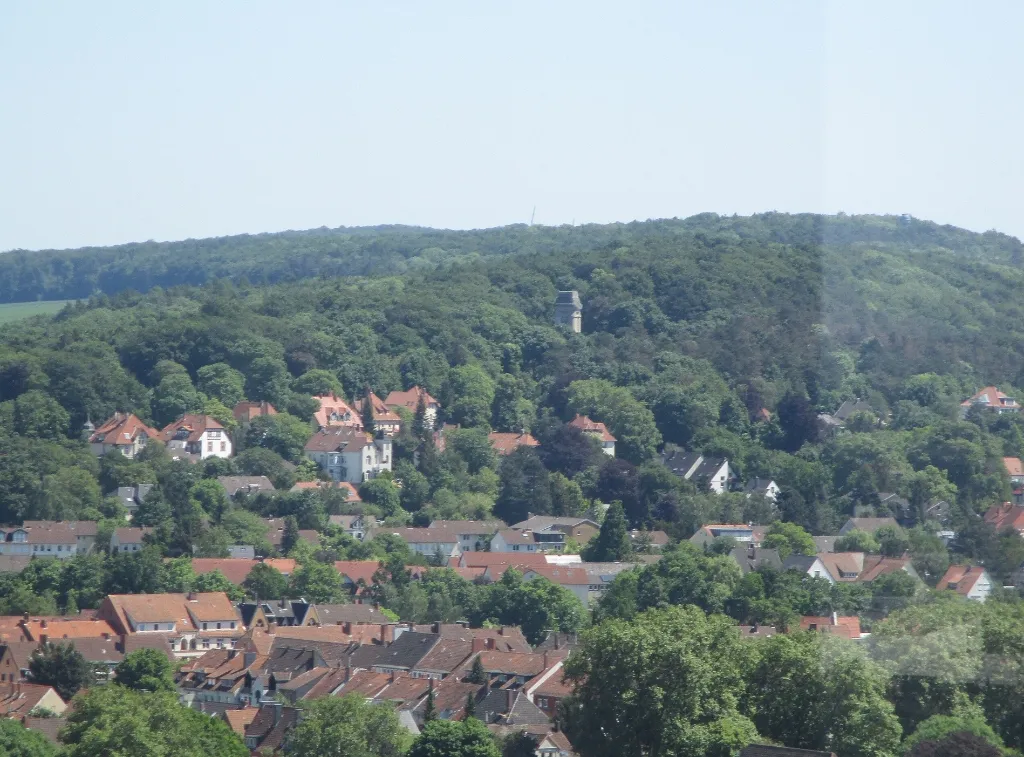
But when their shovels hit something hard in the mud, it didn't sound like rock. It sounded like a dull, metallic thud.
They scraped away the earth and found a lump of what looked like scrap metal. They threw it into a wheelbarrow. They dug again. Another lump. And another. As the rain washed the dirt away, the "scrap" began to shine. It wasn't iron. It was silver.
In that muddy trench, the soldiers had stumbled upon the "Hildesheim Treasure"—seventy pieces of solid Roman silver, the largest hoard ever found outside the borders of the Empire. It was a dinner service fit for a Caesar, buried in the dark earth for eighteen hundred years.
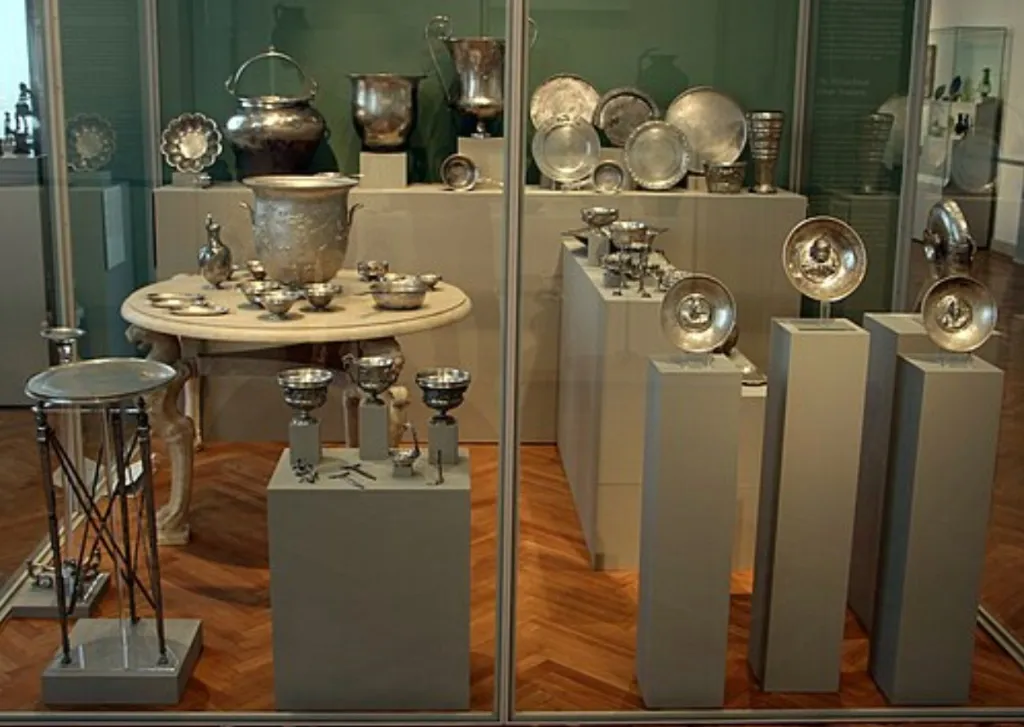
The newspapers went wild. They spun a story that this was the lost camp service of Publius Quinctilius Varus, the tragic Roman general who lost three entire legions in the Teutoburg Forest. It was a romantic, doomed provenance that captivated the Victorian imagination.
But the most important part of this story isn't the discovery. It is what happened next.
Because in Victorian London, a Dutch painter named Sir Lawrence Alma-Tadema wanted that silver. He couldn't buy the originals—they were locked away in a museum in Berlin. So he did the next best thing.
He bought the clones.
I. The Science of Ghosts
We tend to think of the 19th century as a time of steam engines and coal smoke, distinct from the ancient world. But the Victorians were obsessed with collapsing time. They invented photography to freeze the moment, and they invented electrotyping to freeze the object.
Electrotyping was the "3D printing" of 1860. It was a marvel of chemical sorcery that allowed a factory in Birmingham to grow a perfect molecule-for-molecule replica of a Roman artifact.
The process was alchemical. A craftsman would take a mold of the original silver cup using gutta-percha (a rubbery tree sap). He would dust the inside of this mold with graphite—shiny, black pencil lead—to make it conduct electricity. Then, he would submerge it in a tank of copper sulfate and apply an electric current.
Slowly, atom by atom, copper would migrate from a bar and settle onto the graphite skin. It would grow a perfect copper shell, capturing every scratch, every dent, every microscopic tool-mark of the Roman original. Once the shell was thick enough, it was removed and plated with silver.
The result was not a "fake" in the way we think of cheap plastic replicas today. It was a scientific facsimile. It weighed the same. It felt cold to the touch. It rang when you flicked it. It was a ghost of the original object, summoned by electricity.
And for an artist like Alma-Tadema, who was obsessed with the absolute truth of material reality, these ghosts were irresistible.
II. The £16 Emperor
In 1874, the South Kensington Museum (now the V&A) bought a massive electrotype copy of the finest piece from the hoard—the Hildesheim Krater—for £16.
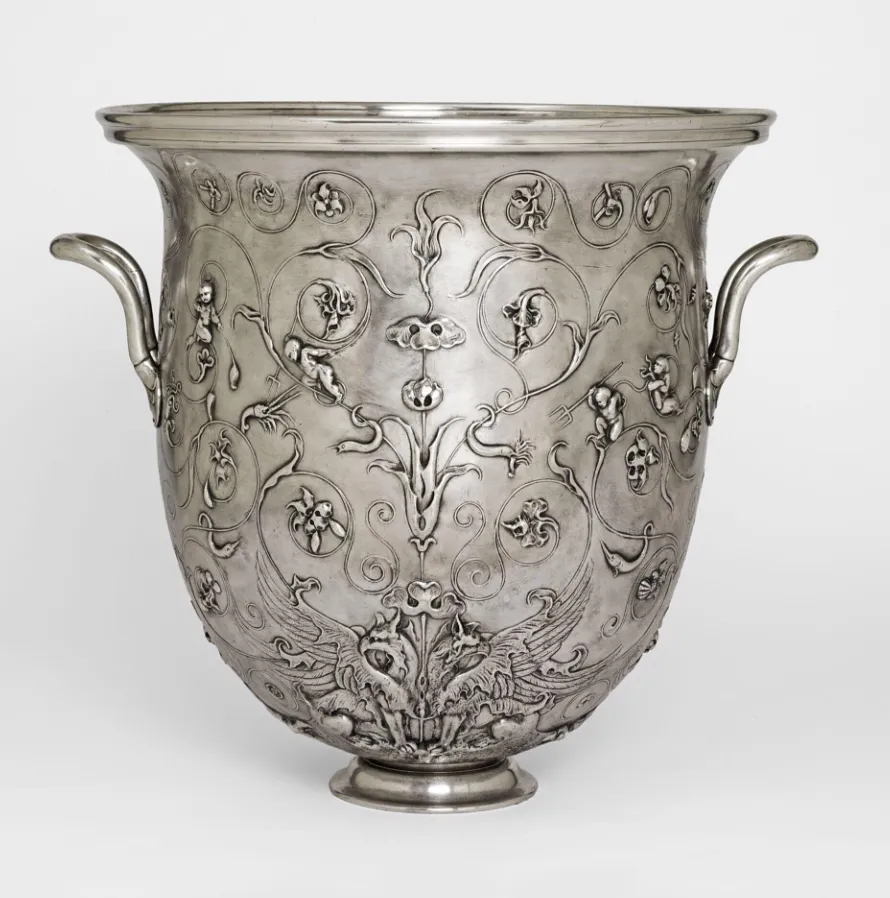
This price point changed everything. A real Roman krater was priceless; a "perfect" copy was the price of a good suit. Suddenly, imperial luxury was democratized. You didn't need to be an Emperor to own the dinner service of a General; you just needed to go to Elkington & Co. in Birmingham.
Alma-Tadema filled his studio with these silver phantoms. He didn't lock them in glass cases. He lived with them. He threw dinner parties where the wine was served from "Roman" jugs. He filled the "Hildesheim" bowls with fresh roses from the garden.
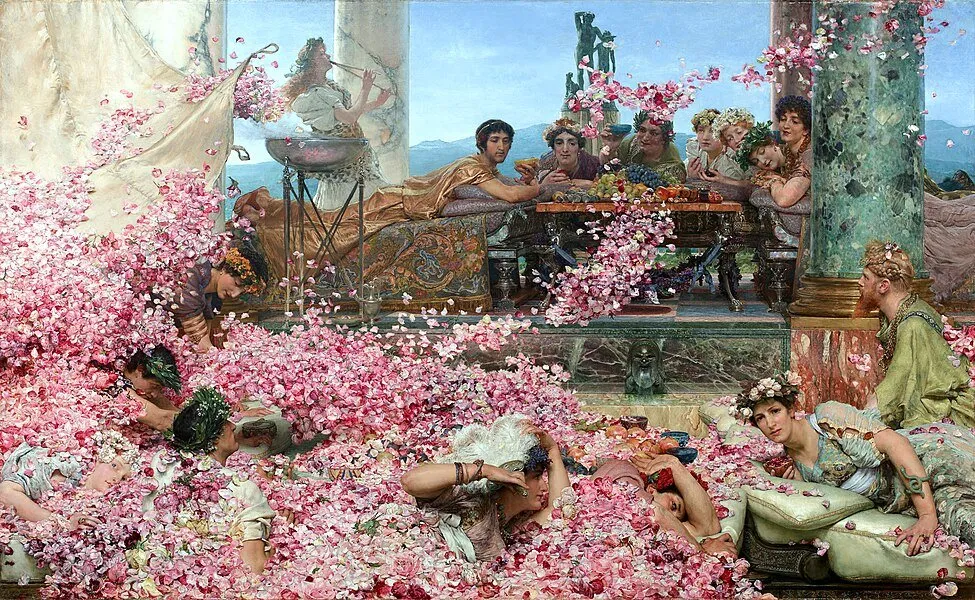
This is the secret to the uncanny realism of his paintings. When you look at The Roses of Heliogabalus, and you see the light gleaming off the silver amphorae, you are not looking at an artist's imagination. You are looking at a painted observational study of an electrotype.
He painted the way the light hit the curve of the manufacturing process. He painted the specific luster of Victorian silver-plate, which is slightly brighter and harsher than ancient solid silver. He was painting a copy of a copy of a lost reality.
III. The Copper Smell
There is a tactile intimacy to this history. We know that Alma-Tadema’s studio was a sensory palace—the smell of incense, the sound of the piano, the cool touch of marble.
But there must have been another smell, faint and metallic. The smell of copper.
If you scratch an electrotype, you reveal the red base metal beneath the silver skin. They are beautiful lies. On a hot London day, did the distinct tang of pennies mix with the scent of the hyacinths?
For the critics, this "fakeness" became a weapon. Later in his life, as Modernism began to rise, critics would attack Alma-Tadema for being "too archaeological," for painting "still lives of props" rather than souls. They mocked his obsession with accessories.
But they missed the point. For Alma-Tadema, the prop was the soul.
He believed that you could not understand the Romans unless you touched what they touched. He needed to feel the weight of the cup in his hand to understand the hand that held it. The electrotype allowed him to physically inhabit the past. It wasn't about faking history; it was about method acting.
IV. The Boy and the Shrimp
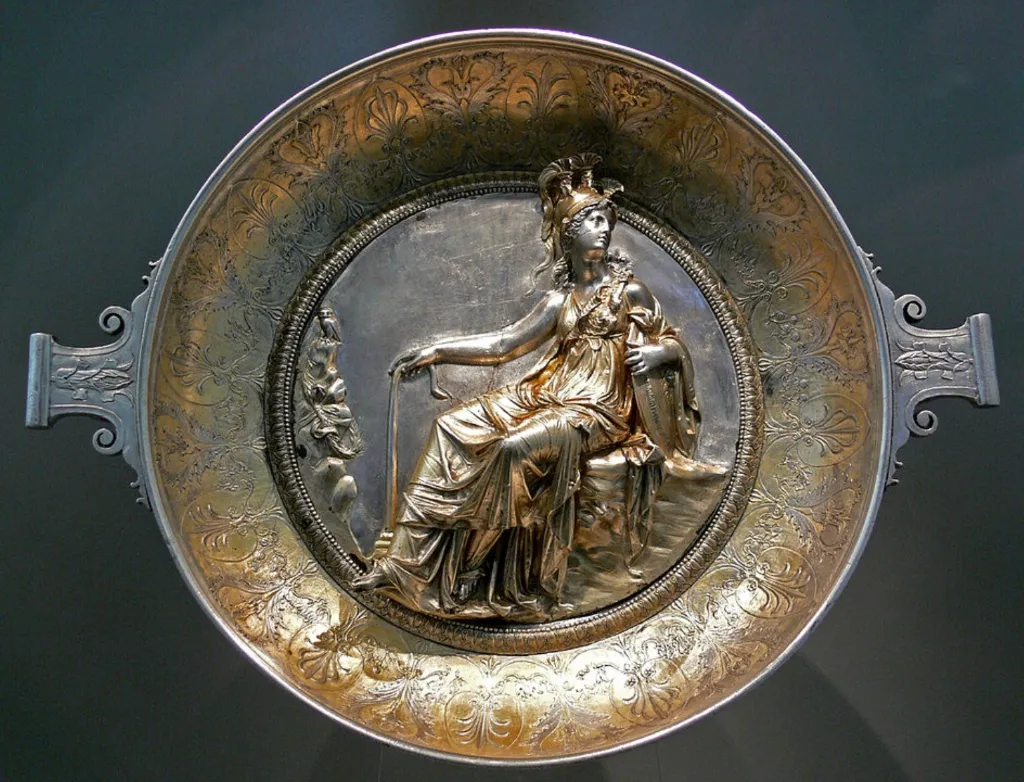
There is one detail on the V&A's electrotype of the Hildesheim Krater that feels particularly "Tadema."
The vessel is decorated with intricate relief work of griffins and foliage. But hidden among the grand mythology are tiny figures of boys attacking shrimps.
It is a whimsical, playful, almost ridiculous detail. It is exactly the kind of "humanizing" touch that Alma-Tadema loved. He spent his career searching for these moments—the jokes, the boredom, the flirtations that happen in the margins of history.
He must have smiled when he saw those shrimps. It confirmed what he always believed: that the Romans were not statues. They were people. They liked expensive silver, they liked wine, and they liked a good joke.
Today, the original Hildesheim Treasure sits in Berlin. But the electrotypes are scattered in museum basements and private camouflaged collections around the world. They are dusty now, tarnished ghosts of the Victorian obsession with the past.
But look at them again. They are monuments to a specific moment in time—a moment when science and art held hands, when a factory in Birmingham could clone a treasure from the Rhine, and when a Dutch painter used a battery-grown ghost to build an empire of dreams.
Author’s Note
This article draws on the catalogue of the Victoria and Albert Museum regarding their acquisition of Elkington electrotypes in 1874, and the research of Alistair Grant in 'Lawrence Alma-Tadema: At Home in Antiquity'.
Leave a Visiting Card
Consulting the visiting cards...