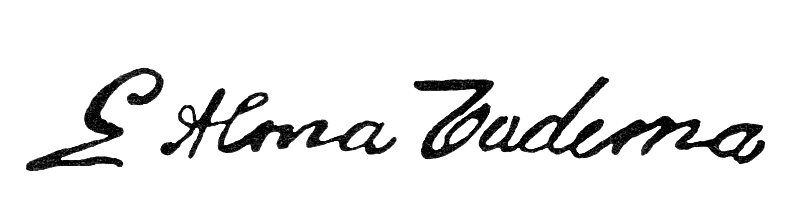
The name on the catalogue reads: Alma-Tadema, Lawrence.
It is 1870, and the Royal Academy exhibition has just opened. Visitors enter with their printed guides, scanning the alphabetized list of artists. The first name they see—before Burne-Jones, before Millais, before Whistler—is Alma-Tadema.
This is not an accident.
Lawrence Alma Tadema was born Lourens Tadema. Under that name, he would have appeared near the end of the catalogue, buried among the lesser-known painters whose work was hung in the dim corners of the gallery. But he understood something that most artists did not: in a crowded market, visibility is everything.
So he changed his name.
He claimed it was a family tradition, an homage to a godfather. Perhaps it was. But the result was undeniable. By moving from "T" to "A," he placed himself at the very beginning of every exhibition catalogue, every dealer's list, every critical review.
The unsuspecting visitor—collector, critic, dealer—would see his name first. And in the art world, being first is half the battle.
The Artist and the Tradesman
Lawrence Alma Tadema once described his own process in an interview, speaking in his characteristic broken English:
"So long I paint my picture, I work 'ard, I work slow to get 'im right... But when 'ee is finished, I am not an artist no more. I am a tradesman."
This was not false modesty. It was a statement of philosophy.
When he held a brush, he was an artist—obsessive, meticulous, chasing the perfect fall of light on marble. But when the painting was dry, he became something else entirely. He became a businessman. A brand manager. A CEO.
And he ran his empire accordingly.
Lawrence Alma Tadema's Opus Numbering System
Every legitimate Alma-Tadema painting bears a number.
Not a date. Not a title. A number.
Opus I. Opus CCXV. Opus CCCCVIII.
He assigned sequential Roman numerals to every work he deemed worthy of his name, from his first accepted painting in 1852 to his last in 1912. If a canvas did not have an opus number, it was not an Alma-Tadema. It was a sketch, a study, or—more likely—a forgery.
This was not vanity. It was quality control.
The opus system created a closed, verifiable ecosystem for his brand. Collectors could authenticate a work simply by checking the number against his catalogue. Dealers could not pass off inferior works as finished paintings. And Lawrence Alma Tadema himself could maintain absolute control over what carried his name.
It was an early form of blockchain verification, 150 years before the technology existed.
But it was also more than that. The opus numbers transformed his paintings from individual artworks into a product line. Each number suggested continuity, progression, scarcity. Owning Opus CCLII was not just owning a painting—it was owning entry 252 in a limited, numbered series.
He was not just selling art. He was selling collectibles.
The Five-Tier Pricing Strategy
If you walked into the London gallery of L.H. Lefèvre in the 1880s, you would find an advertisement listing Alma-Tadema's prints for sale.
But you would not find a single price. You would find five.
The same image—say, The Roses of Heliogabalus—was available in five different versions, each at a different price point:
- Artist's Proofs (8 pounds, 8 shillings) – Signed by both Alma-Tadema and the engraver. Printed on the finest paper. Limited to 100-500 copies.
- Proofs Before Letters (6 pounds, 6 shillings) – High-quality prints without the title inscription. For serious collectors.
- India Proofs (4 pounds, 4 shillings) – Printed on imported Indian paper, softer and more luxurious than standard stock.
- Indian Prints (3 pounds, 3 shillings) – Standard prints on Indian paper, unsigned.
- Plain Prints (2 pounds, 2 shillings) – The cheapest version. No signature. No luxury paper. Just the image.
This was not a pricing structure. It was a class system.
The Artist's Proof was for the wealthy collector who wanted exclusivity. The Plain Print was for the factory worker who earned £81 a year and could not afford an original painting, but could afford the image.
Lawrence Alma Tadema understood that art, like any product, could be segmented. The millionaire and the laborer both wanted the same thing—a piece of the Roman dream. But they could not pay the same price. So he gave them the same image, at five different levels of quality, five different levels of prestige.
The painting was singular. But the image was scalable.
Democratization or Exploitation?
There are two ways to interpret this strategy.
The generous view: Lawrence Alma Tadema democratized art. He made his work accessible to people who could never afford an original canvas. A clerk in Manchester, a schoolteacher in Sydney, a shopkeeper in New York—they could all own an Alma-Tadema for the price of a week's wages.
The cynical view: Lawrence Alma Tadema exploited the masses. He sold them a cheaper version of the same product, extracting profit from every economic class. The factory worker paid 2 pounds for a print that cost pennies to produce. The millionaire paid 8 pounds for the same image, printed on fancier paper.
Both views are correct.
Lawrence Alma Tadema was not a philanthropist. He was a capitalist. But capitalism, at its best, creates access. And access, even when motivated by profit, can feel like generosity.
The factory worker did not care whether Alma-Tadema's motives were pure. He cared that he could hang The Roses of Heliogabalus in his parlor, next to the photograph of his wedding and the portrait of the Queen.
For 2 pounds, he could own beauty. And that was enough.
Lawrence Alma Tadema: The Brand Police
Lawrence Alma Tadema did not just build a brand. He defended it.
When a dealer exhibited an old sketch of his—Hush! She Sleeps from 1870—without his permission, he wrote a furious letter to the press:
"I am sorry to see that the old sketch... is exhibited publicly. Really, exhibition-makers ought to ask the artist's permission to use his name in order to attract the public to pay their shillings for his show."
The issue was not the sketch itself. The issue was that it was outdated. It did not represent his current work. And if the public saw it, they might form the wrong impression of his brand.
This was the mindset of a modern CEO, not a Victorian painter. He understood that every public appearance of his work—whether in a gallery, a catalogue, or a print shop—was a branding opportunity. And if the brand was diluted, the value would fall.
So he policed it ruthlessly.
The Signature as Seal of Approval
The Artist's Proofs were not just expensive because of the paper. They were expensive because they carried two signatures: the engraver's and Alma-Tadema's.
His signature was not a formality. It was a seal of approval.
By signing a print, he was certifying that it met his standards. That the lighting was correct. That the shadows matched the original. That the engraver had not taken liberties with the composition.
If he did not sign it, it did not ship.
This is why he could write such harsh letters to engravers like Löwenstam. The print was not the engraver's work. It was Lawrence Alma Tadema's work, reproduced by the engraver. And if the reproduction was flawed, it damaged his brand.
The signature was the final checkpoint in the quality control process. And Alma-Tadema never signed anything he did not approve.
Lawrence Alma Tadema and Modern Luxury Brands
Lawrence Alma Tadema's five-tier pricing strategy is not unique to the 19th century. It is the foundation of the modern luxury goods industry.
Consider a fashion brand like Louis Vuitton. You can buy:
- A bespoke handbag (£10,000)
- A limited-edition handbag (£5,000)
- A standard handbag (£2,000)
- A wallet (£500)
- A keychain (£100)
Same brand. Same logo. Five price points.
Or consider Apple:
- iPhone Pro Max (£1,200)
- iPhone Pro (£1,000)
- iPhone Standard (£800)
- iPhone SE (£400)
Same technology. Same ecosystem. Four price points.
Lawrence Alma Tadema understood this in 1880. He knew that a brand could serve multiple markets without diluting its prestige—as long as the quality was tiered, and the exclusivity was maintained at the top.
The Artist's Proof was the Hermès Birkin bag. The Plain Print was the keychain.
Both carried the name. But only one carried the signature.
The Conclusion
Lawrence Alma-Tadema did not just paint. He built a brand.
He changed his name to appear first. He numbered his paintings like a product line. He sold his images at five price tiers, from millionaires to factory workers. He policed his brand with the vigilance of a modern corporation.
And in doing so, he became the first truly modern commercial artist.
The paintings were beautiful. But the business was ruthless.
And that is why, 150 years later, we still know his name.
This is Part 3 of the Empire of Marble trilogy. Return to Part 1: The Tycoon or Part 2: The Double-Dip to explore the full story of Alma-Tadema's commercial empire.
Leave a Visiting Card
Consulting the visiting cards...