
In the winter of 1851, in a small, wind-battered village in the north of the Netherlands, a fifteen-year-old boy lay in bed, waiting for the end.
His name was Lourens. His face was pale, his breath rattled in his chest, and his handkerchiefs were stained with blood. The local doctors had been clear: it was consumption (tuberculosis). In the 19th century, this was not a diagnosis; it was a sentence.
They told his mother to prepare for the funeral. They told his legal guardians—stern, practical men who managed the family estate—that there was no point in spending any more money on his education. Why pay for Latin lessons for a corpse?
But the boy didn't die. Instead, he did something that would change the course of art history.
He decided to paint his way out.
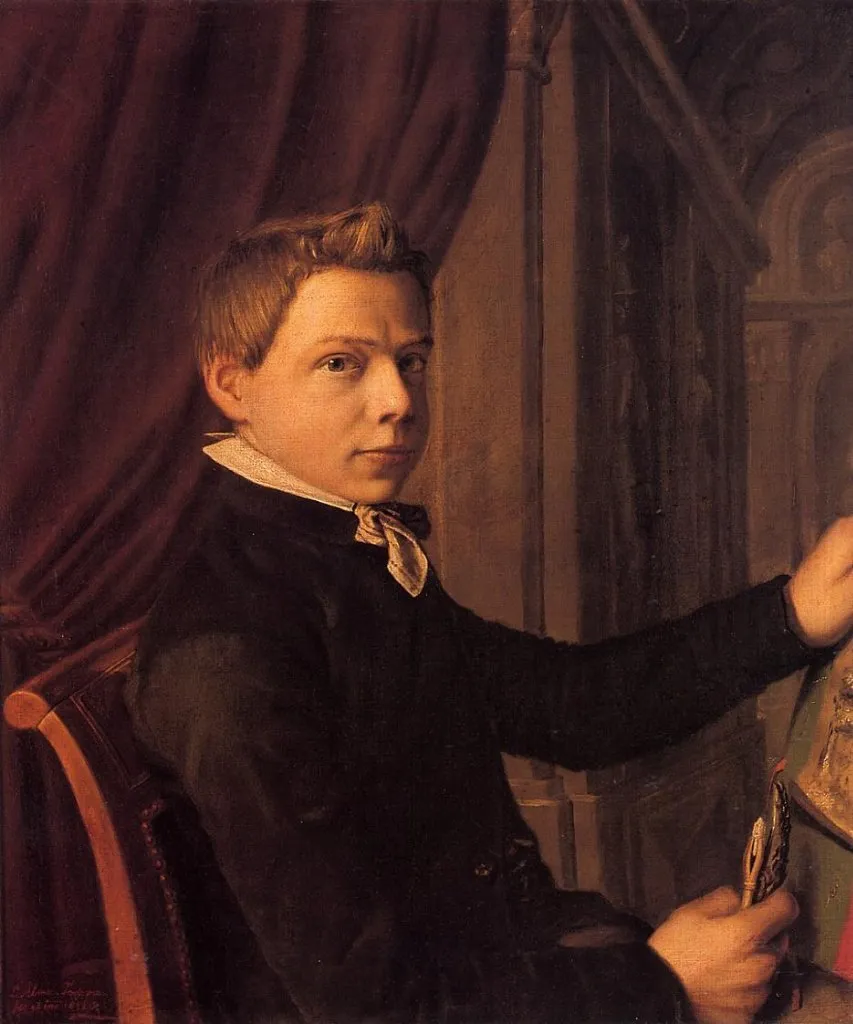
The Silence of Dronryp: Where Lawrence Alma Tadema Was Born
To understand the explosion of light and color that defines Lawrence Alma Tadema, you have to look back at the quiet gray of where he started.
He was born in Dronryp, a village in Friesland. It is a land of flat horizons and endless gray skies, where the damp green fields seem to soak into everything. It is a place where the sun is a rare, cherished visitor, and the wind is a constant companion.
His father, Pieter Tadema, was the village notary—a man of laws and ledgers, but also a man who loved music. From his father, Lawrence learned to see the world with a sense of rhythm. Later in life, people would notice that his paintings felt balanced and perfectly in place, much like a well-composed piece of music. But Pieter died when Lawrence was just four, leaving the boy in a quiet house full of memories and the lingering silence of a Dutch winter.
His mother, Hinke, raised her children with a quiet, steely resolve. She had a natural gift for painting, but in the mid-19th century, a woman was only expected to make "pretty things." She spent her hours cutting delicate, intricate figures out of paper. Watching her move the scissors, young Lourens (as he was then known) learned how a single, careful cut could capture the shape of a life.
He was a child who noticed everything. At three and a half years old, he was already correcting adults. When a teacher at school drew a block on the board to demonstrate a lesson, little Lourens spoke up: "But those lines are wrong." He possessed an innate eye for detail that no one could teach, and few could ignore.
But his guardians didn't care for his "eye." They saw only a boy who needed a steady career. He was meant for the law, following the path of the father he barely remembered. Art was a distraction for children, not a profession for a man.
Then, the world turned cold. At fifteen, the coughing began.
Then came the blood.
The 16-Hour Solution
When the diagnosis came, the pressure to become a lawyer evaporated. The guardians backed off. If the boy wanted to spend his final weeks drawing, let him draw. It wouldn't matter soon anyway.
Lawrence took this freedom and ran with it. Or rather, he lay with it.
Confined to his bed, too weak to move, he made a pact with himself. If he was going to die, he would die an artist.
He began a regimen that would have killed a healthy man. His mother, sensing his desperation and perhaps his genius, became his accomplice. She would tie a string to his big toe and run it under the door to her own room. At 5:00 AM every morning, she would pull the string to wake him up without alerting the rest of the house.
For sixteen hours a day, the dying boy drew.
He drew until his fingers cramped. He painted the view from his window. He studied manuals on perspective and anatomy. He worked with a feverish intensity, trying to cram a lifetime of learning into the few months he had left.
The Miracle of Lawrence Alma Tadema
A strange thing happens when you find your purpose: sometimes, the body decides to stick around to see it through.
As the weeks turned into months, the funeral did not happen. The coughing fits grew less frequent. The color returned to his cheeks. The doctors were baffled; they had predicted a swift decline, but the boy was getting stronger. It was as if the simple act of creating beauty was healing his body.
By the time he turned sixteen, the verdict was overturned. He was going to live.
But he was not the same boy. The "Lourens" who was meant for the law had died in that bedroom. In his place was an artist who had looked death in the face and realized that life was too short for the gray ledgers of the Netherlands.
He was given his wish: he was sent to Antwerp to study. He left behind the damp, unhealthy air of Friesland for the "extremely good" schools of the Continent. In the dryer air of the Belgian studios, his health stabilized, and his education reached a level of excellence rarely found in England at the time. It was here that Lourens began his transformation into "Lawrence," leaning into a new identity that would eventually carry him to the heights of British society.
The Hunger for Life
This brush with death reveals the secret behind his future art—and his eventual love for London.
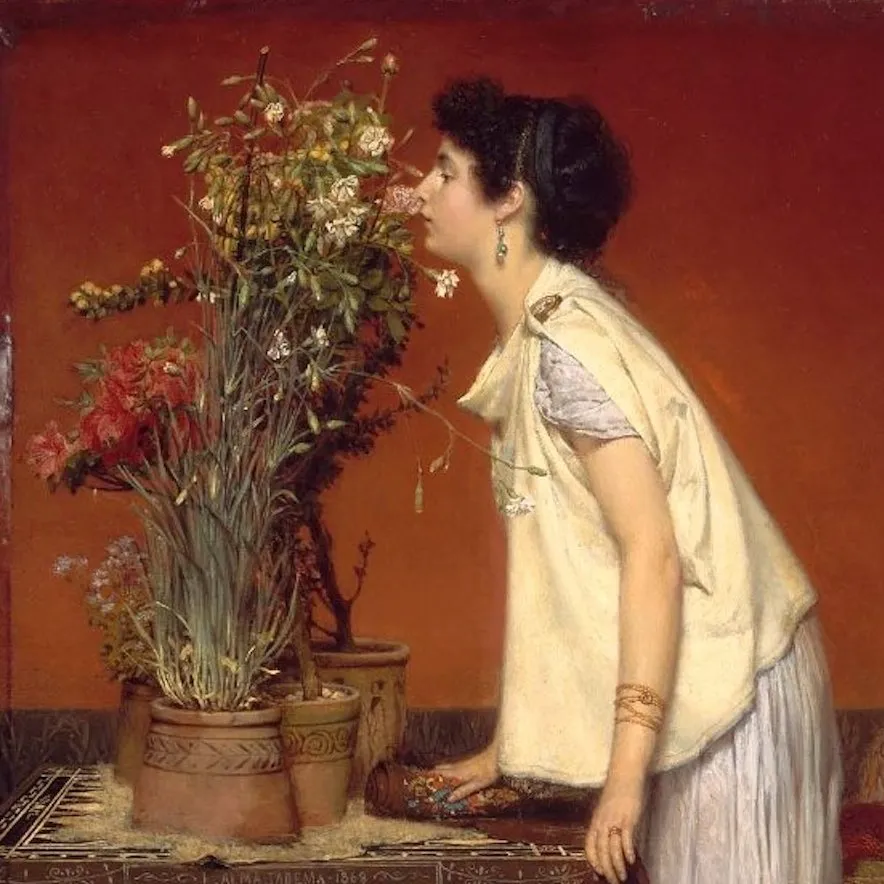
Critics often wonder why Lawrence Alma Tadema painted such idealized scenes. Why is everyone in his paintings so young, so beautiful, so healthy? Why is there no poverty, no sickness, no dirt in his Rome?
The answer is simple: he had seen enough darkness in Dronryp. He didn't want to paint reality; he wanted to explore the opposite of death. He created a world where the sun never set, where the marble never cracked, and where youth lasted forever.
When you look at his famous masterpieces, with their blinding blue skies and roses that never wilt, you aren't just seeing a historical reconstruction. You are seeing the defiant dream of a boy who decided to build a paradise where the cold could never touch him again. It was this same hunger for light that drew him to London, where he found a "broader spirit" and a warmth that his native land lacked. In London, he could finally breathe.
The Lesson of Lawrence Alma Tadema
History is full of artists who were tortured by their demons. Van Gogh painted his madness; Munch painted his scream.
Lawrence Alma Tadema is different. He is the artist of gratitude.
Lawrence Alma Tadema painted every marble tile, every silk ribbon, and every beam of sunlight with the meticulous care of a man who knows that none of it is guaranteed. He loved the physical world—the texture of things, the solidity of stone, the warmth of skin—because he almost lost it.
The boy who was supposed to die lived to be seventy-six. He became a Knight of the British Empire. He became one of the richest artists in the world. But deep down, he remained that fifteen-year-old in the dark room, pulling on a string at dawn, desperate to catch the light before it faded.
Leave a Visiting Card
Consulting the visiting cards...