
If you were to walk through the Hall of Panels in Casa Tadema in the late 1890s, your eye would glide across the "smooth" perfection of the Victorian masters—the polished Greeks of Leighton, the rigid Romans of Poynter.
But then, you would hit a splash of chaos.
A vertical panel depicting a Javanese dancer, painted with such "bravura" and speed that it seems to vibrate against the wood.
It is the work of John Singer Sargent, a man who was not just an intrusion into Lawrence's classical sanctuary, but a deeply integrated member of his chosen family.
The "Friend" in the Wainscoting
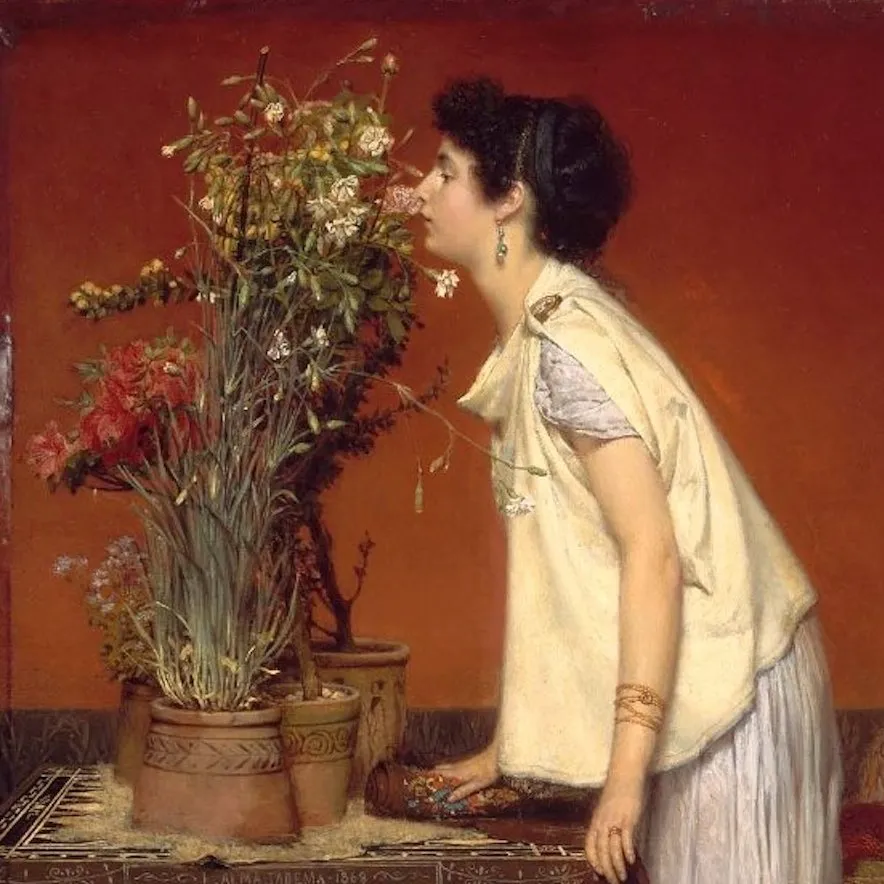
When Lawrence Alma-Tadema built his "Hall of Panels," he wasn't just creating a gallery; he was building a "Liber Amicorum"—a book of friends rendered in wood. To be invited to paint a panel was the ultimate mark of the inner circle.
Sargent wasn't just a guest; he was "built-in" to the very fabric of Grove End Road. His Javanese Dancer was a Trojan Horse of modern energy. In a house where every marble floor was painted with 8,000 translucent layers, Sargent's panel arrived with the "first hit" of the brush.
Lawrence, the master of the "Finished," was fascinated by Sargent's ability to capture life in a single stroke. He reportedly said of the younger man's magic: "He doesn't paint the thing; he paints the light on the thing. It is a devil's trick, but it works."
Tuesday Evenings at the Piano
To truly see them together, you must imagine a Tuesday evening. The air is thick with the scent of expensive roses and the shared smoke of the studio.
John Singer Sargent was an accomplished pianist, a "very proficient executant" who discussed scores with the same rigor he brought to a canvas. While Lawrence was not a performer himself, he was a devoted patron of music—his "Famous Tuesdays" were legendary for hosting the greatest musicians of the age, from Paderewski to Tchaikovsky.
Through their mutual friend, the conductor George Henschel, they moved in a world where the boundaries between art and music dissolved. Sargent might be dismissive of the "finished" school in his private notes, calling it "not art in any sense," yet he showed a profound deference to Tadema as a critic. He respected Lawrence's knowledge—the same way two master builders might respect each other's understanding of stone, even if they preferred different styles of architecture.
The Secret Archaeologists
Beneath the "bravura" brushwork of Sargent and the "marble" finish of Tadema lay a shared obsession: the "nerd-level" research of the ancient world.
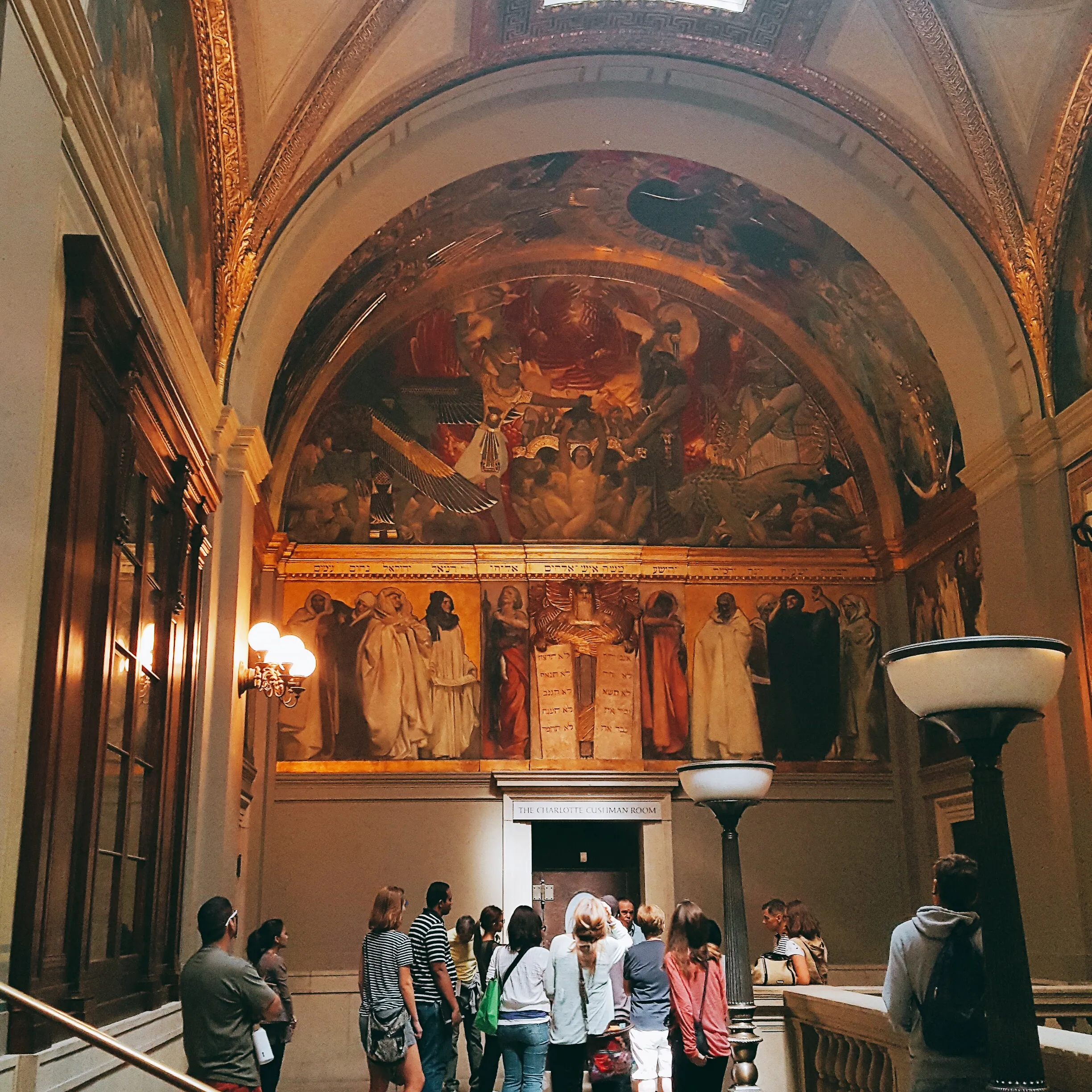
While London saw Sargent as a fashionable face-painter (a role he eventually grew to "abhor and abominate"), he spent decades of his career on a parallel obsession: the Triumph of Religion murals for the Boston Public Library. The project consumed thirty years of his life, requiring extensive research trips to study Egyptian motifs, Assyrian reliefs, and Greek pottery—the same obsessive archaeological gaze that Lawrence used for his Pompeian excavations.
This was the hidden bridge between the Rapier and the Marble. Both men were "History Nerds" who hid their deep, scholarly research under a layer of spectacular paint.
The Final Guardian
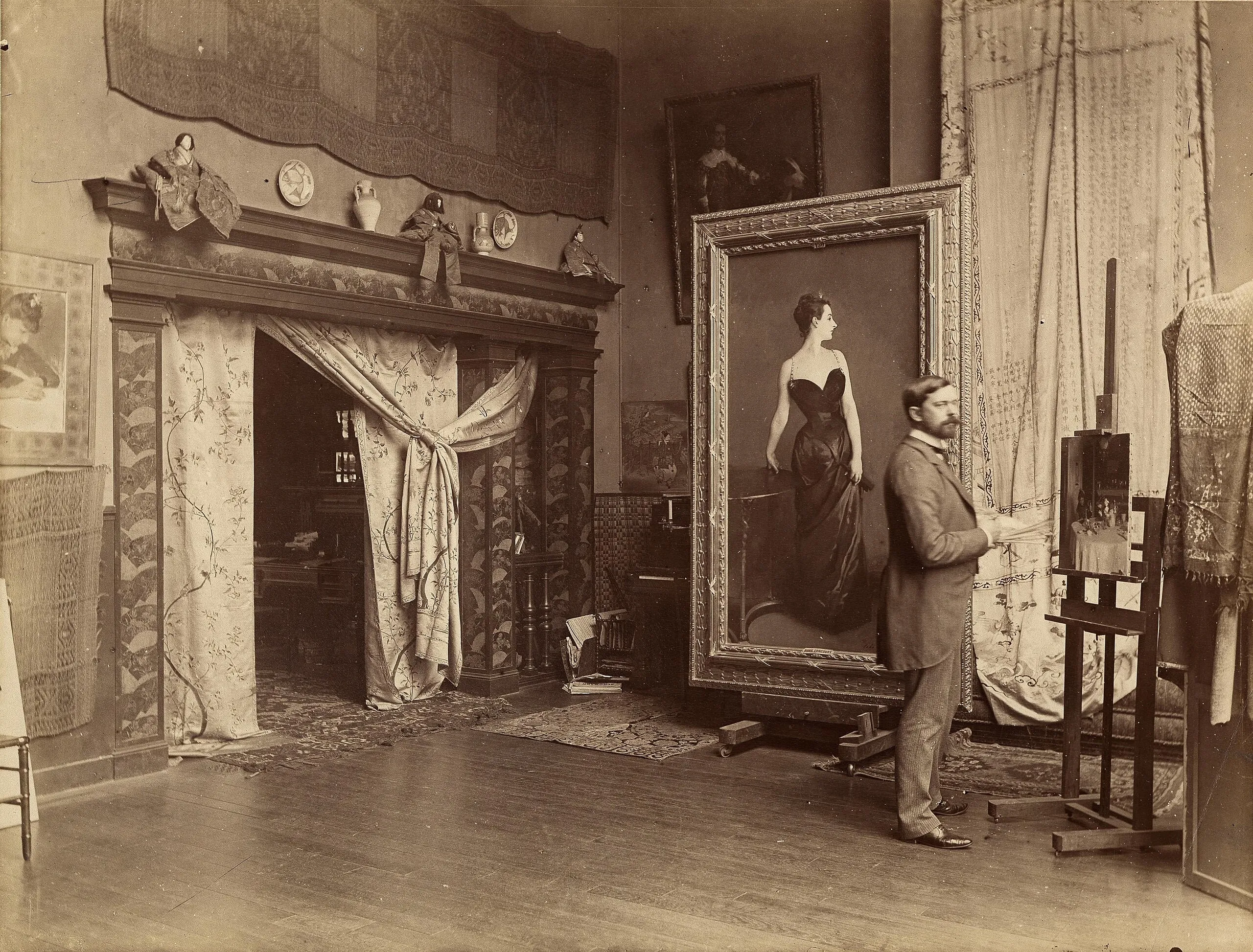
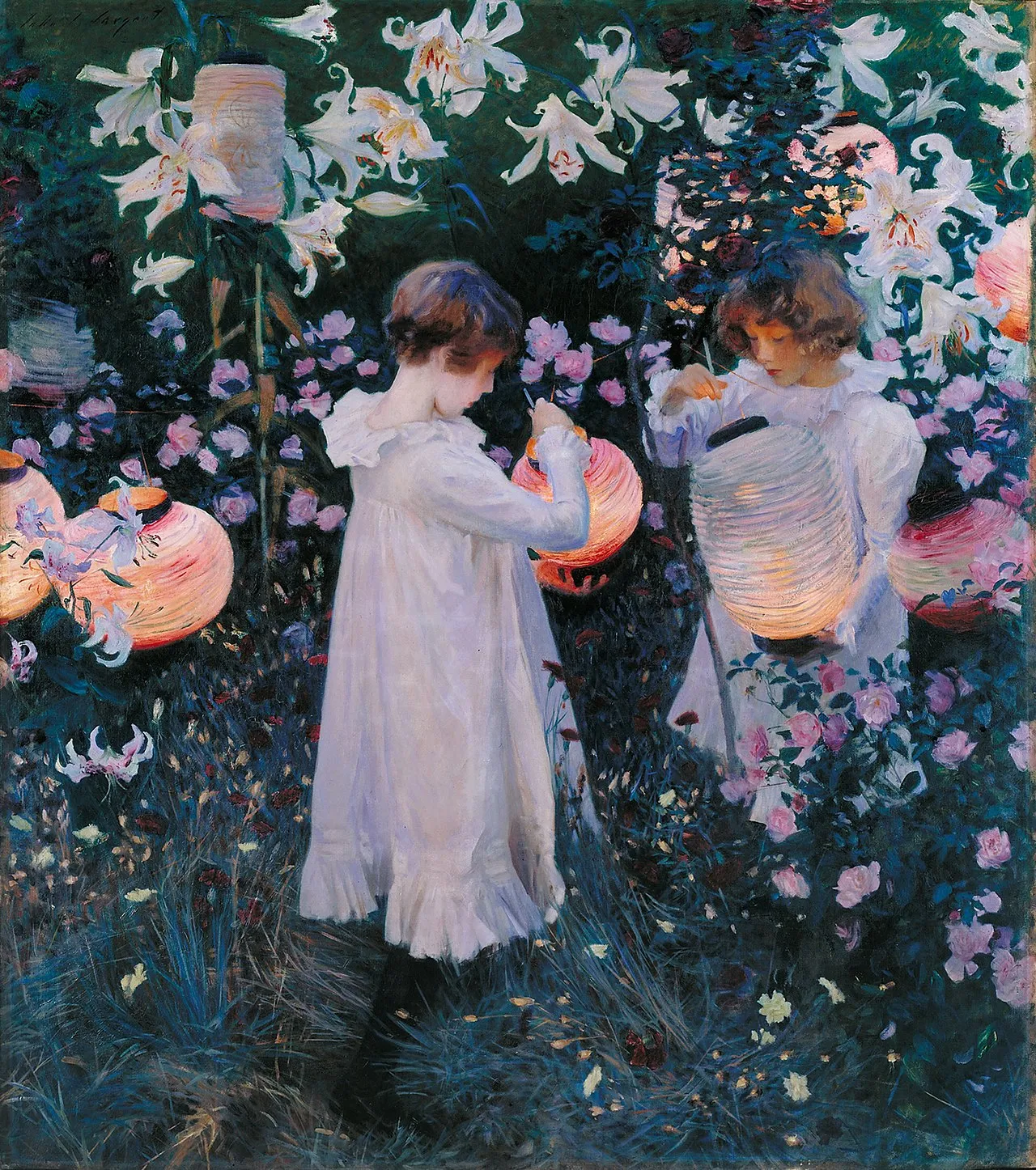
John Singer Sargent arrived in London in 1886 as a refugee from scandal. His portrait of Madame X had caused outrage in Paris—too sensual, too daring for the French Salon. But London saw an opportunity where Paris saw offense. Within a year, his painting Carnation, Lily, Lily, Rose—a safe, beautiful vision of children with lanterns—became the hit of the Royal Academy and was purchased for the nation. The American outsider had redeemed himself.
John Singer Sargent's election to the Royal Academy in the 1890s was championed by the old guard—Leighton and Tadema. They knew the Academy was dying of its own "smoothness," and they saw in John Singer Sargent a man who could hold the institution together.
Sargent matched the "Class" of the Olympians even if his "Style" was a revolution. He lived on Tite Street—the bohemian epicenter of Chelsea, home to Whistler and Oscar Wilde—spoke five languages, and was a master of the dinner party.
Inside the Alma-Tadema Sanctuary, Sargent's work remains the Window of Energy. It reminds us that the "Famous Tuesdays" weren't just about admiring still statues; they were about the rhythm of the dancer, the thump of the piano, and the "rapier-like" flash of friendship that refuses to stay in the past.
Leave a Visiting Card
Consulting the visiting cards...