
It was 1909, and the golden world of Alma Tadema was fading.
Lawrence Alma Tadema was seventy-three years old.
He had lived a life of extraordinary beauty. He had built a sanctuary. He had painted the greatest musicians of his time. But now, the light was fading.
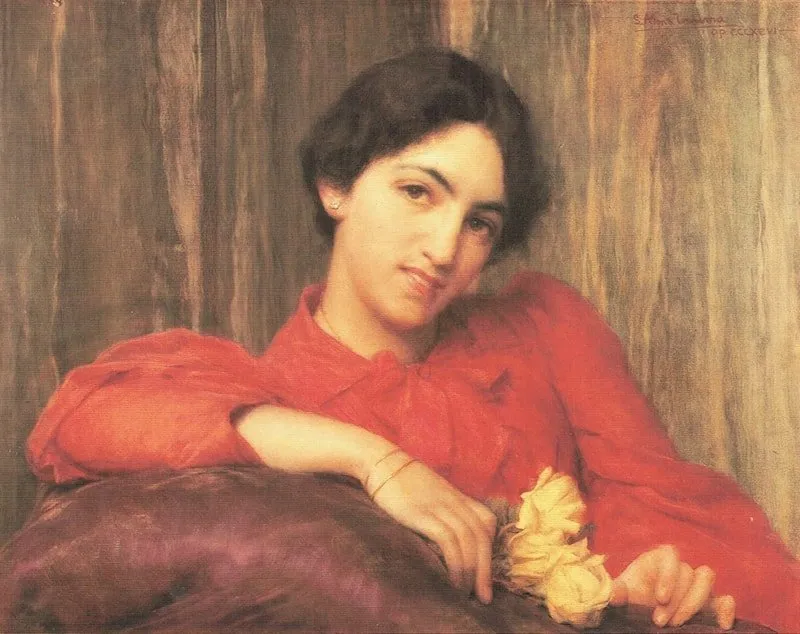
In this twilight, he painted one last musical portrait.
Her name was Ilona Eibenschütz. She was young, vibrant, and incredibly gifted. But she carried with her a ghost.
She was the last living link to Johannes Brahms.
When Alma Tadema Heard the Brahms Story
Decades earlier, Alma Tadema had welcomed George Henschel and Joseph Joachim—men who were friends with Brahms.
Now, he painted the woman Brahms had loved like a granddaughter.
Ilona Eibenschütz had been a child prodigy. She studied with Clara Schumann. But her connection to Brahms was unique. In the summer of 1893, at Ischl, the composer took her aside. He sat at the piano and played his final piano pieces (Opus 118 and 119) for her—privately, before anyone else in the world heard them.
He played "brutally," she later said. He groaned and hummed along with the melody. It wasn't polite music. It was raw emotion.
She absorbed it all. She knew his tempo, his rubato, his heavy, growling bass.
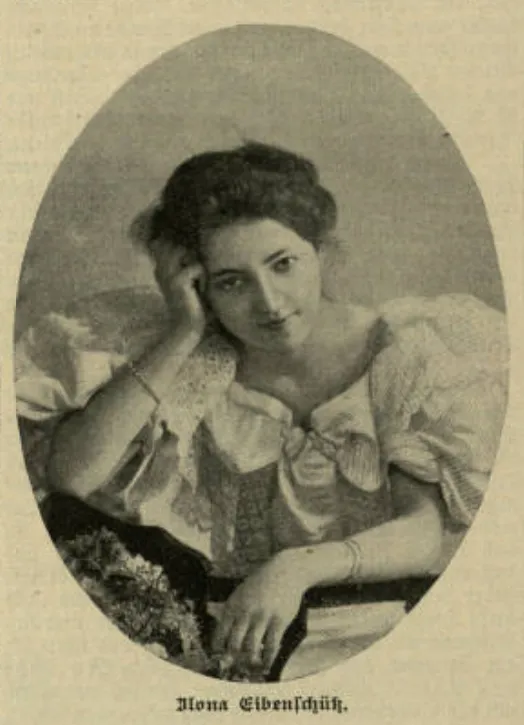
When she sat at the piano in the studio of Alma Tadema, she wasn't just playing music. She was bringing that summer in Ischl into St. John's Wood. She was summoning a vanished world. The world of German Romanticism that Alma Tadema had loved all his life.
She was a time capsule.
The Portrait: Alma Tadema's Twilight
The portrait (Opus 396) is different from the others.
It is softer. The sharp, archaeological precision of the early years has mellowed. Alma Tadema paints her with a tenderness that suggests a grandfather looking at a beloved grandchild.
She looks out at us—confident, elegant, but with a hint of melancholy. By 1909, she had already retired from the public concert stage (she married in 1902 and stopped touring). She was no longer playing for ticket holders; she was playing for friends.
This explains the intimacy. In the studios of London, she was a legend—the woman who had known Brahms, the exclusive pianist who only played when she chose to. Alma Tadema didn't paint a public star; he painted a private treasure.
Why Alma Tadema Painted Her Last
Why did Alma Tadema choose her for his final musical tribute?
Perhaps because she represented the future that remembered the past.
It was the end of an era. That same year (1909), Alma Tadema’s beloved wife Laura died. The legendary "Tuesday evenings" ceased. The great studio fell silent.
The portrait of Ilona was not just a memory of Brahms; it was the final curtain call for Casa Tadema itself. Three years later, the painter followed his wife, and the sanctuary was closed forever.
The Survivor
Ilona Eibenschütz lived until 1967. She lived through two World Wars. She lived to see the Beatles.
And in 1952, at the age of eighty, she did something extraordinary. She sat down at a microphone and recorded her memories of Brahms.
She played the waltzes he had taught her. Her fingers were old, but the rhythm was there. The "Brahms snap." The sound of 1890 alive in the 1950s.
When we look at her portrait by Alma Tadema, we see the bridge.
We see the young woman who carried the fire of the nineteenth century safely through the storms of the twentieth, sheltering it in her hands like a candle.
She was the last guest. The last melody. And the final proof that beauty, once created, never really dies.
Leave a Visiting Card
Consulting the visiting cards...