
It is November in London. The fog, thick and yellow as pea soup, presses against the tall windows of 17 Grove End Road. Inside, the air is differently weighted. It smells of expensive cigars, the lingering sweetness of hyacinths, and the metallic tang of fresh oil paint.
Sir Lawrence Alma-Tadema sits at his dining table. He raises a glass of deep red Chambertin wine, the candlelight catching the facets of the crystal. He is not alone.
He looks up, and there, hanging on the wall between the shadows, is George Henschel.
The portrait is not merely a likeness; it is a residency. Henschel is in America, conducting orchestras in Boston and New York, yet he remains fixed here, caught in the eternal amber of a 1879 afternoon.
"You are with us at every meal," Tadema writes to his friend across the Atlantic, his pen scratching against the paper in the silence of the house. "You are with us at every meal, as your portrait hangs in our dining room."
The Resonance of a Painted Room
To step into the world of Alma-Tadema was to enter a space where the boundary between the living and the rendered was porous. The artist did not just paint his friends; he invited them to haunt his walls.
For thirty-five years, the correspondence between the painter and the "Singing Conductor" flowed like a river between continents. The letters—now yellowed fragments in the archives of Birmingham—reveal a man obsessed with the architecture of friendship.
Tadema’s house was a musical instrument in its own right. When Henschel moved in, he didn't just bring his voice; he brought the physical texture of his art. He drew tiles to adorn the house, helping to "make it a happy home." In return, Tadema sent him sketches of singing lessons taken from ancient Greek pots—a "trademark" for a modern maestro.
These were not the interactions of professional colleagues. They were the exchanges of two men who understood that a house, like 17 Grove End Road, is a collection of echoes.
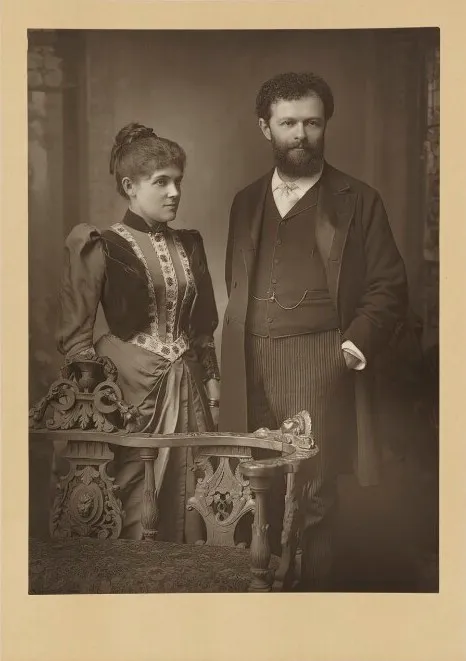
The Texture of Loss
The letters turn darker as the decades pass. The vibrant Tuesdays of the 1880s—thick with the sound of the Heckmann quartet and the rustle of silk—give way to the quiet of the twentieth century.
The most poignant "gold nugget" in this archive is a birthday gift sent in 1911.
Laura, Tadema’s beloved wife and fellow artist, had died two years prior. On Henschel’s birthday, Sir Lawrence sends him a small, fragile object: a glass from the late Laura Alma-Tadema’s studio.
One can imagine the weight of that gift. It carried the silence of an empty workspace and the residue of a life lived in service of beauty. It was a fragment of the sanctuary, passed from one grieving hand to another.
"We think of you often," he writes, his health failing, "and we hope all is going well in the land of the sun."
Even as the artist was failing, his domestic world remained a hive of sensory memory. When he was too ill to paint, his daughter Anna would sing to him to "cheer him up." He writes of a visit from the great Paderewski, who brought grapes and news from abroad.
The studio was no longer a place of production; it had become a chapel of remembrance.
The Judas Tree
In one of the final letters, Tadema corrects a friend about a detail in a painting. They thought he had painted an almond tree.
"The tree in my picture," he clarifies with the precision of a master, "is not an almond tree but a Judas tree which grew in the Villa Borghese."
It is a small, seemingly pedantic correction, but it reveals everything. For Tadema, every leaf, every vein in a block of marble, and every note of a friend's song was an individual truth. He was a man who lived in the specifics.
He remembered the exact light of his birthplace in Dronrijp, even as he declared himself a "proud Englishman." He remembered the precise construction of a window that cost him a week's work when it went wrong.
And he remembered the friendship of George Henschel, which began with a portrait and ended with a blue funeral ticket to St. Paul’s Cathedral.
The Echo
And so, the marble remains cool to the touch.
The portrait of the young Henschel at the piano still hangs, perhaps, in the imagination of those who walk the halls of the Sanctuary. He is still there, caught in the act of listening, forever a guest at a table where the wine never runs dry and the music never quite fades.
What remains of a man after his studio is emptied?
Behind the grand opuses and the knightly honors, there is only the silence of the letters—and the lingering resonance of a voice that once made the marble breathe.
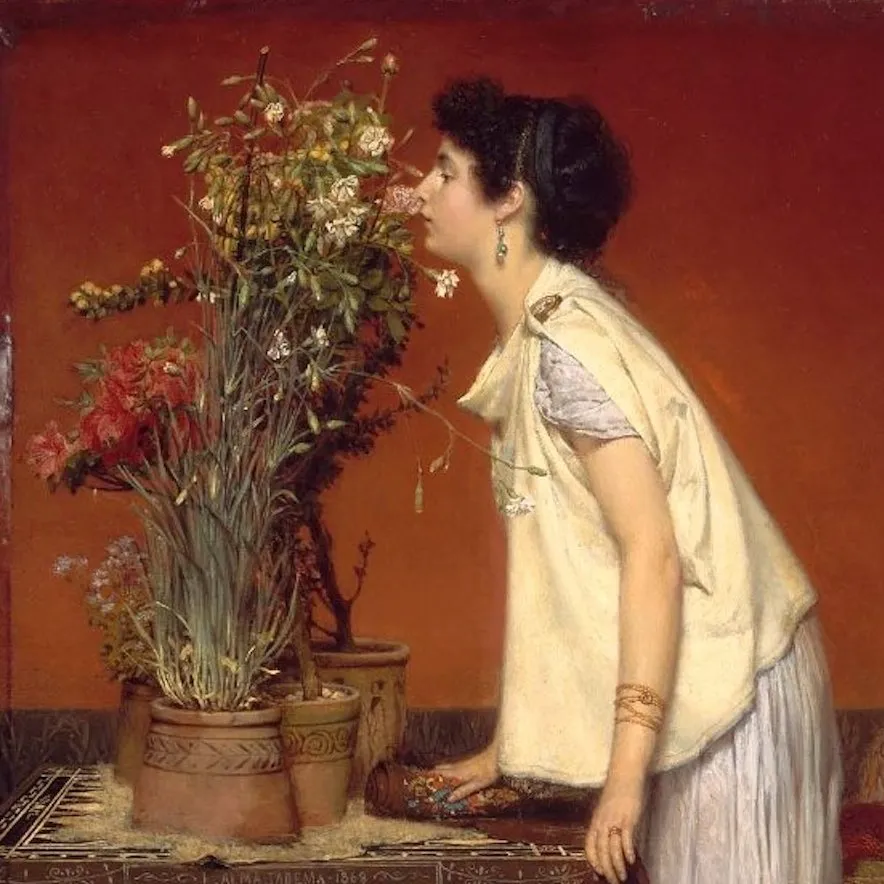
Leave a Visiting Card
Consulting the visiting cards...