The cheque arrives on a Tuesday morning.
It is 1904, and Sir Lawrence Alma Tadema stands in the golden light of his studio at 17 Grove End Road, holding a slip of paper worth £5,250. The ink is still wet. He does not smile—he rarely does in photographs—but there is a quiet satisfaction in the way he folds it once, twice, and slips it into the pocket of his velvet smoking jacket.
£5,250.
To understand what this means, you must forget everything you think you know about artists and money.
The Myth We Were Taught
We are raised on a particular story about artists. It goes like this: the artist suffers. The artist starves in a garret. The artist dies penniless, and only then—only then—does the world recognize their genius. Van Gogh sold one painting in his lifetime. Gauguin fled to Tahiti, penniless and desperate.
This is the mythology of the tortured creator, and it is so deeply embedded in our culture that we assume it must be universal.
Lawrence Alma-Tadema did not suffer.
He did not starve.
He did not die penniless.
He died in a house that cost more than most men would earn in ten lifetimes, surrounded by marble imported from Carrara, onyx from Egypt, and furniture he designed himself. His funeral was held at St. Paul's Cathedral, where he was buried alongside Turner and Reynolds in the crypt reserved for England's greatest artists.
But before we get to the funeral, let us return to that cheque.
What £5,250 Could Buy in 1904
The painting was The Finding of Moses. It depicted an Egyptian princess discovering the infant prophet in a basket among the reeds, rendered in Lawrence Alma Tadema's signature style: every fold of linen archaeologically accurate, every reflection in the Nile painted with the precision of a jeweler.
Sir John Aird, the civil engineer who built the Aswan Dam, commissioned it. He paid £5,250 for the canvas alone, plus additional fees for the frame and shipping.
To a modern reader, this number means nothing. £5,250 in 1904? Is that a lot?
The translation requires context.
In 1904, a factory laborer in London earned approximately £81 per year. A middle-class family—comfortable enough to employ a cook and a maid—lived on roughly £500 per year. A substantial freehold house in a respectable London neighborhood cost between £2,000 and £3,000.
Lawrence Alma Tadema's single painting cost enough to buy two large London houses.
Or, to put it another way: that one canvas represented 64 years of a laborer's wages.
If we translate this into modern purchasing power—not through inflation calculators, which are notoriously misleading for wealth comparisons, but through real estate equivalency—a substantial house in St John's Wood today costs between £5 million and £15 million.
Which means The Finding of Moses was worth somewhere between $10 million and $20 million in today's terms.
For a single painting.
Lawrence Alma Tadema's Annual Income
The Finding of Moses was not an anomaly. It was simply the most expensive commission in a career built on astronomical fees.
In 1888, Lawrence Alma Tadema painted The Roses of Heliogabalus for £4,000—another mansion's worth. A Reading from Homer commanded a similar sum. Smaller works—the intimate domestic scenes, the single figures draped in white—sold for £500 to £1,000 each. He completed multiple paintings per year.
Scholars estimate his annual income at the height of his career was somewhere north of £20,000.
Let that number settle for a moment.
A highly successful professional man in Victorian England—a doctor, a barrister, a rising architect—might earn £700 per year and consider himself prosperous. A family living on £500 per year could afford a cook and a maid and send their children to good schools. These were the comfortable classes, the people who attended the Royal Academy exhibitions and bought engravings of Alma-Tadema's work to hang in their parlors.
Lawrence Alma Tadema earned forty times what they did.
£20,000 per year in the 1890s placed him in the same financial echelon as the wealthiest industrialists, bankers, and landed aristocrats. He earned more than most members of Parliament. He earned more than the Prime Minister. He earned more than the President of the Royal Academy.
He earned like a modern Hollywood A-lister. Like a Premier League footballer. Like a tech billionaire.
And yet, we still call him "an artist," as if that word alone could contain what he was: a one-man luxury goods empire, producing bespoke fantasies for the global elite.
Lawrence Alma Tadema's Fortress of Money
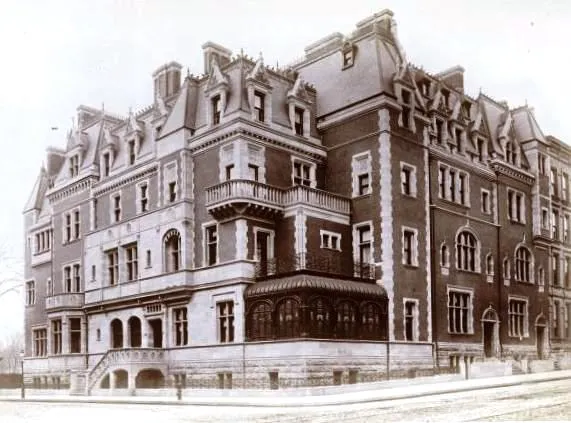
Walk through the doors of 17 Grove End Road, and you are walking through the physical manifestation of that wealth.
Between 1886 and 1900, Lawrence Alma Tadema is reported to have spent as much as £70,000 renovating the house. Not building it—renovating it. He gutted the interior and rebuilt it as a Pompeian palace transplanted to Regent's Park. The walls were clad in marble. The ceilings were coffered in cedar. The floors were inlaid with mosaics copied from the House of the Tragic Poet.
In one corner of the house, a fountain murmured into a marble basin. Windows of Mexican onyx—a material he introduced to English domestic architecture—cast a soft, golden glow through the rooms. Every detail, from the door handles to the floor tiles, was designed by his own hand.
£70,000.
At standard inflation rates, that translates to roughly £10.5 million today. But again, inflation is a poor measure of wealth. In terms of what that money could command—the labor of stonemasons, the shipment of marble from Carrara, the hiring of Italian craftsmen to install the mosaics—it was the equivalent of building a palace.
Think of it this way: every brushstroke on The Roses of Heliogabalus paid for a slab of marble in the Hall of Panels. Every fold of drapery in Spring funded another onyx column. The paintings were not just art; they were the engine of an empire. The house was not a home. It was a fortress of money, disguised as a sanctuary of beauty.
And everyone who entered knew it.
The Contrast
Here is what makes this story strange.
The paintings themselves are soft. They are quiet. They depict languid afternoons, women reading poetry, roses falling like snow. There is no violence in them (except for Heliogabalus, and even that death is beautiful). There is no noise. The figures recline on marble benches, gazing at the sea, lost in thought.
The paintings whisper.
But the money behind them roars.
Lawrence Alma Tadema understood something that most artists of his generation did not: beauty is a commodity, and if you control the supply, you control the price. He did not paint for love. He did not paint for posterity. He painted because wealthy men would pay him the price of a mansion to hang a piece of ancient Rome on their walls.
And they did. Over and over again.
The Starving Artist, Inverted
We return, finally, to the myth.
The myth says: the artist suffers, and the world profits.
Lawrence Alma Tadema inverted this. He did not suffer. The world paid him, and paid him, and paid him again. He lived in a palace. He dined with royalty. He was knighted by three kingdoms. When he died, he left behind a fortune—the house alone was worth more than most men would see in a lifetime.
And yet, within a decade of his death, his paintings were considered worthless. Modernism arrived, and the marble world he built was dismissed as kitsch. His canvases sold for pennies at auction in the 1960s. The same painting that cost two London houses in 1904 could be bought for the price of a used car in 1965.
The money did not save him from obscurity.
But it did give him something most artists never have: a life without want. A studio flooded with light. The freedom to paint slowly, carefully, obsessively. The ability to import fresh hyacinths from the Netherlands in winter, just to capture the way light filters through their petals.
Wealth did not make him a better artist.
But it gave him the time to become one.
Lawrence Alma Tadema's Ledger
If you were to open Lawrence Alma Tadema's account books—and they still exist, archived in Birmingham—you would find entries like this:
- The Roses of Heliogabalus: £4,000
- The Finding of Moses: £5,250 (plus £200 for frame)
- Spring: £4,500
- A Reading from Homer: £5,000
Page after page of numbers. Paintings reduced to prices. Beauty converted into pounds sterling.
And at the bottom of the ledger, if you were to total it all up, you would arrive at a single, unavoidable conclusion:
Lawrence Alma-Tadema was not a starving artist.
He was a tycoon who happened to paint.
This is Part 1 of the Empire of Marble trilogy. Continue to Part 2: The Royalty Machine to discover how he made the real money—not from the paintings themselves, but from what came after.
Leave a Visiting Card
Consulting the visiting cards...