The British establishment is a fortress. It is notoriously difficult for outsiders to penetrate, especially in the 19th century. You had to go to the right school (Eton or Harrow). You had to go to the right university (Oxford or Cambridge). You had to have the right accent.
Lawrence Alma-Tadema had none of these things.
He was a Frisian village boy. He was a college dropout. He spoke English with a thick, guttural accent that he never lost.
And yet, by the end of his life, he had climbed higher than almost any Englishman of his generation. The story of Sir Alma Tadema is the ultimate immigrant success story.
The First Kingdom: Belgium
His first conquest was Belgium.
As a student in Antwerp, he won the patronage of the King of the Belgians early on. He was made a member of the Royal Academy of Antwerp, a significant early recognition of his burgeoning talent. In 1862, he was named a Knight of the Order of Leopold. It was his first taste of royal approval. For a man whose father had died leaving the family in precarious circumstances, this was validation.
But Belgium was too small for him.
The Second Kingdom: The Realm of Art
When he moved to London in 1870, he had to start over. The Royal Academy was a closed shop. But his talent battered down the doors.
He was elected an Associate of the Royal Academy (ARA) in 1876 and a full Royal Academician (RA) in 1879. This was the "knighthood" of the art world. It meant he was part of the elite. His paintings were hung "on the line" at the Summer Exhibition—the prime viewing spot.
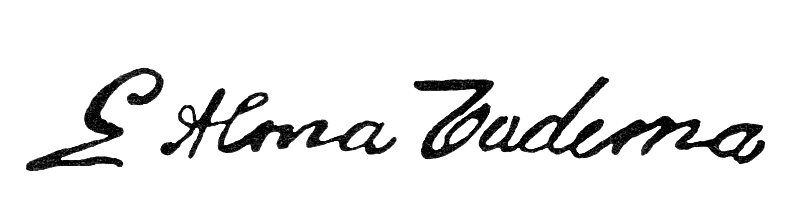
He added these letters to his signature with pride. L. Alma-Tadema, RA.
But his reach extended beyond the Royal Academy. He was a prominent member of the Royal Society of Painters in Water Colors (elected a full member in 1875), and his deep, archaeological knowledge of the past earned him the prestigious title of Fellow of the Society of Antiquaries. To the establishment, he wasn't just a painter; he was a scholar of the ancient world.
The Third Kingdom: The Empire
But the ultimate honor came from the Queen herself.
In 1899, Queen Victoria’s Birthday Honours list included a surprise. The Dutch painter was to become Sir Alma Tadema.
He was knighted at Windsor Castle. The boy from Dronryp knelt before the Empress of India and rose as a Knight Bachelor of the British Empire.
It was a controversial choice. Some nativist critics grumbled. "Why are we knighting a Dutchman?" they whispered. "Aren't there enough English painters?"
But the establishment knew the truth: Sir Alma Tadema was more British than the British. He had embraced the Empire. He paid his taxes. He brought glory to London. He was the perfect citizen.
The Order of Merit
In 1905, King Edward VII went even further. He awarded Tadema the Order of Merit (OM).
This is a much rarer honor than a knighthood. It is limited to 24 living members. It is the personal gift of the Sovereign, given for "exceptionally meritorious service."
He was one of the first artists to receive it. He wore the medal proudly. In his self-portrait for the Uffizi Gallery in Florence, he didn't paint himself holding a brush; he painted himself wearing the ribbon of the Order of Merit. It was the ultimate mark of an immigrant who had not just survived the establishment, but mastered it.
The Fourth Realm: The Republic of Letters
While he conquered the courts and the galleries, Tadema was also securing a different kind of sovereignty: the respect of the academic world. The universities didn't just praise his "beauty" or technical skill; they bowed to his research—a quality they called "Visual Archaeology."
Tadema was the first artist to systematically use archaeological evidence in his work. He treated the ancient world not as a backdrop for fantasy, but as a site for reconstruction.
- The Library of the Past: He possessed a massive personal archive of over 30,000 photographs and drawings of ancient ruins, which he cross-referenced for every painting.
- The Precision of Pompeii: When he visited Pompeii on his honeymoon in 1863, he didn't just sketch for inspiration; he took physical measurements of architectural remains to ensure his perspectives were mathematically accurate.
A Doctor of Letters: Dublin 1892
In 1892, during the Tercentenary celebrations of Trinity College Dublin—a massive gathering of the European "Republic of Letters"—Alma-Tadema was awarded the degree of Doctor of Letters (Litt.D.) alongside the leading intellectual giants of the era.
The University Orator, speaking in the traditional Latin, referred to him as vir clarissimus, artis et antiquitatis peritissimus—a man most distinguished, most expert in both art and antiquity. The university essentially declared that his paintings were a form of visual literature, capable of "translating" the lifestyle and philosophy of the ancients into a medium the public could finally touch.
Doctor of Civil Law: Durham 1893
A year later, in 1893, Durham University awarded him the degree of Doctor of Civil Law (D.C.L.). This is one of the highest secular honors a university can bestow, and for Alma-Tadema to receive it was a rare admission that an artist could contribute to the legal and social reconstruction of history.
At the ceremony on June 27, 1893, it was noted that he had "restored to us the life of the ancient world" and that his works were "not only models of art but also of archaeological research."
The Pedagogical Impact
By the 1890s, Tadema's "vision" of the past was being used in schools and by historians to illustrate "how it really was." He had become an unofficial consultant to the British Museum, and his recreation of Rome was so archaeologically sound that it remains the blueprint for how classical antiquity is portrayed in cinema, from Ben-Hur to Gladiator. Even today, when we "see" the ancient world, we are often looking through Tadema's eyes.
The Need for Validation
Why did he care so much about these ribbons and titles?
Critics sometimes mocked him for it. They called him a social climber. But that is uncharitable.
You have to remember where he came from. He was the "boy who was supposed to die". He was the fatherless child. He was the foreigner in a strange land.
The titles were his armor. Being Sir Alma Tadema proved that he belonged. It proved that he was safe. His name became a global symbol for "excellence" and "pedigree"—so powerful that it even crossed the Atlantic to the bluegrass of Kentucky, where a $4,000 championship racehorse was named in his honor.
It proved that the gray mist of his childhood could not touch him anymore. When he was buried in St. Paul's Cathedral in 1912, it was the final stamp of approval on a passport he had been stamping himself for seventy years.
Leave a Visiting Card
Consulting the visiting cards...