
Every empire has a foundation stone. For the artistic empire of Sir Lawrence Alma-Tadema—built on marble, light, and historical grandeur—that stone was a simple portrait.
Opus I. Number one of four hundred and eight.
It was painted in 1851, in a quiet home in Leeuwarden. It depicted his sister, Artje ("Atje").
Today, the painting remains lost.
But the girl? She is not entirely forgotten.
While English-language biographies have often treated her as a footnote, the archival record in her native Netherlands has preserved what the art world lost. The painting, Opus I, is missing. But we finally know what she looked like.
The First Number
When Alma-Tadema decided to catalogue his work, he did not begin with the Roman epics that had made him famous. He did not choose The Pyrrhic Dance or The Vintage Festival—the paintings that had already hung in galleries and drawn crowds. He reached back two decades, to a portrait of a girl in their home in Leeuwarden.
"Portrait of my sister, Artje." Oil on canvas. Dimensions unknown. Location unknown.
The designation was deliberate. Opus I. The origin point. The first stroke in a career that would span over 400 works. And yet, for all the meticulous record-keeping that followed—every painting photographed, every sale documented, every exhibition catalogued—this one has slipped through the cracks of history.
The last confirmed reference appears in a 1978 Dutch catalogue, where the provenance is listed simply as "Plaats onbekend." Place unknown.
It has been missing ever since.
The Girl from the Flatlands
Artje Tadema was born in 1838, two years after her brother Lourens (who would become Lawrence Alma-Tadema). She grew up in the rural silence of Friesland, where the land is so flat you can see the curve of the earth.
She was his first companion. His first critic. His first muse.
For a long time, we knew almost nothing else about her life. Artje existed only in the margins of other people's stories.
But in 1851, she was the center of one.
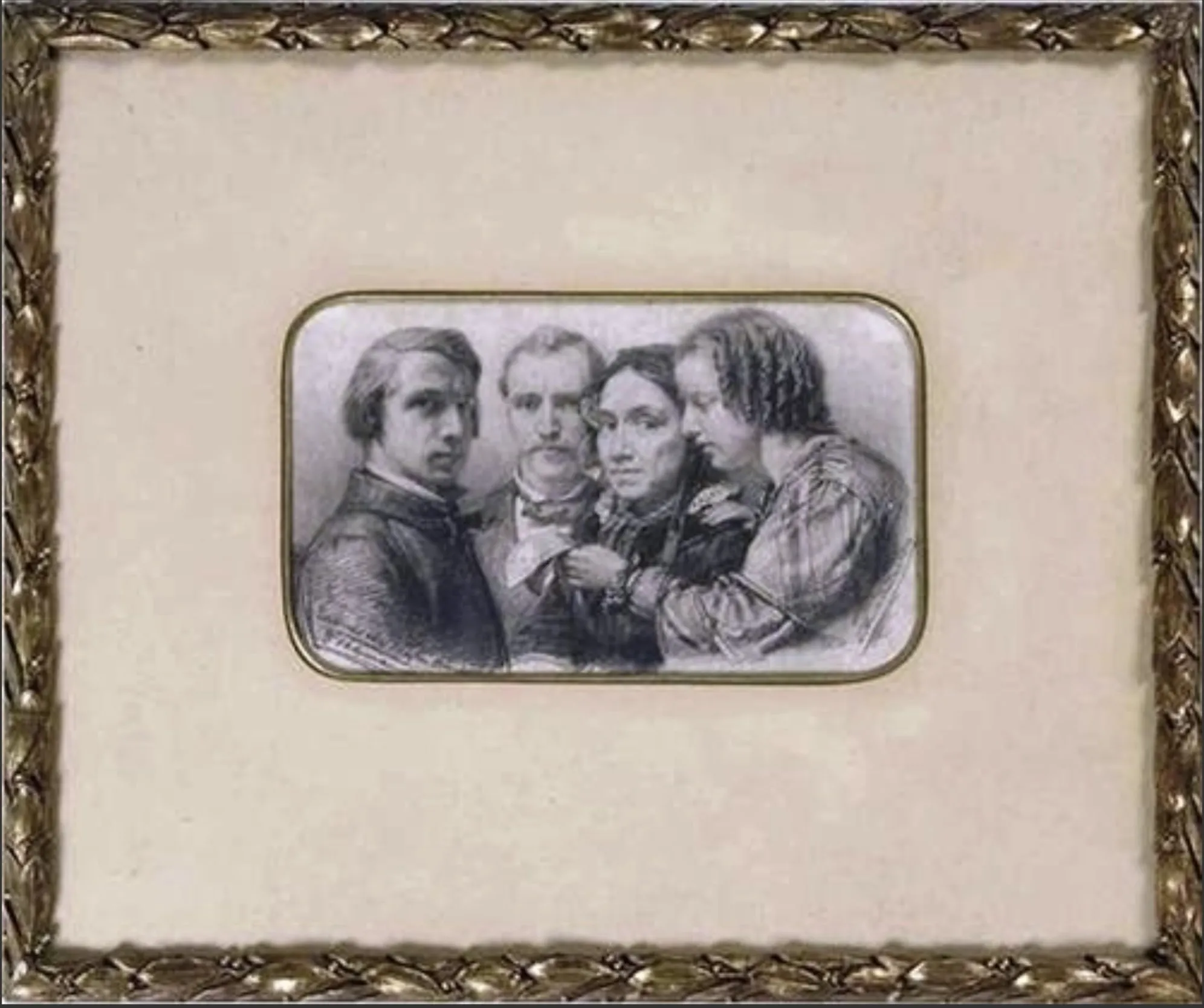
This pencil drawing, made in Leeuwarden in 1859, captures a rare moment of domestic intimacy. Lawrence portrays himself on the far left (drawn in mirror image), next to his mother Hinke. On the right sits Artje, reading a letter aloud—likely from their brother Wopke, who was stationed as a judge in the Dutch East Indies.
It is a scene of quiet connection, a snapshot of the family before fame and distance pulled them apart.
Lawrence was only fifteen when he painted Opus I in 1851. He had been studying art for only a few years, apprenticed to a local painter in Leeuwarden. He was already showing signs of the precision that would define his later work—the obsessive attention to texture, the almost archaeological fidelity to detail.
And he chose to paint his sister.
Not a landscape. Not a still life. Not a classical scene. A portrait. A face. The girl who had grown up beside him in the flat, gray light of the north.
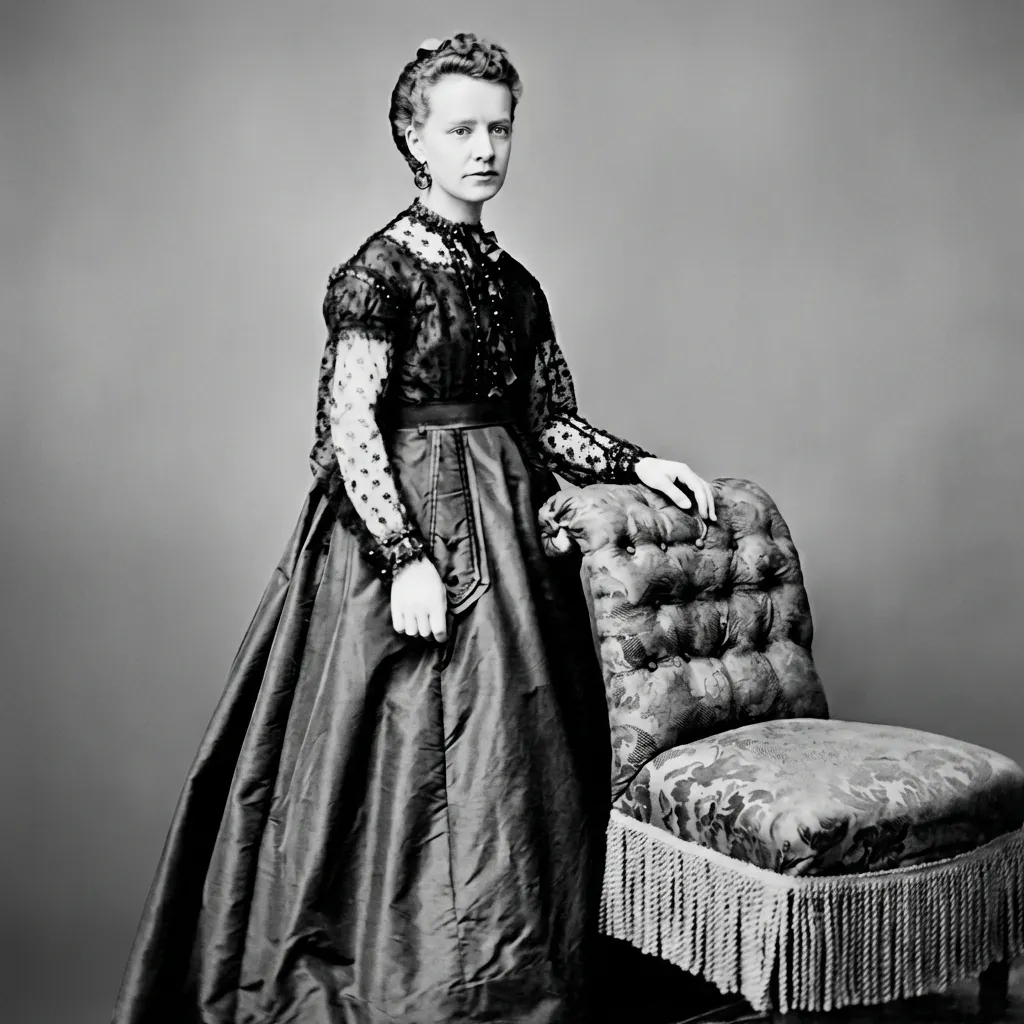
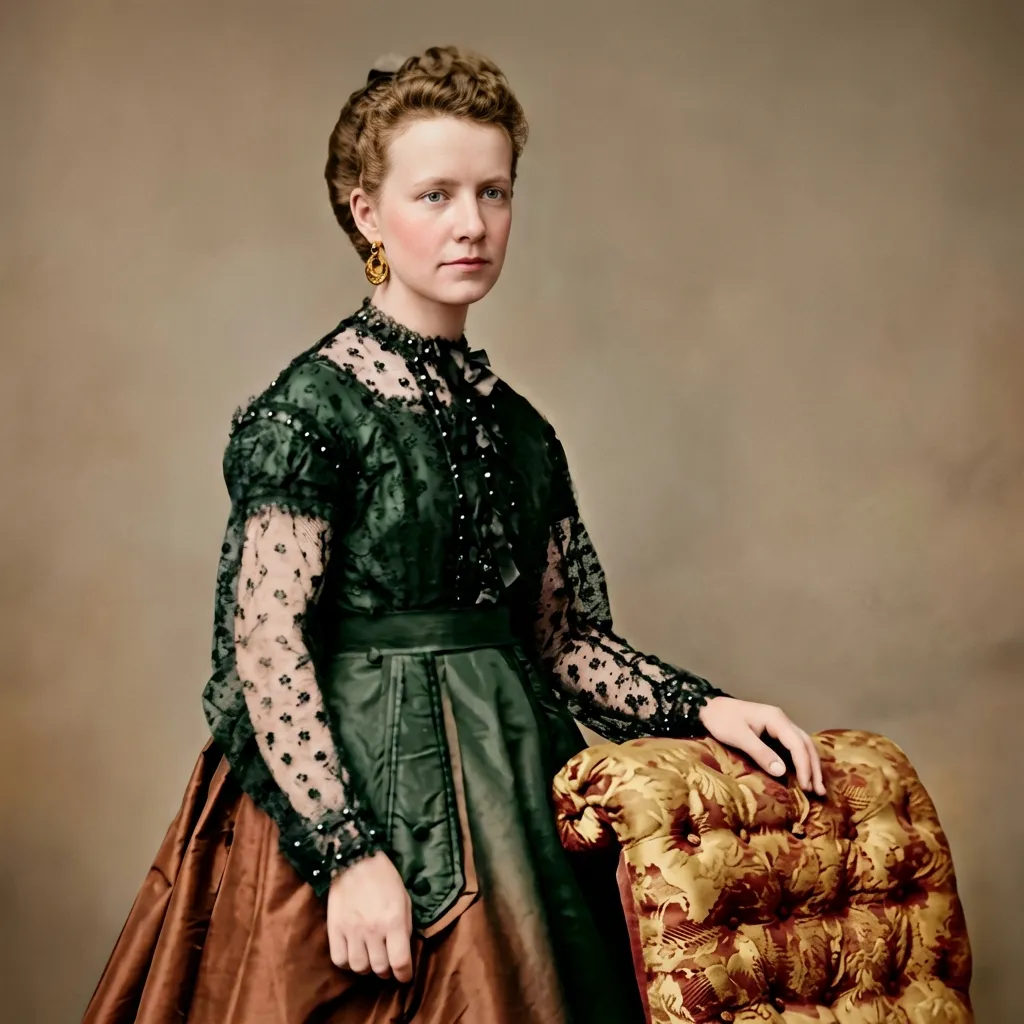
Digital restoration based on original from Musée d'Orsay.
The Face in the Archive
But the archives tell a different story.
We now verify the existence of at least four photographs of Artje, held in the collections of the Musée d'Orsay and the RKD.
Note: The images below have been digitally enhanced and colorized using AI to reveal lost details. The original, unaltered archival scans are preserved at the bottom of this article for historical reference.
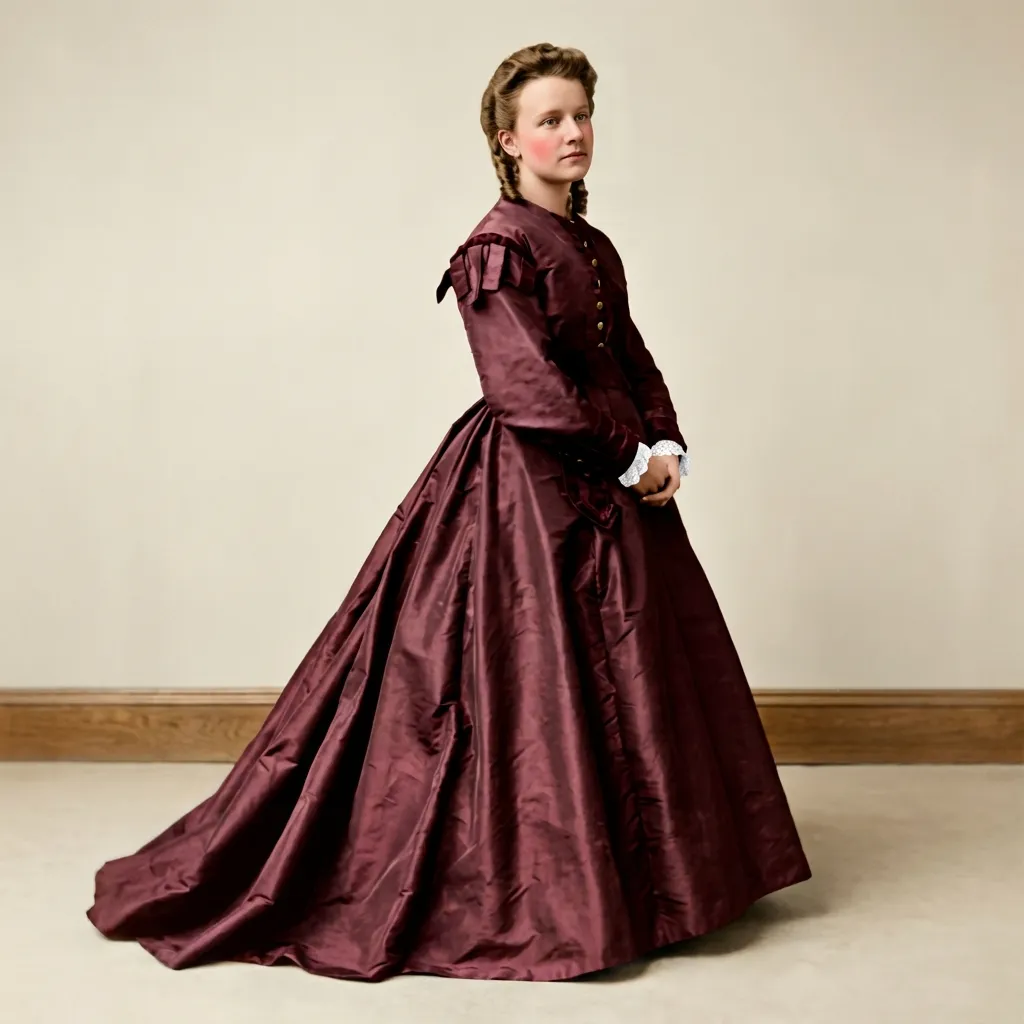
Digital restoration based on original from Musée d'Orsay.
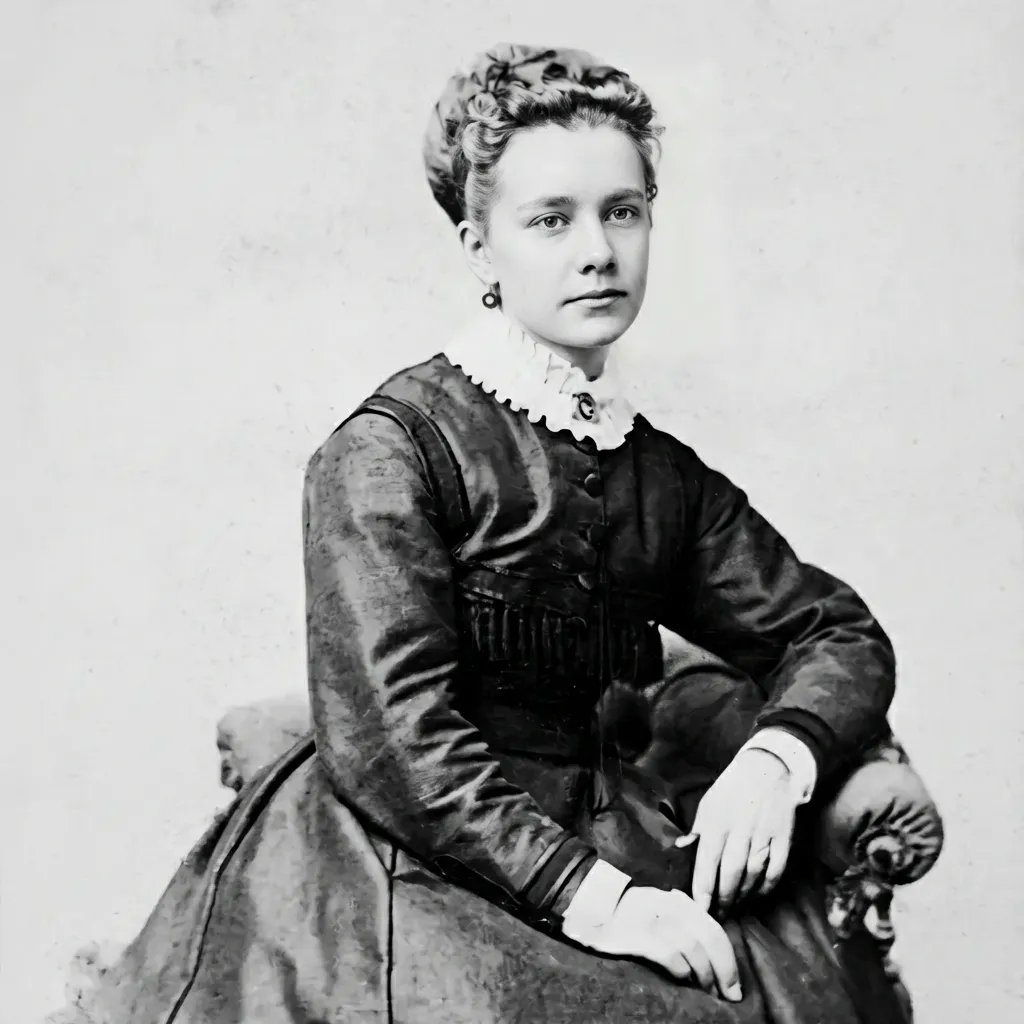
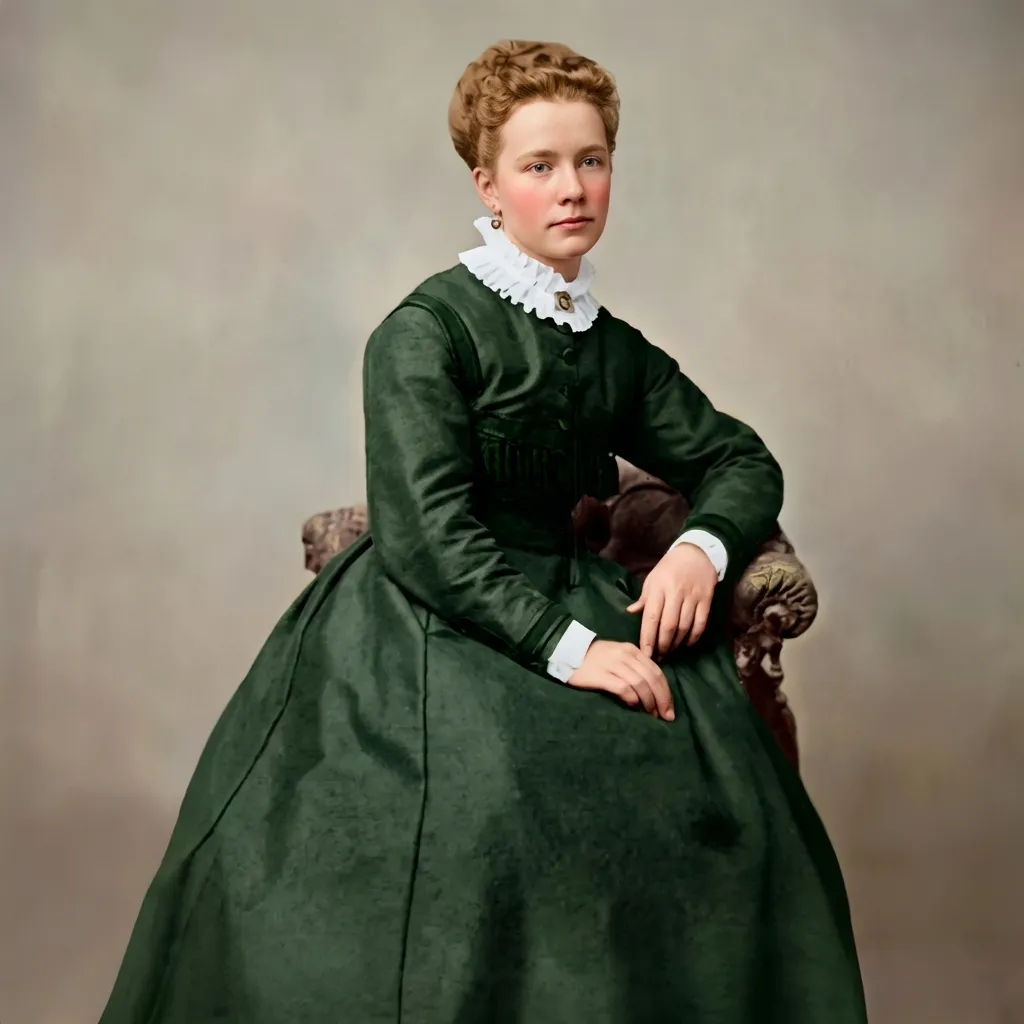
Digital restoration based on original from Musée d'Orsay.
But the most poignant is the one that traveled the furthest.
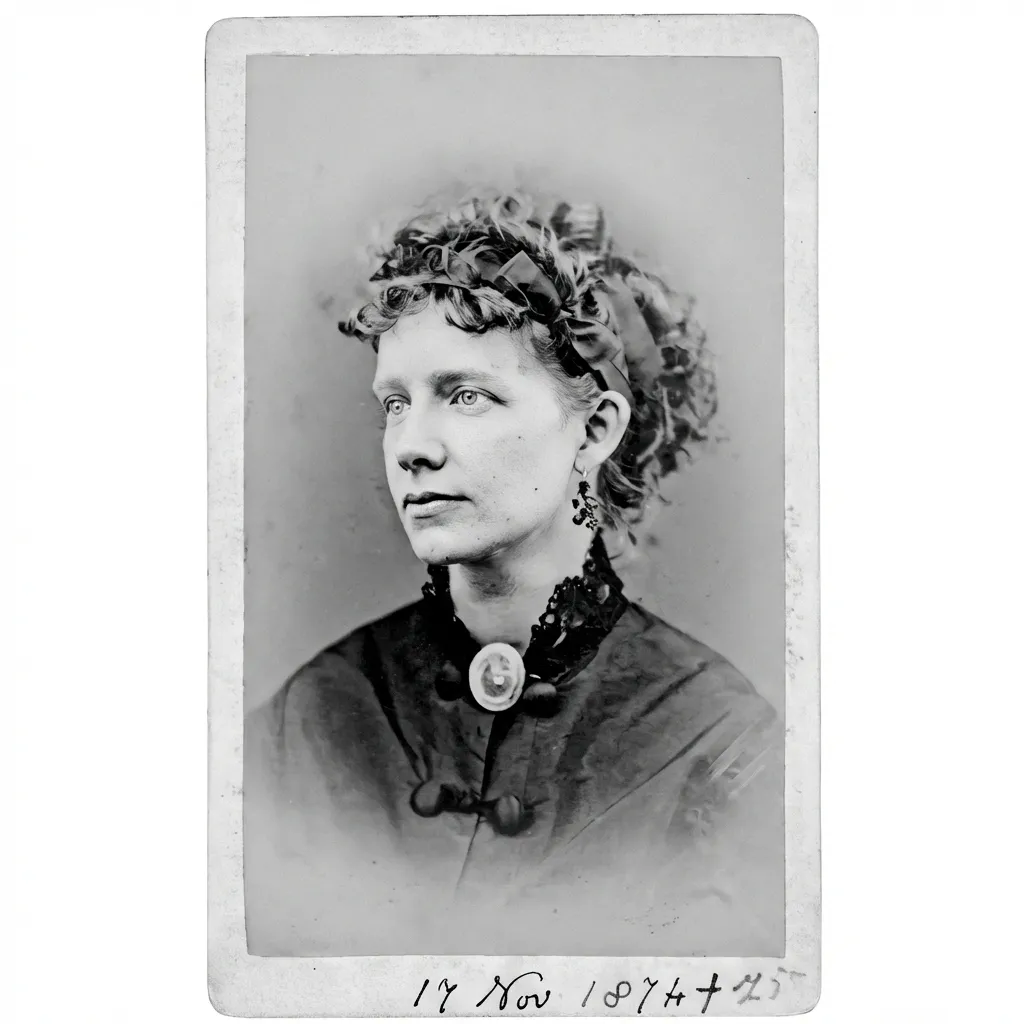
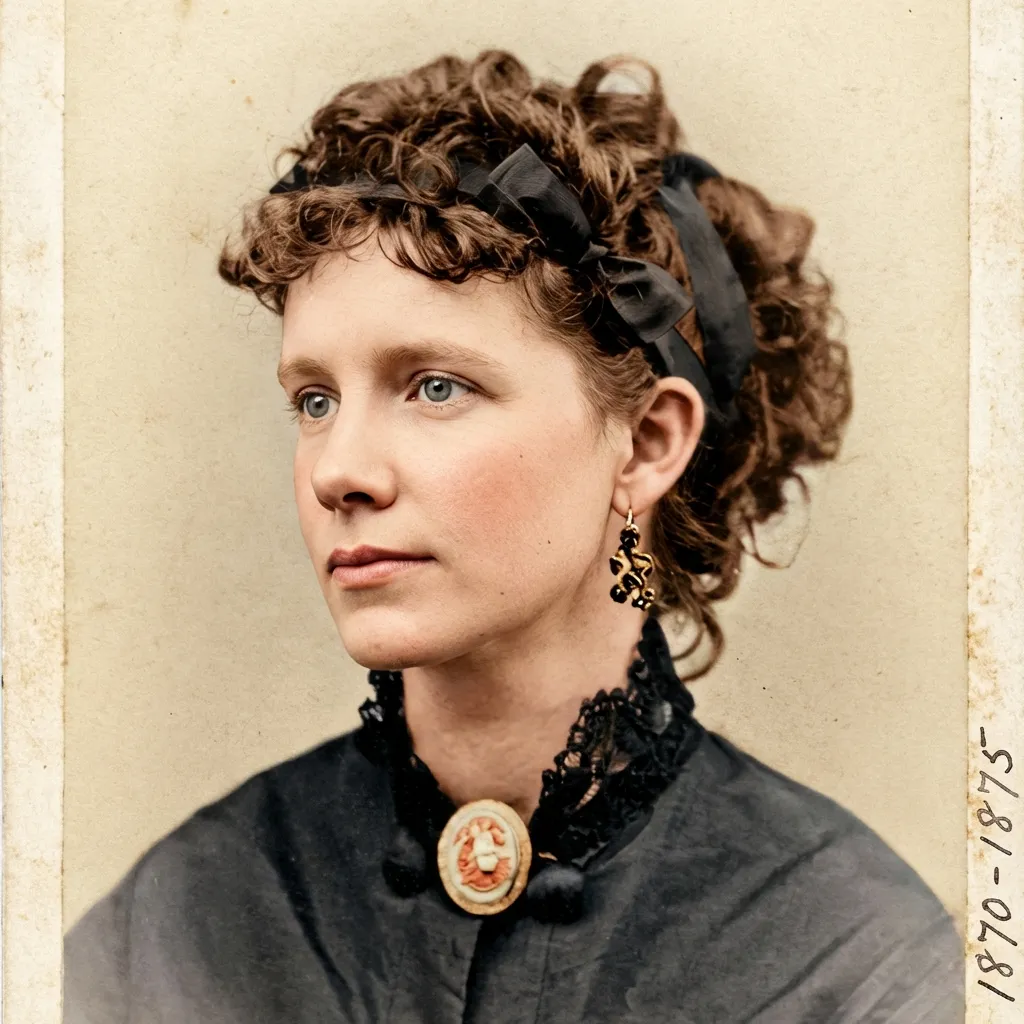
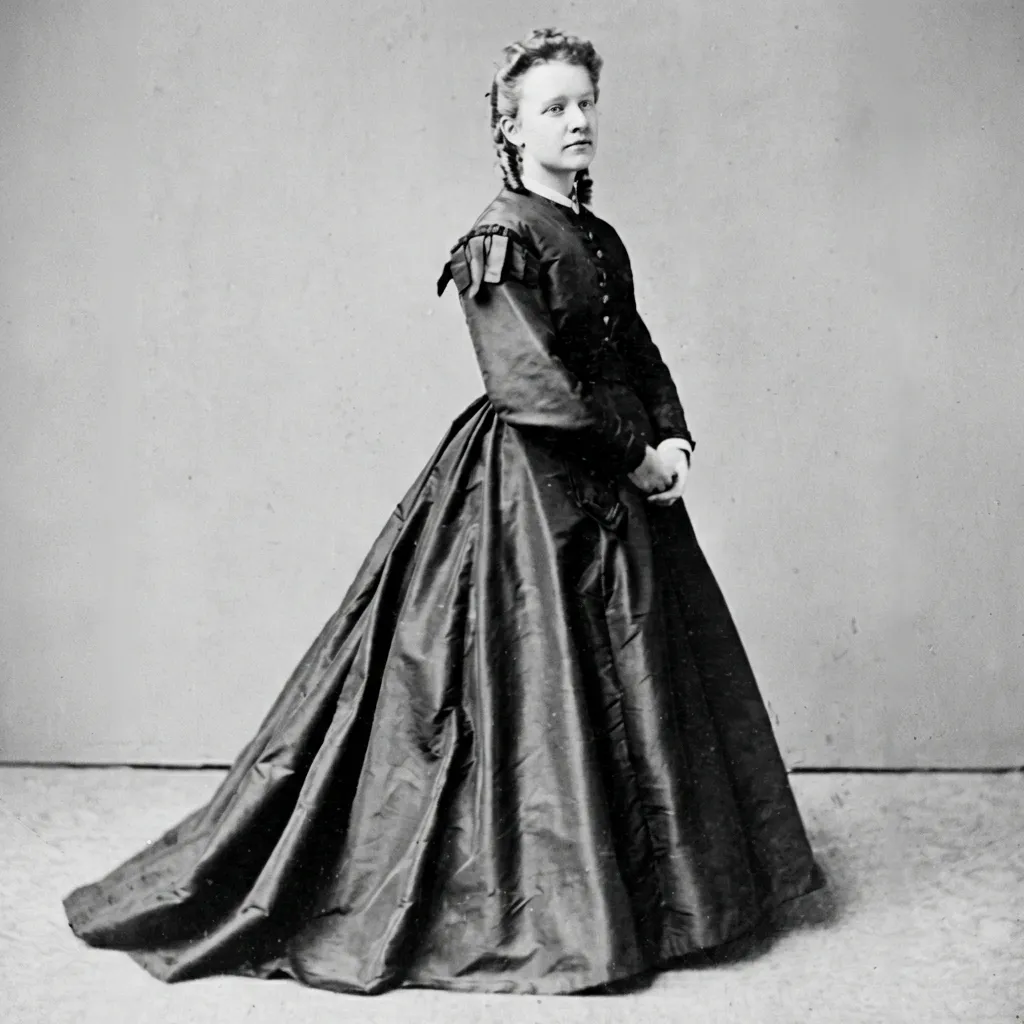
Digital restoration based on original from RKD – Netherlands Institute for Art History.
Here she is, shortly before her death. She looks away from the camera, her gaze fixed on something we cannot see. Her hair is curled, bound with a dark ribbon.
This is the face that welcomed Lawrence's daughters when they lost their mother. This is the face that watched over the chaotic, grief-stricken household in Brussels and London. And it is the face of a woman who was about to embark on a journey far stranger than anyone realized.
She is not the "invisible woman" we assumed her to be. She has a name, and thanks to the diligent preservation of Dutch history, she has a face.
When Lawrence Alma-Tadema's first wife, Pauline, died in 1869, it was Artje who came to save him. She left the Netherlands and moved to Brussels, then London, to care for his two young daughters. For two years, she was the only mother they knew—the Dutch-speaking heart of a household in mourning.
When Lawrence married Laura Epps in July 1871, Artje stayed through the transition, helping the new bride navigate a ready-made family, two grieving children, and a husband whose studio was filled with marble and ghosts. She remained until 1873, when she finally left the London household to begin her own life.
For those critical years—1870 to 1873—she was the invisible scaffolding that allowed the Sanctuary to be built. She sang lullabies in Frisian while Lawrence entertained critics and collectors. She kept the household running while he painted his way into British high society.
The Caribbean Mystery
The story we have always been told is that Artje returned to the Dutch flatlands to live out her days in quiet obscurity.
The truth is far more dramatic.
In 1873, Artje did not marry a local farmer. She married Herman Rodeck, a German merchant. At the time, Mayagüez was a thriving hub for German expatriates, who controlled much of the island's coffee and sugar trade to bypass British tariffs.
Artje followed her husband's trade routes across the Atlantic, leaving the gray skies of Northern Europe for the Spanish Caribbean.
The final photograph—preserved so carefully in the archives—was not taken in London or Leeuwarden. The stamp on the back reads: J. de M. Terreforte, Mayagüez, Porto-Rico.
We know that Artje Tadema, the muse of Opus I, traveled thousands of miles from the flatlands of Friesland to the tropical heat of the Caribbean. We know she was there around 1874. And we now know, with absolute certainty, that she never returned.
In a letter written on November 30, 1911—just months before his own death—Lawrence confirmed the end of her journey. Writing to his friend George Henschel about his childhood home, he stated:
"Born 1836, I left it 1838 to go to Leeuwarden, where my father was nominated the notary and where my sister the late Mrs. Rodeck, who died in Porto-Rico in 1875, was born the year of our arrival."
She died in March 1875, aged only thirty-seven. While we do not know if Lawrence ever visited her grave, we suspect we know why she died. Records indicate that her son, Pieter Rodeck, was born in Mayagüez in that same month. It seems the sister who had raised Lawrence's daughters likely died giving birth to her own.
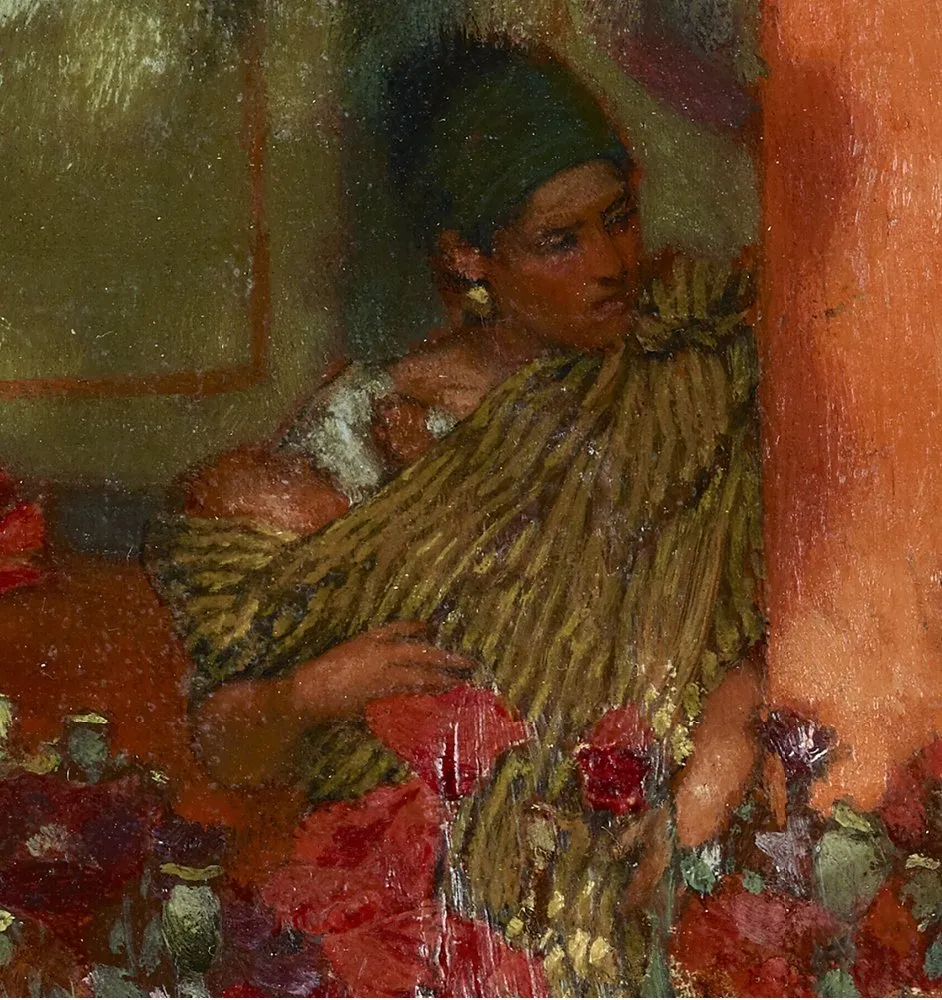
But the boy survived. By 1878, Lawrence had brought the young Pieter to London. He appears as a baby in the arms of a nurse in A Hearty Welcome (Opus CXC).
Nearly a decade later, Pieter was captured again as a boy in his uncle’s Self Portrait with Daughters and Cousin Pieter Rodeck (c. 1885–1887). He would eventually grow up to become a Reverend, a lasting legacy for the woman who once vanished into the tropical heat of the Caribbean.
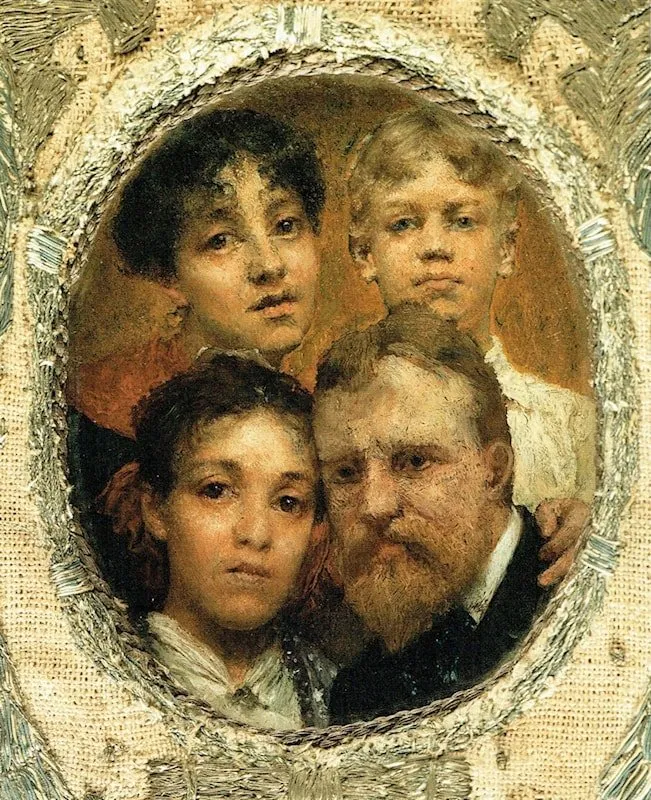
The woman who was the first face in the catalogue vanished thousands of miles from the world she helped build, but she left a life behind.
A Second Face Found: The Charlotte Gere Discovery
While Opus I remains a ghost, a dramatic discovery by the independent historian Charlotte Gere has clarified another early portrait of Artje.
In an 1870 painting by the Belgian artist Jan Frans Verhas titled An Artistic Interior, we are given a rare, smuggled glimpse into Alma-Tadema’s temporary home at 4 Camden Square. This was the house he rented briefly upon arriving in London, before moving to Townshend House.
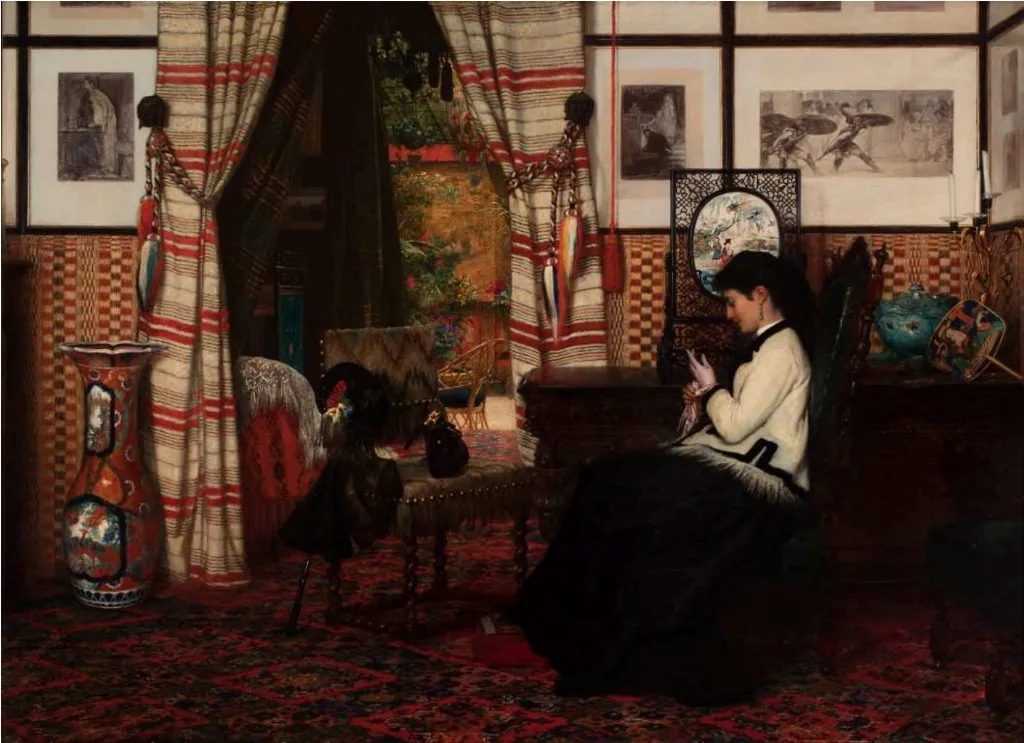
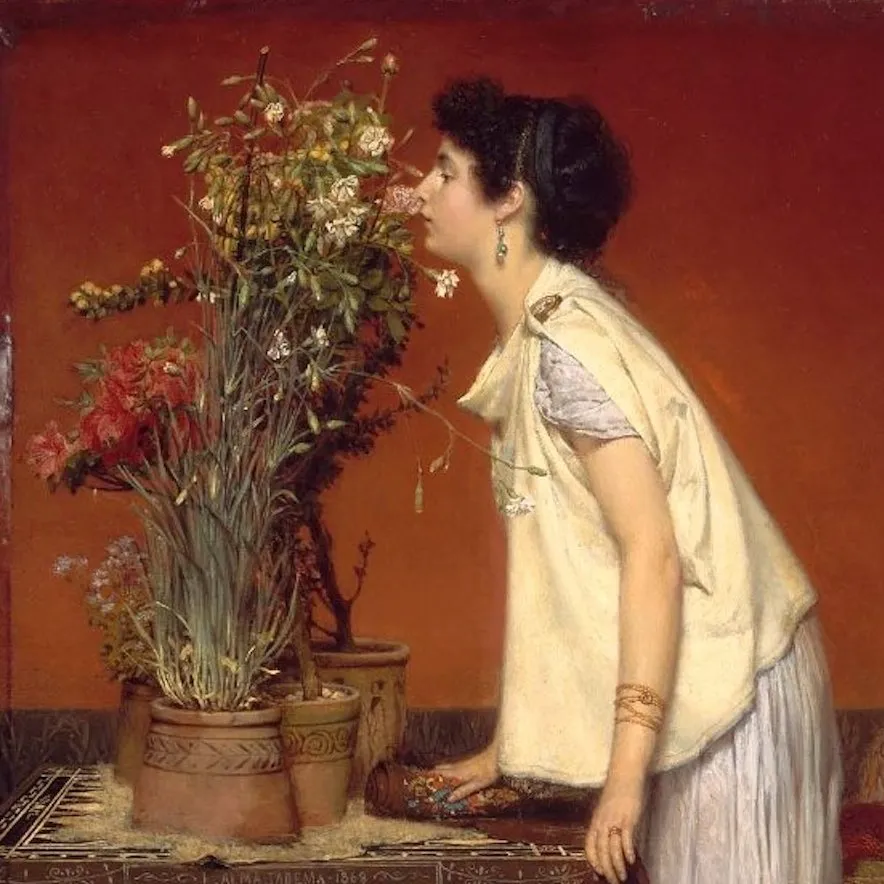
On the wall in the Verhas painting, to the left of a curtained opening, hangs a reproduction of Alma-Tadema’s own 1868 work, Opus LXI (61), titled Woman and Flowers (also known as Flowers).
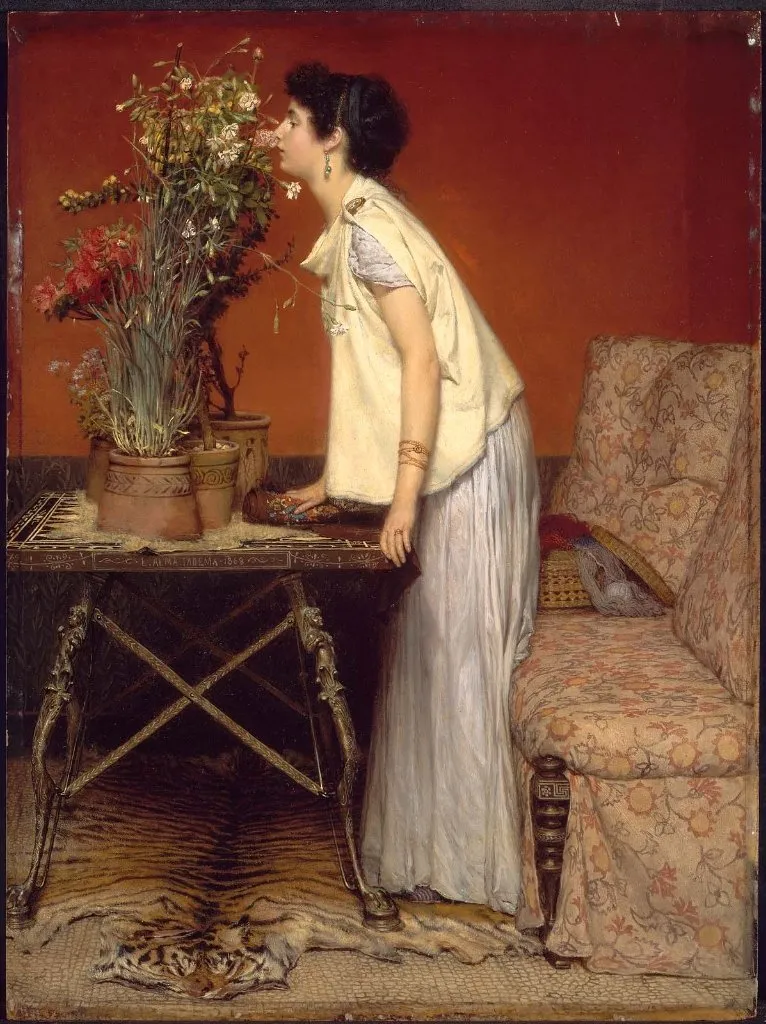
In her research published in British Art Studies, Charlotte Gere identifies the model for this 1868 painting—now in the Museum of Fine Arts, Boston—as Artje herself. Furthermore, she suggests that the woman seated in Verhas’s portrayal of the Camden Square interior is almost certainly Artje, captured during the brief window when she was the "invisible scaffolding" of Lawrence’s London life.
This discovery effectively gives us a second painted face for Artje. While the lost Opus I captured her as a girl in Leeuwarden, Opus LXI captures her in the full bloom of her time in London—surrounded by the North African striped curtains and Japanese tatami matting that defined the artist's first English sanctuary.
Visitors to the Sanctuary may find her face strangely familiar; we have chosen the figure of the young Artje from Woman and Flowers to watch over our newsletter sign-up gallery. It is a quiet tribute to the woman who once watched over the artist's home—a constant reminder that this site, and Tadema's career, began with her.
But while we can now piece together her likeness through photographs and secondary paintings, the "Number One" in Lawrence’s ledger remains a phantom. It is the missing origin point in an otherwise perfect sequence.
The Missing Foundation Stone
There is a rigorous, almost mathematical logic to how Alma-Tadema viewed his life's work. He numbered every single painting, starting with that first portrait of Artje in 1851 (Opus I) and ending with his 408th work in 1912.
Three hundred and ten works later, in 1890, he would paint his most famous face: the pianist Ignacy Jan Paderewski (Opus CCCXI). In that portrait, the background is a rich Japanese silk—a testament to the "Japonisme" that both the painter and the pianist adored.
But whether he was painting a global superstar against the gold of the East or his own sister in the gray light of home, the protocol was the same: a number in the corner, a place in the ledger.
There is a strange poetry to the fact that this entire artistic empire rests on a foundation no one can see. Opus I has not surfaced in over fifty years. It may be hanging in a farmhouse in Friesland, mistaken for an amateur work, or waiting in a private collection for someone to notice the signature.
While the painting remains lost, the discovery of these photographs changes everything. We no longer have to imagine the face that started it all. Artje Tadema was more than a muse for a teenage artist; she was the partner in the family's survival who provided the invisible scaffolding for the Sanctuary. Now, thanks to the archives of the Netherlands and Paris, she has been restored to her proper place—not just as a name in a ledger, but as a woman with a face, a story, and a legacy that traveled as far as the Caribbean.
Original Archive Scans
For the sake of historical accuracy, the original, unrestored archive scans are preserved below in their true, un-corrected state.
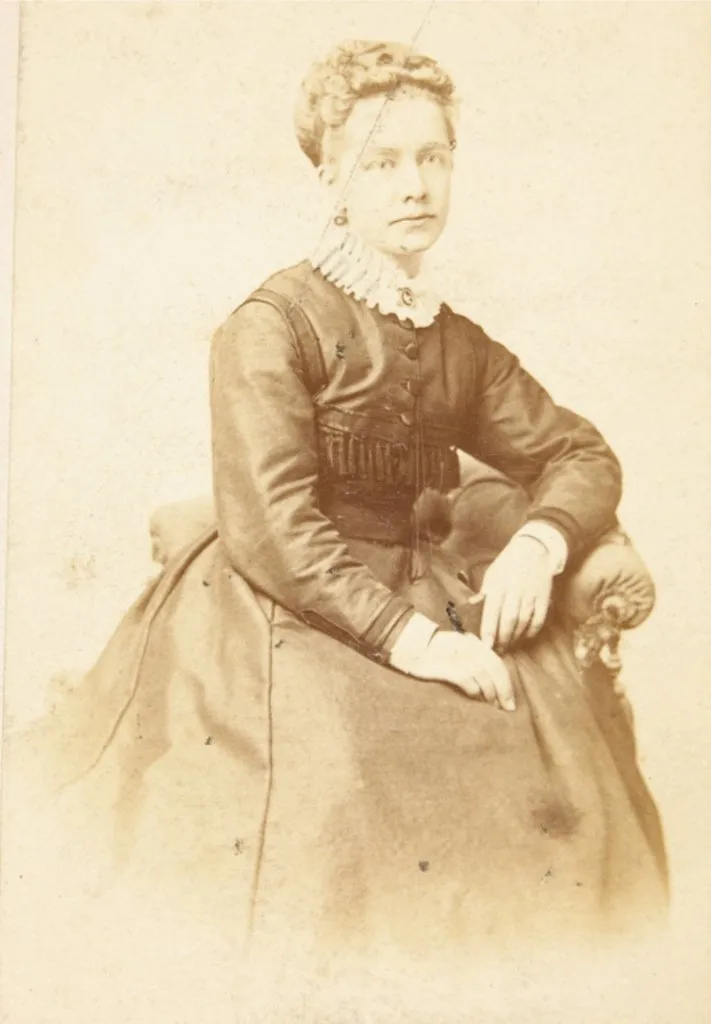
Musée d'Orsay.
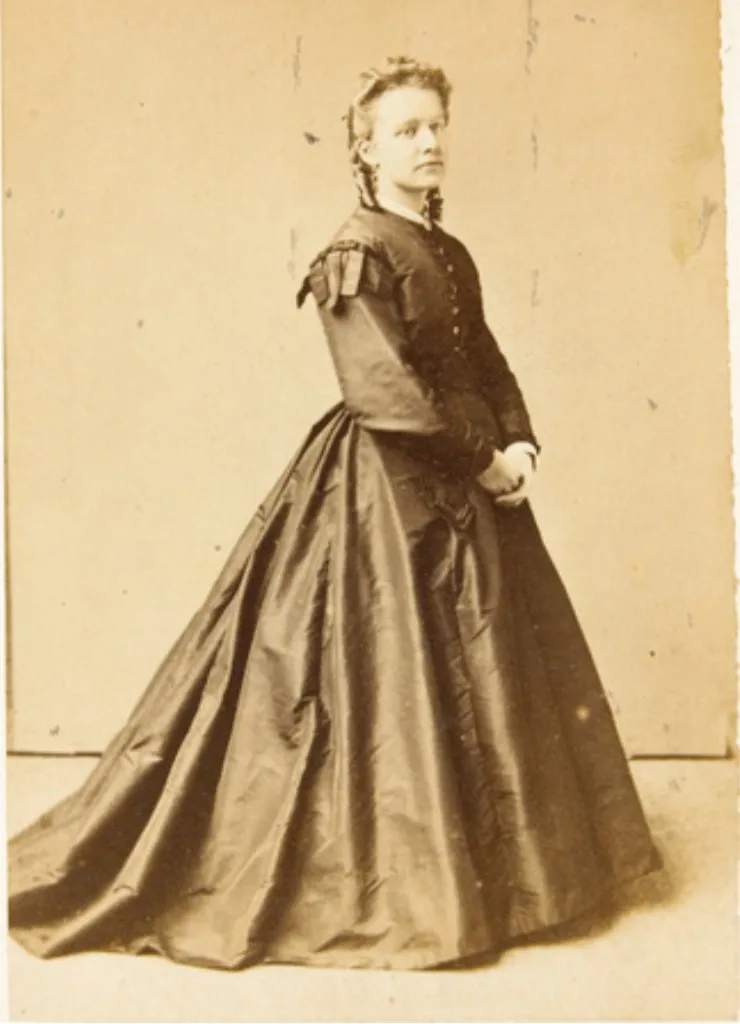
Musée d'Orsay.
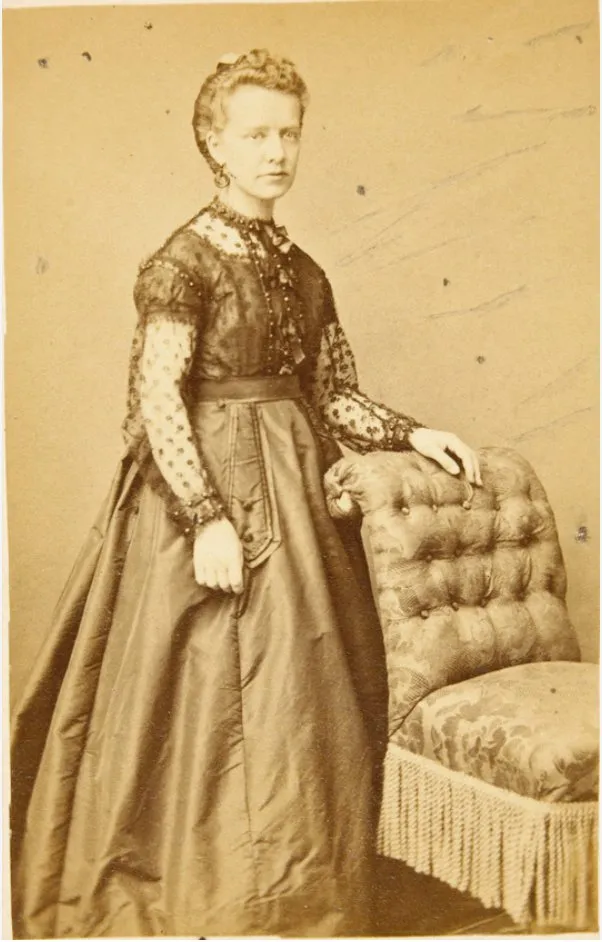
Musée d'Orsay.
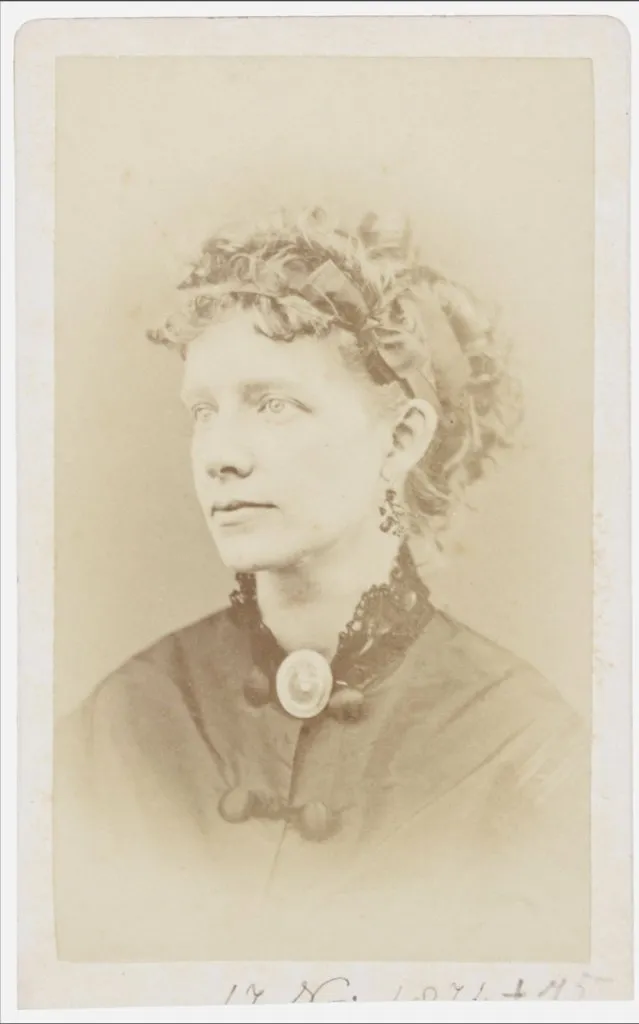
RKD.
If you know the whereabouts of Alma-Tadema's Opus I, or have any information regarding this lost portrait, please contact the Sanctuary. Some faces deserve to be found.
Leave a Visiting Card
Consulting the visiting cards...