
We often think of the artist Tadema as a painter of luxury. We see the silk, the marble, the flowers.
But to really understand him, you have to look at the dirt.
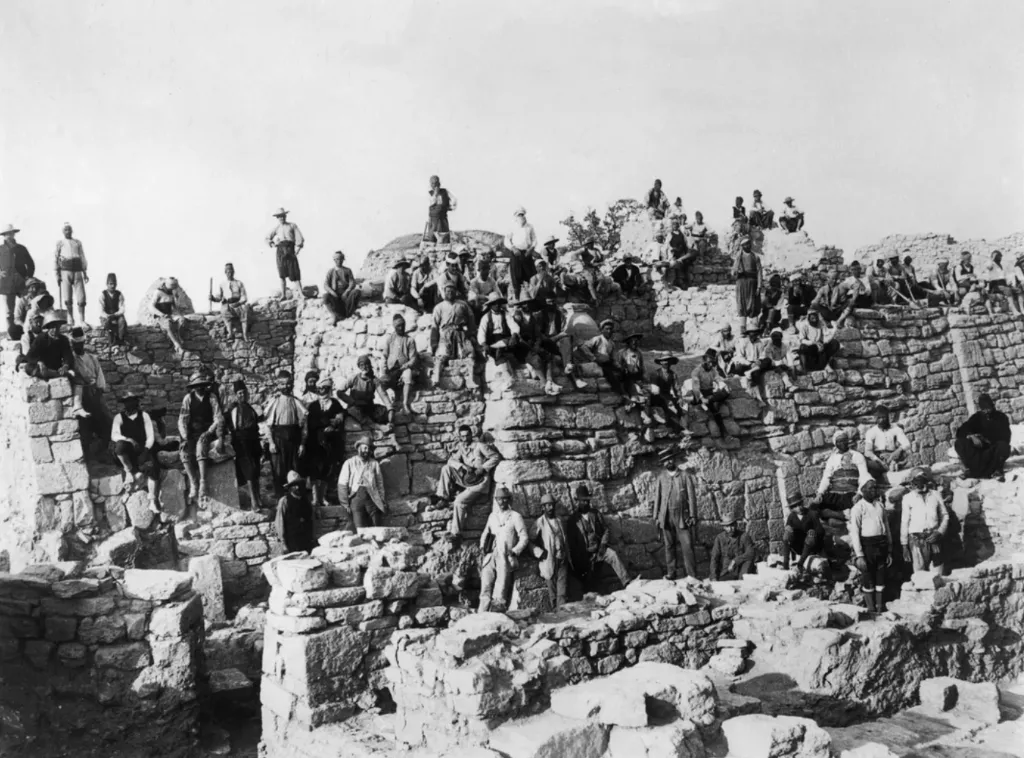
He lived in the Golden Age of Archaeology. It was a time when the earth was opening up and revealing its secrets at a dizzying rate.
- In 1870, Heinrich Schliemann began digging at Troy, proving that the Iliad wasn't just a myth.
- In the 1870s, excavations at Pompeii became more scientific, revealing street plans and domestic lives.
- In the 1890s, Arthur Evans would uncover the Palace of Knossos in Crete.
The newspapers were filled not just with politics, but with diagrams of ruins. The Victorian public was obsessed with the idea that beneath their feet lay lost civilizations.
The Visual Translator
The problem was that archaeology is dry. It is a science of broken pots, foundation walls, and dust. The academic reports were boring.
The public craved someone who could take this data and bring it to life. They needed a visual translator.
Enter the artist Tadema.
He positioned himself as the bridge between the academic and the popular. He subscribed to the archaeological journals. He knew the excavators. He updated his paintings based on the latest findings.
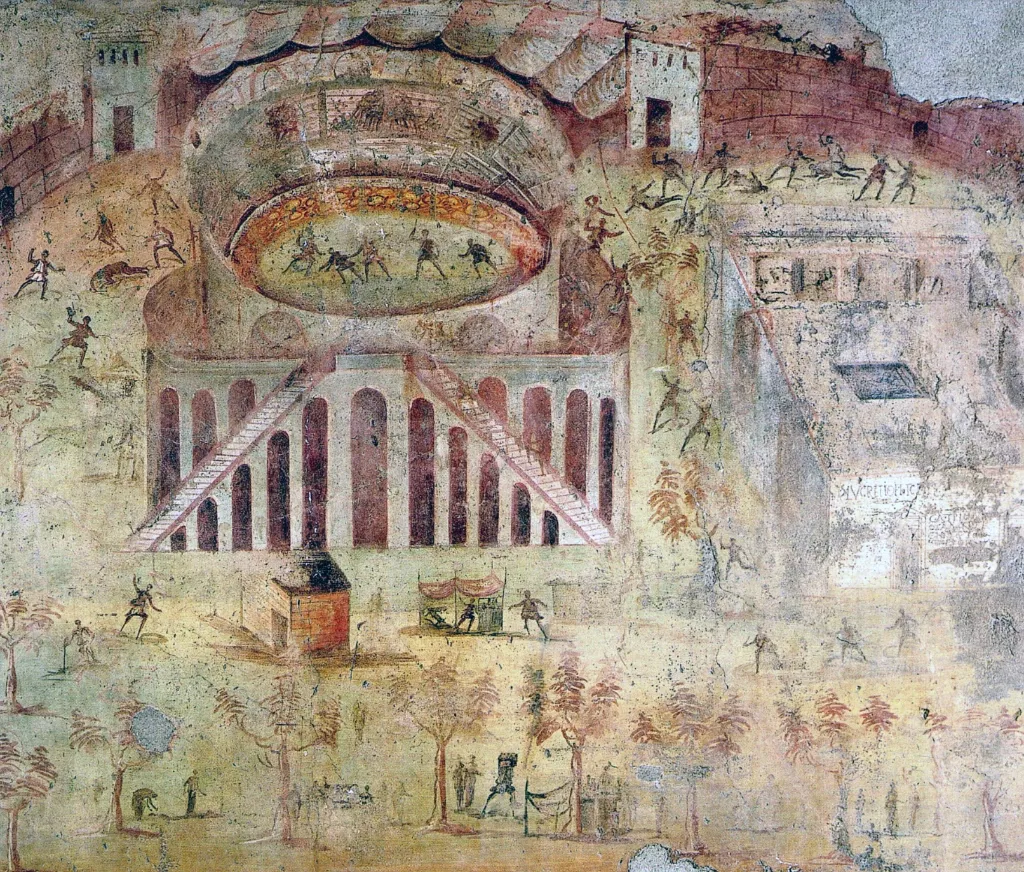
If a new dig in Rome revealed that the Colosseum had a specific type of awning (velarium), Tadema would paint a picture showing exactly how that awning worked.
The House of the Vettii
A perfect example is the House of the Vettii in Pompeii.
When it was excavated in the 1890s, it revealed incredibly well-preserved frescoes with a distinctive black-and-red color scheme. It changed the understanding of Roman interior design overnight.
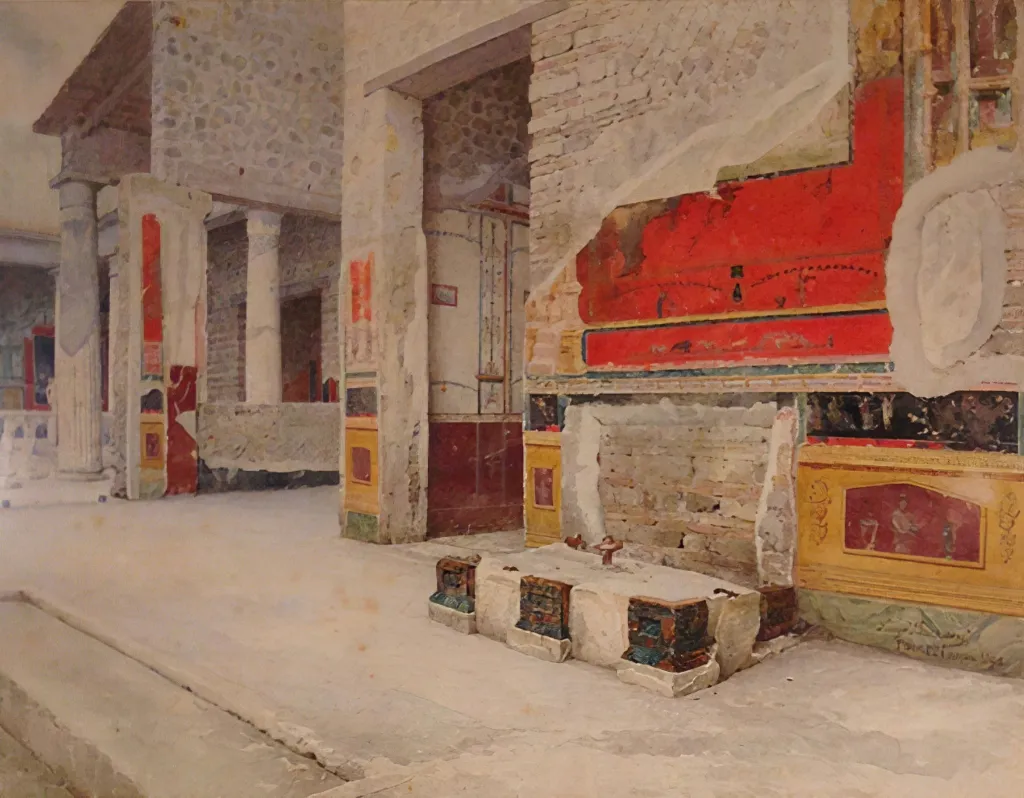
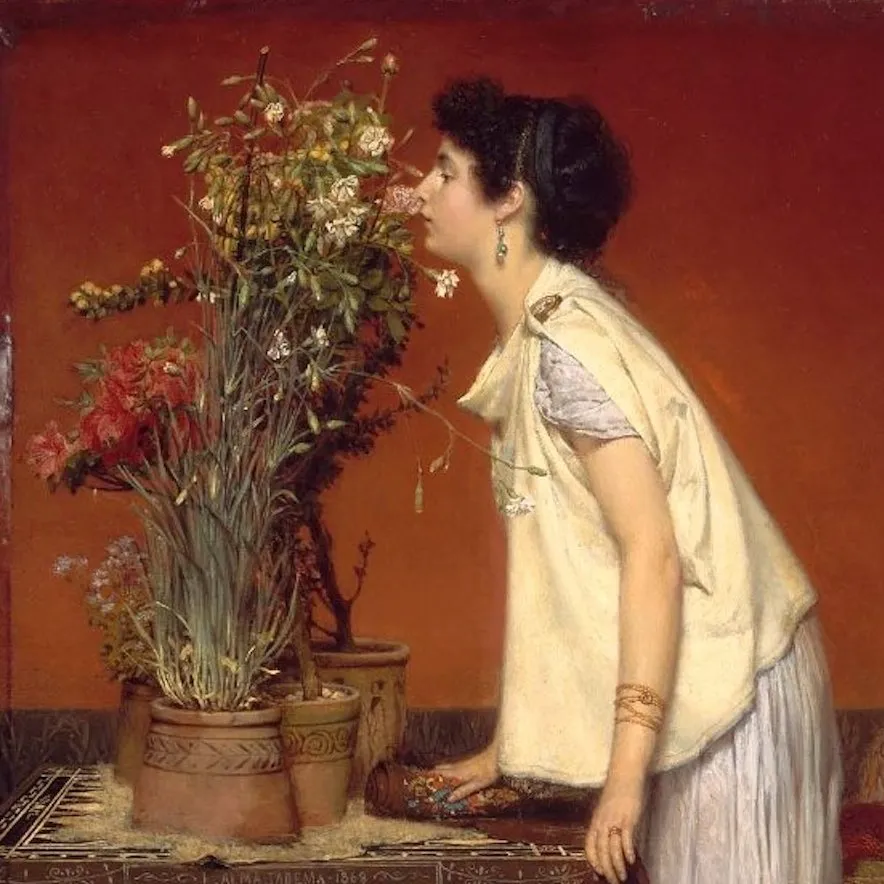
Almost immediately, the artist Tadema incorporated these specific wall colors into his next painting. He was reporting the news with his brush.
Science vs. Art
Does this obsession with facts hurt the art?
Some critics said yes. They argued that he was too literal, too pedantic. They called him a "grocer of antiquity," listing items rather than creating poetry.
But for the Victorian public, the accuracy was the poetry.
They loved the feeling of "being right." They loved knowing that the silver cup in the painting was based on a real cup in the Naples Museum. It gave the painting authority. It wasn't a fairy tale; it was a reconstruction.
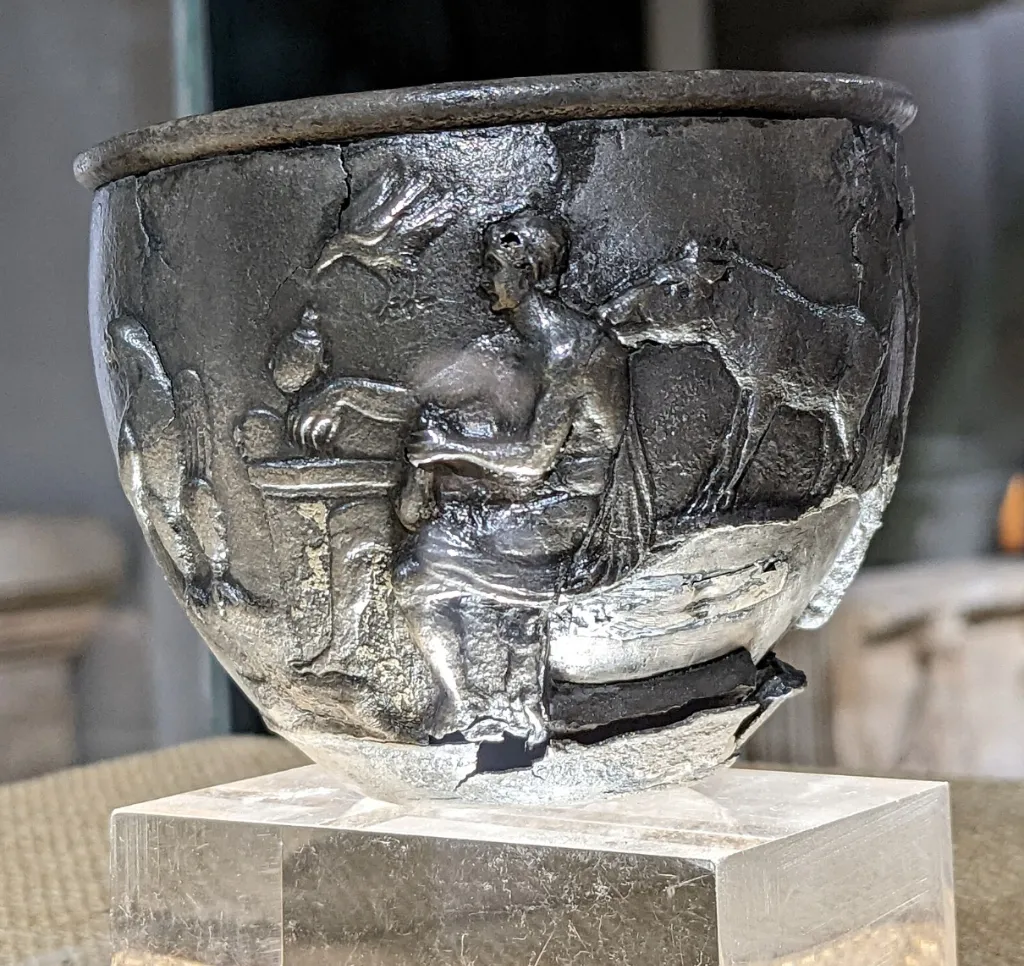
This passion led him to fill his studio with copies of the spectacular Hildesheim Treasure, found by Prussian soldiers in 1868. He didn't just paint these silver ghosts; he dined off them, collapsing the distance between his Victorian dinner parties and the feasts of ancient Rome.
In an age before cinema, the artist Tadema was the special effects department for history. He allowed people to walk through the ruins they read about in the Times. He took the dry dust of excavation and turned it into a living, breathing world.
Leave a Visiting Card
Consulting the visiting cards...