The sun in Pompeii is unforgiving. It does not merely illuminate; it bleaches. For two thousand years, the volcanic ash protected the red cinnabar and the golden ochre of the Roman walls, holding them in a dark, suffocating embrace. But the moment the excavators’ spades broke the seal, the clock began to tick. Light, moisture, and air rushed in, and the vibrant ancient world began, almost immediately, to fade.
In the late 19th century, a man could be found kneeling in this dust, racing against the sun.
His name was Geremia Discanno. He was not a famous Royal Academician. He did not attend the glittering partiesgrove at St John’s Wood. But in the grand, collaborative ecosystem that produced the masterpieces of Sir Lawrence Alma-Tadema, Discanno was the foundational stone. He was the eyes of the studio, the collector of light, and the man who ensured that when we look at an Alma-Tadema painting today, we are seeing the Roman world not as it was imagined, but as it actually was.
The Trilogy of the Studio
We often fall into the trap of the "Lone Genius" myth—the idea that a great artist stands alone before the easel, conjuring worlds from thin air. But the studio of Lawrence Alma-Tadema operated more like a Renaissance workshop or a modern film production unit. It was a hive of specialized intelligence.
To understand Discanno, we must place him within the Studio Trilogy—the three key figures who grounded Alma-Tadema’s visions in absolute reality:
- James John Gaul (The Architect): The master of structure. He built the perspective grids and architectural frameworks, ensuring the marble halls would stand up if built in reality.
- James Allanson Cull (The Naturalist): The master of life. He painted the fish, the flowers, and the biological details with zoological precision.
- Geremia Discanno (The Archaeologist): The master of surface. He provided the color, the texture, and the cultural DNA of the Roman world.
While Gaul worked in London and Cull produced zoological studies, Discanno was the operative in the field. He was the bridge between the foggy grey of London and the brilliant azure of the Bay of Naples.
A Revolutionary Education
Discanno was not bred to be a mere copyist. Born in Barletta in 1839, he was the son of a political prisoner. His father, Gennaro, had been jailed for opposing the Bourbon "Bomb King," raising Geremia in an atmosphere where art was inextricably linked to truth and resistance.
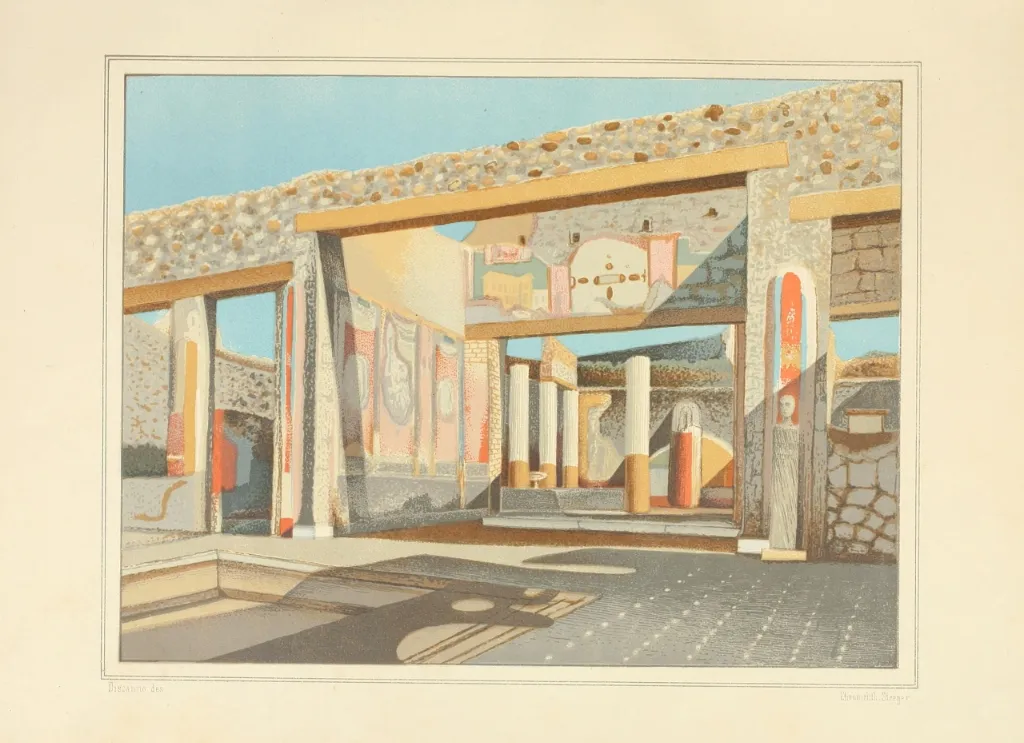
He was trained in the school of verismo—Italian realism. This was a movement that rejected the romanticized, theatrical gloss of earlier academic art in favor of a gritty, uncompromising fidelity to nature. When Discanno looked at a Pompeian wall, he didn't just see a pretty picture. He saw the cracks in the plaster. He saw the way the wax coating had yellowed. He saw the history of the object.
This radical honesty made him the perfect partner for Alma-Tadema.
The "Google Images" of 1880
Distance was the enemy. Alma-Tadema lived in London, the capital of an industrial empire, but his imagination lived in the Mediterranean. He could not hop purely on a plane to check a detail in the House of the Vettii.
Discanno became his remote sensor.
Discanno established a workshop in Pompeii where he famously mixed his paints to match the ancient Roman pigments. He documented sites like the House of L. Caecilius Jucundus with such fidelity that his watercolors captured the colors before they were lost to the sun.
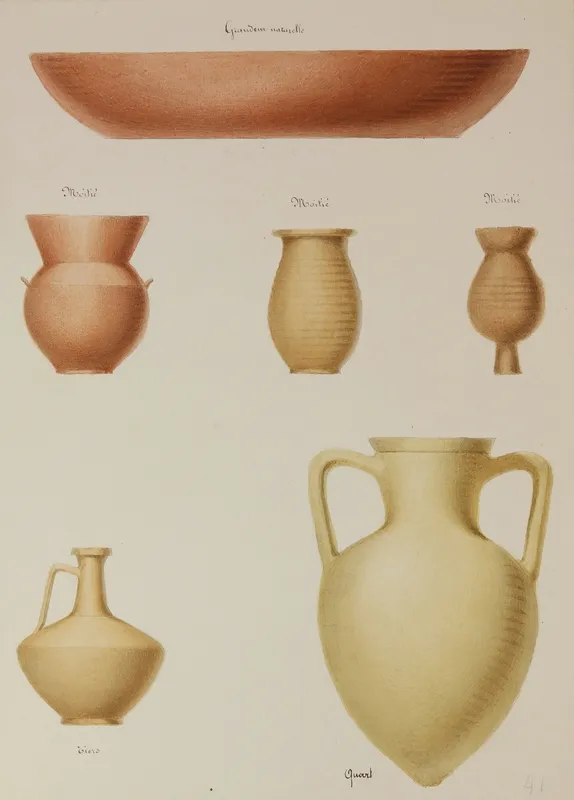
These drawings were filed into the famous Red Portfolios of the London studio. When Alma-Tadema painted his Pompeian interiors, he was citing Discanno’s research, while Portfolio 138 specifically preserved his detailed structural diagrams for pottery.
The Arbiter of Truth
Discanno’s authority grew to be absolute. In the archaeological circles of Naples, he was known as "The Arbiter." When professors and historians argued over the date of a fresco or the meaning of a motif, they didn't look to the textbooks—they looked to Discanno.
His reputation even reached the Imperial courts of Europe. In 1890, Empress Elisabeth of Austria (the famous "Sisi") commissioned Discanno to travel to Corfu to decorate her villa, the Achilleion. She did not want a modern interpretation of Pompeii; she wanted the truth. Discanno spent months painting the vaults and stairways, translating his archaeological data into a living palace for a modern queen.
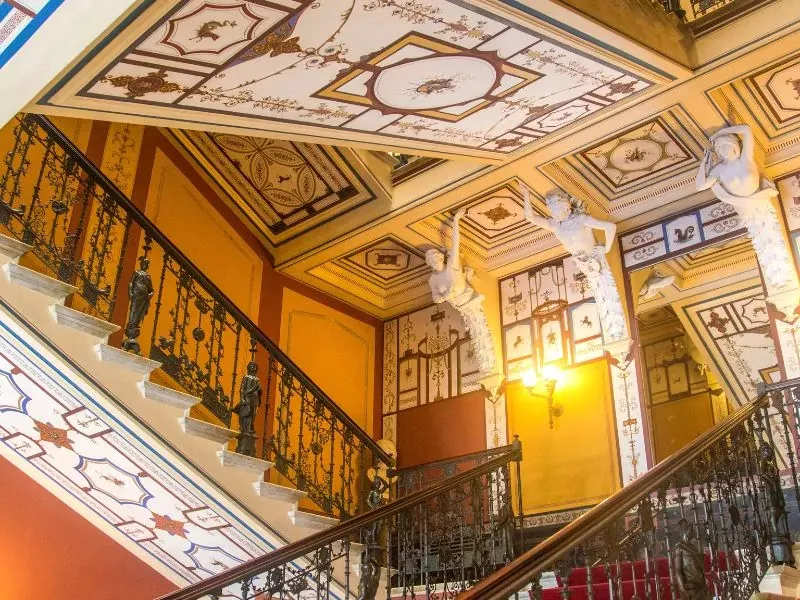
His obsession with material reality even led him into the courtroom.
In a dramatic episode that feels pulled from a screenplay, Discanno was once sued by a subordinate who claimed to have invented a special chemical adhesive for preserving frescoes. The accuser tried to destroy Discanno’s reputation by claiming the mixture was poisonous and that Discanno was recklessly endangering the art.
Discanno stood up in the crowded court. He held up a vial of the disputed chemical. And then, in a gesture of supreme confidence, he drank it.
He won the case.
The Ghost on the Wall
Today, if you visit Pompeii, you will see ruins that are majestic but often mute. The reds have turned to pinks; the intricate details have been scrubbed away by wind and rain.
The tragedy of archaeology is that to find something is often to destroy it.
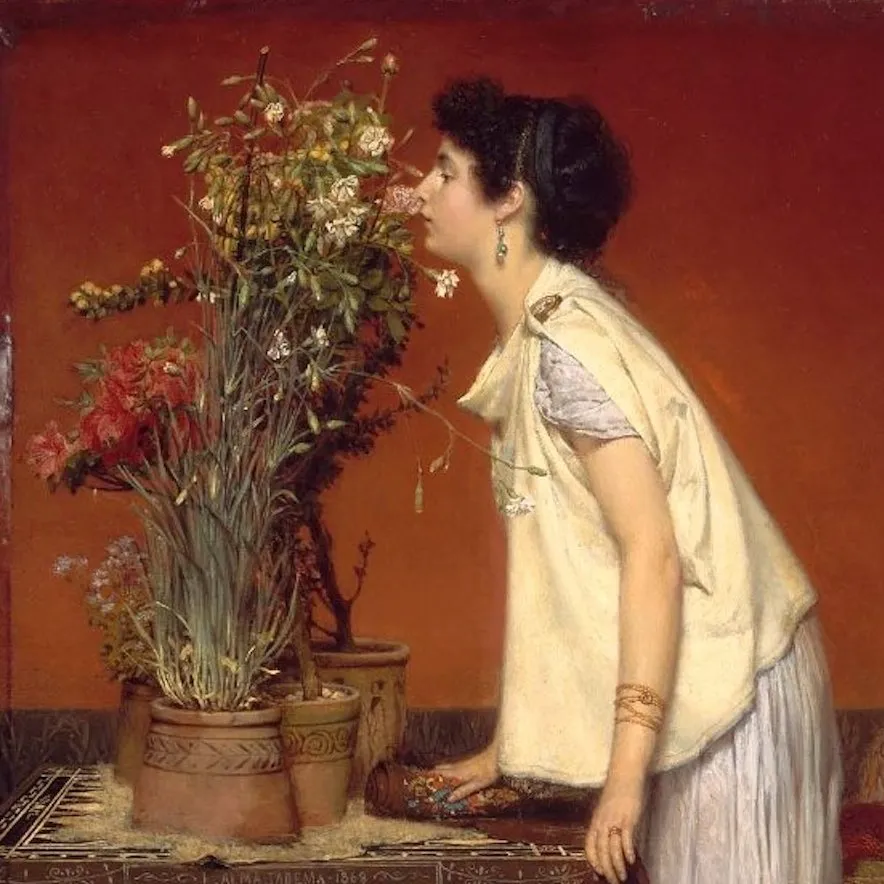
But inside the paintings of Lawrence Alma-Tadema, the walls of Pompeii are still wet with fresh paint. The House of the Greek Epigrams, the House of Orpheus, the lost villas of the rich and famous—they are preserved in high-fidelity color because Geremia Discanno captured them before they faded.
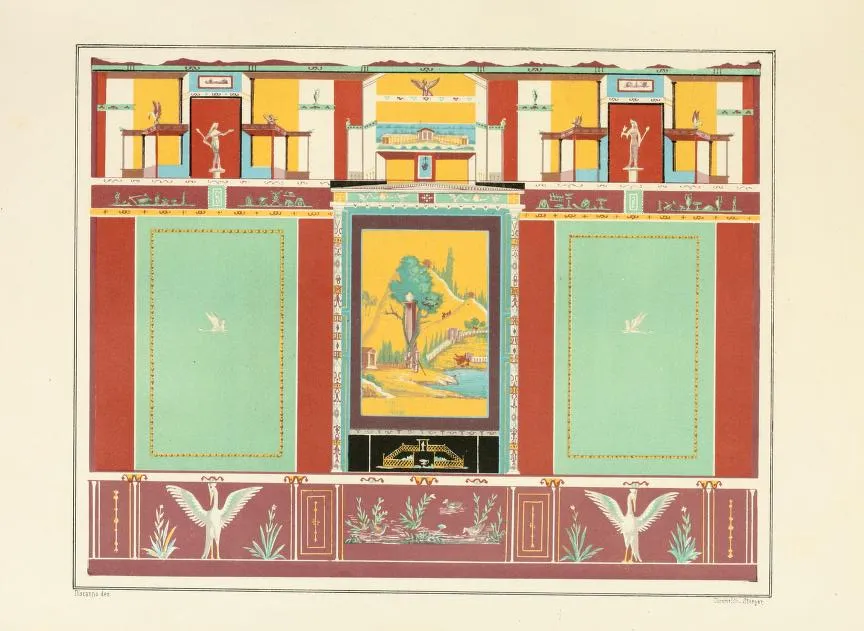
He was the "invisible hand" who ensured that the Victorian vision of Rome was not a fantasy, but a resurrection. He proved that an artist could be a historian, and that a painting could be a document of truth.
Every time you stand before an Alma-Tadema canvas and feel the heat of the stone or the coolness of the shadow, you are feeling the legacy of the man who drank the potion, the son of the revolutionary, the spy in the ruins.
Leave a Visiting Card
Consulting the visiting cards...