
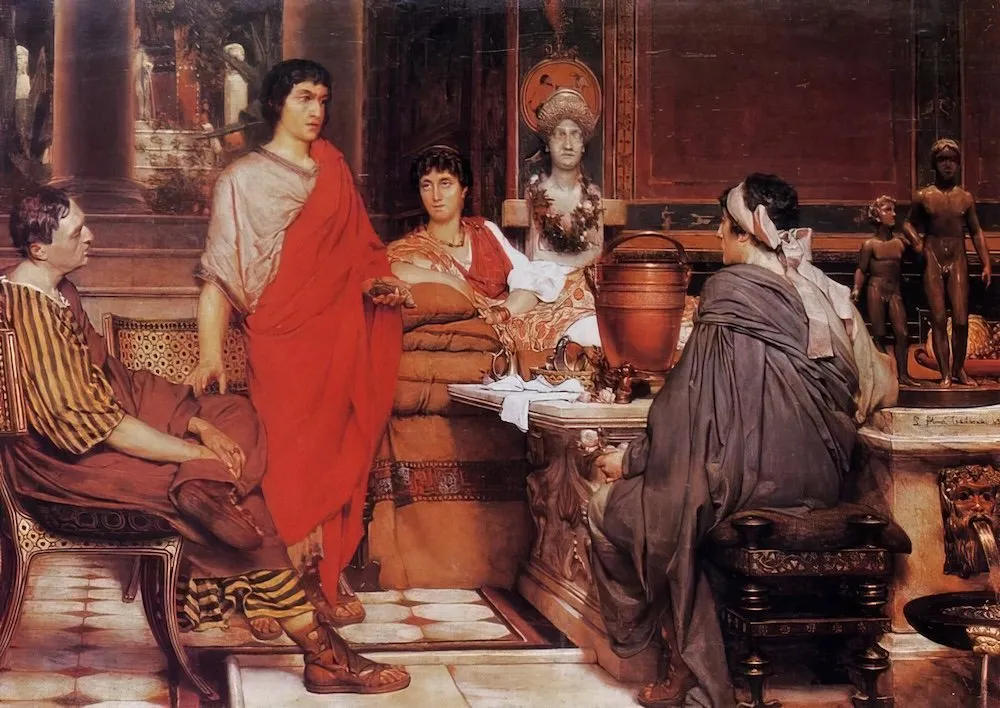
Step through the golden doors and leave the noise of the modern world behind. For the artist Lawrence Alma-Tadema, this threshold was an obsession. Across three major paintings—his Opus XXVII, XL, and LXXX—he returned to a single, haunting figure: the woman the poet Catullus called "Lesbia."
To understand who she really was—a heartless socialite, a private mourner, or an eternal Muse—we have to start here, in the heart of the Roman Republic. The air in this room carries a heavy weight. It is thick with the scent of sun-warmed wine, the faint, sweet musk of expensive oils, and the sharp, metallic tang of deep crimson walls. There is no blue sky to offer an escape; the world is enclosed, intimate, and intensely red.
In this first act of her story, a drama is unfolding in calculated silence. A man stands in a vibrant red toga, his figure cutting a bold, almost defiant silhouette against the shadows. This is Gaius Valerius Catullus (c. 84–54 BC), the great poet of heartbreak, and he is clutching a small, limp form in his palm.
It is a dead sparrow.
To understand why a grown man would bring a tiny bird carcass to a private salon, we have to look closer at the woman in the center of the room—and the secret, lopsided tragedy of the man who chose to hide her behind another name.
Clodia: The 'Medea' of the Palatine Hill
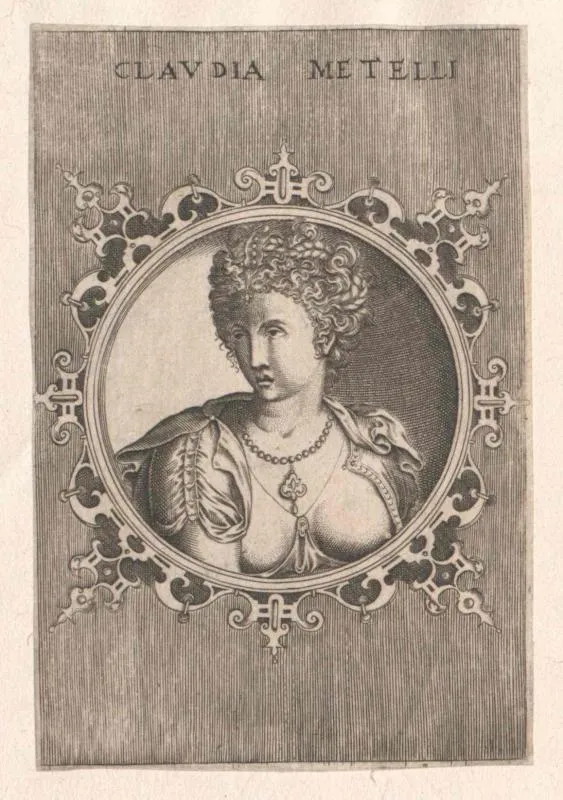
In the history books, the woman reclining on the cushions was Clodia Metelli. She wasn't just a character in a poem; she was a billionaire socialite and a political powerhouse. In 1st-century BC Rome, a woman’s life was typically a quiet affair of spinning wool and tending the lineage. But Clodia was a force of nature.
She was a daughter of the Claudii, one of the oldest and most arrogant families in Rome—a clan that believed the law was something they directed, not followed. Clodia lived a life that was “liberated” long before the word existed. She hosted lavish beach parties at Baiae, debated philosophy with the city’s elite, and influenced the destiny of Rome’s most powerful men.
To her enemies, she was a "Medea," a dangerous woman of a thousand scandals. The orator Cicero, in a legendary courtroom performance, once painted her as a common predator, an "urban Medea" who poisoned her husband and traded her favors like a merchant. But to the young, intense poet Catullus, she was his entire universe.
The Provincial Poet’s Obsession
Catullus was a boy from the provinces, arriving in the capital from Verona with a suitcase full of ambition and a heart far too fragile for the Roman "It Girl" circuit. When he first saw Clodia, he didn't see the poisoner or the socialite; he saw a goddess.
For Catullus, the world was divided into "Suns" and "Kisses." He wrote about her with a passion that had never been seen in Latin literature before—intimate, domestic, and utterly raw.
“Let us live, my Lesbia, and let us love,
and let us judge all the rumors of the old men
to be worth just one penny!
The suns are able to set and return:
When once the brief light sets for us,
one eternal night must be slept by us.”
But there was a problem. Clodia was a married aristocrat of the highest order, the wife of a Consul. In a city where gossip—the "rumors of the old men"—could be a death sentence, Catullus could not simply write her name in his verses.
The Birth of 'Lesbia'
To protect them both, Catullus created a mask. He gave Clodia a secret name: "Lesbia."
It was a brilliant literary move. The name was a direct homage to Sappho, the legendary woman poet of the island of Lesbos. By calling her Lesbia, Catullus was doing more than just hiding her identity; he was attempting to curate her. He was telling the Roman elite: “She is not just my lover; she is my intellectual equal. She is the tenth Muse.”
He wanted his mistress to be a docta puella—a learned girl who could appreciate the complex Greek meters he was weaving into his Latin poems. In his mind, he had turned Clodia into a literary masterpiece. But the real Clodia was an independent woman with her own agenda, and she likely found his poetic cage increasingly stifling.
The Code of the Sparrow
In the private language of Catullus and Lesbia, the sparrow (the passer) was their most intimate currency. It was the witness to their "thousands of kisses." In one of his most famous poems, Catullus captures a moment of burning jealousy—not of another man, but of her pet bird:
“Sparrow, my girl’s delight,
Whom she plays with, whom she holds in her lap,
Whom she gives her finger-tip to...”
He watched her let the bird peck her finger and sit in her lap, and he wished he could be that small creature, just to be that close to her skin. To Catullus, the sparrow represented the "little luxury" of their relationship, the small, seemingly insignificant moments that made up the fabric of their love.
Then, the bird died.
Catullus wrote a world-famous lament, Catullus 3, begging the very spirits of Love to weep because his girl's sparrow—"whom she loved more than her own eyes"—was gone. It was a masterpiece of Victorian-era "nice" mourning, a sign to the world that even in the ruthless world of the late Republic, there was still room for a single tear over a small life.
The Historical Consensus: The Boring Poet
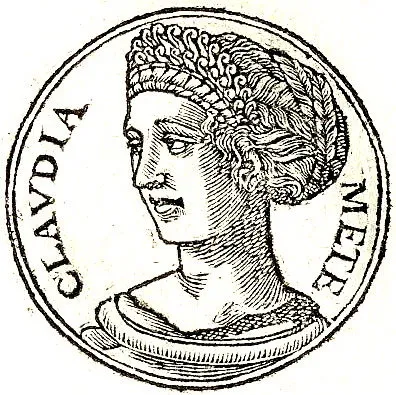
If we believe the historians and the bitter letters of his rivals, Catullus was something of a social disaster. He was the provincial boy who took things too seriously. While Clodia was playing the high-stakes games of the Roman elite, managing scandals and influencing Senate votes, Catullus was writing 116 poems carefully analyzing her every glance.
History tells us that Clodia eventually found him boring. She had a string of elite lovers who offered her visceral political power, like Marcus Caelius Rufus—men who were too busy changing the Republic to weep over sparrows. In the painting, we see glimpses of these rivals; men who recline with a casual ease that Catullus lacks, comfortable in their shared status while the poet stands awkwardly on the edge. In the eyes of the "old men" whose rumors Catullus mocked, he was just a brief, somewhat tedious footnote in a busy socialite's life. He was a poet in a world that demanded players.
Alma-Tadema's 'What If?'
But here is where Lawrence Alma-Tadema plays a cheeky game with history. He asks us: What if the rumors were not entirely true?
Look at Clodia’s face in Opus XXVII. She is reclining on her cushions, eyeing Catullus with a curious, almost assessing look as he makes his dramatic presentation—clutching the dead bird and likely delivering the opening lines of his famous lament. Her look is not one of rapturous love, but it is certainly one of attention. It is a gaze that says, “Okay, let's see what this provincial boy has brought me today.”
She is intrigued. For this brief, golden moment in the salon, the poet has managed to become the most interesting thing in the room—an entertaining distraction, a curiosity that has made the "It Girl" of Rome pause her other conversations. She is watching to see how this intense, tragic man will finish his speech.
Odi et Amo: The Torture of the Poet
But why is Catullus looking away from the very woman who is finally giving him her ear?
The answer lies in his most famous internal conflict: Odi et amo (I hate and I love).
He has arrived at her villa with a calculation in his heart. To him, the dead sparrow is the ultimate peace offering. He thinks: “I will bring this bird to her. We will weep together over its tiny body, and she will remember the day I wrote that poem. She will remember who I am, and we will bond once more in this shared grief.”
But even as he makes the presentation, Catullus is being pulled apart. He loves the "Lesbia" he has created, but he is starting to suspect—and fear—the real Clodia. He is already anticipating her betrayal, already imagining her leaving his side for a man with more "visceral" power. In his head, he is already "tortured." While he stands there in the flesh, his spirit is already prepping for the rejection he is certain is coming.
The Blindness of the Infinite Performance
The irony is that Catullus is too caught up in the "story" of his own rejection to notice his own triumph. He stands with his back half-turned to her, clutching the dead bird and looking away into his own internal, dramatic tragedy. He is so performative, so in love with the idea of being the supplanted suitor, that he is literally blinded to the fact that he actually has her ear.
He has brought a piece of their past to a woman who is ready to be entertained by him in the present, but his head is too full of the bitter, vengeful lines of his future poetry. He is a ghost in a room where the sun is finally shining on him, too busy mourning a metaphor to notice that the woman in the light is actually waiting for him to speak.
The Echo of the Crimson Room
But if Catullus is a ghost in this room, the room itself has its own secret ancestry. The vibrant, suffocating red that surrounds him was not born in a literal Roman villa, but in a studio in Brussels.
In the mid-1860s, years before Lawrence Alma-Tadema would become the celebrated "architect of light" in London, he was living a shared dream of the past with his first wife, Pauline.
Together, they had walked the sun-scorched ruins of Pompeii on their honeymoon in 1863, and upon their return to Belgium, they sought to bring that ancient atmosphere into their own home. To create the atmosphere for Opus XXVII, Tadema literally turned his Brussels studio into a Roman atrium, painting the walls that vibrant, visceral "Pompeian Red." He lived inside his own reconstruction, a world where the ancient past was not a museum piece, but a lived-in, vibrant reality.
In this first act of our trilogy, we see the "Idea of Lesbia" at its most potent. She is the socialite, the muse, and the mask. As we watch Catullus standing in that red-walled silence, we realize that his greatest rival wasn't Clodia's other lovers—it was the very poems he wrote to immortalize her.
He brought a dead bird to a living woman, too busy mourning a metaphor to notice that for one brief, cheeky moment, she was actually listening.
But as the guests depart and the sun moves over the Palatine, the performance of the salon gives way to a single, small silence.
The Trilogy Context
This article is part of the Lesbia Cycle, exploring Lawrence Alma-Tadema's preoccupation with the poems of Catullus across three masterpieces: Opus XXVII (1865), Opus XL (1866), and Opus LXXX (1870).
Next: The Weight of a Small Silence: Lesbia and the Million-Dollar Sparrow
Leave a Visiting Card
Consulting the visiting cards...