
It is a Tuesday evening in May 1881. The gaslights dim in a London theatre as Lawrence Alma-Tadema leans forward in his seat. The air is heavy with the scent of damp wool and the faint, sulfurous tang of the footlights. On stage, a German actor named Ludwig Barnay stands motionless in Roman armor, the leather straps catching the flickering light.
When he speaks, it is not with the declamatory bombast that Victorian audiences expect from their tragedies. It is quiet. Almost conversational. As if Julius Caesar himself had stepped through a tear in time, bringing the grit and resonance of ancient Rome into the heart of London.
Lawrence Alma-Tadema watches, and for a moment, the world of his paintings undergoes a mutation. He has spent seventeen years painting marble—smooth, cool, eternally still. But here, in the half-dark of the stalls, the stone begins to breathe.
What if marble could walk?
The Actor Who Became a Painting
Barnay was not English. He belonged to the Saxe-Meiningen Court Theatre, a German company that arrived in London with a radical proposition: that historical theatre should look like history. Under the direction of Duke Georg II, they had revolutionized European performance with a "total work of art" approach. No more painted backdrops and generic robes; they demanded researched, specific, and archaeologically defensible antiquity.
Their ensemble acting—where crowd scenes moved like actual crowds rather than a static chorus—and their use of naturalistic delivery was exactly what Lawrence Alma-Tadema was achieving on canvas. The Meiningen company brought to the stage the same "Visual Silence" and archaeological precision that Tadema had spent his life perfecting.
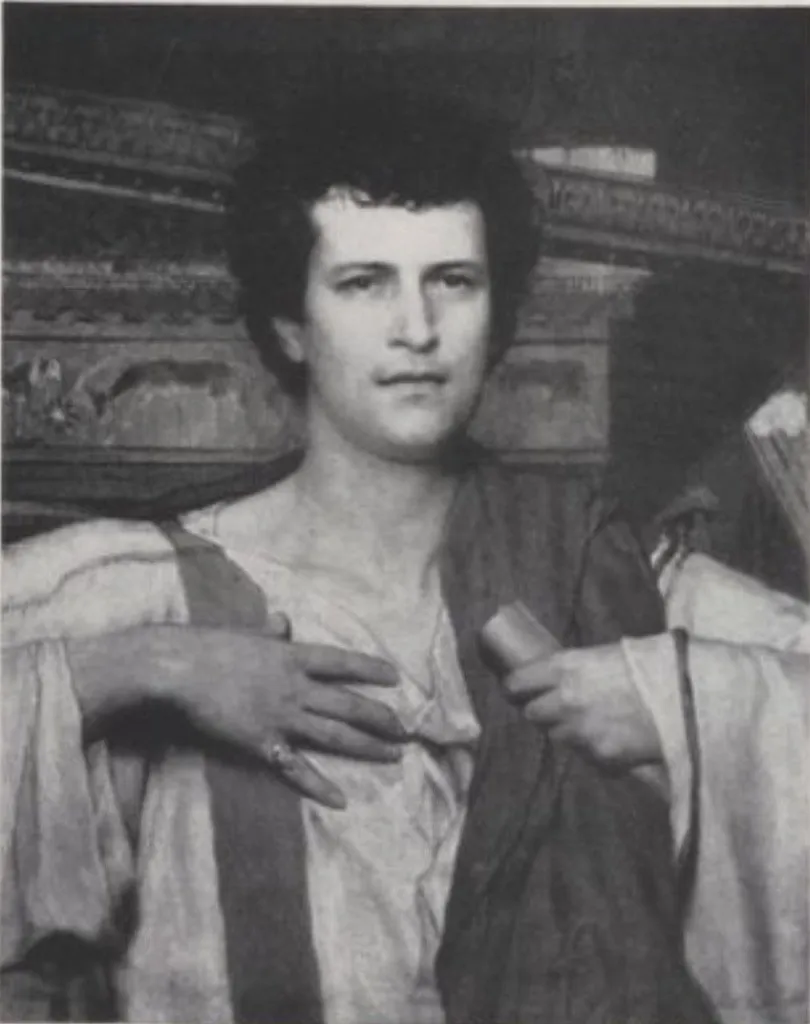
For Lawrence Alma-Tadema, it was a recognition from an unexpected quarter. Here were actors doing with their bodies what he did with paint. The following year, 1882, he painted Barnay’s portrait (Opus CCXXXVIII). Not Barnay the man, but Barnay as Mark Antony—captured mid-performance, in full archaeological costume.
This was not a commissioned portrait of a celebrity; it was a study of the fusion of actor and character. The performance style of the Meiningen company was the catalyst—the moment Tadema realized his marble didn't have to be static.
The Germination: A Theatrical Timeline
The encounter with Barnay was the seed. It would take a decade to bloom into a full second career, but the progression follows an unbroken line of inspiration:
- 1881: Watches the Meiningen Court Theatre in London. Sees Barnay perform Julius Caesar with a radical, researched precision.
- 1882: Paints Ludwig Barnay as Mark Antony (Opus CCXXXVIII), studying how a living body occupies an ancient character.
- 1883: Paints The Meeting of Antony and Cleopatra (Opus CLXXXIV), translating the theatrical inspiration into his own monumental painted vision.
- 1893: Takes his first professional stage commission, designing Hypatia for Herbert Beerbohm Tree.
- 1898–1901: Emerges as the definitive designer of the "Archaeological Shakespeare" with Julius Caesar and Coriolanus, establishing a visual vocabulary that would influence the stage for a generation.
Why This Matters: The Seed of a Vision
The Barnay portrait is the evidence of an intellectual shift that occurred a full decade before his first set commission. By painting Barnay in character, he was exploring the idea that the past could walk among us. The connection between Barnay’s naturalistic performance and Tadema’s visual aesthetic created a resonance that would eventually define the look of the Roman world for generations of theatre-goers and, much later, film-makers.
There is a profound irony in the timing. In 1882, Tadema painted Barnay as Antony, a performance that helped spark his own theatrical ambitions. Fifteen years later, when he designed Julius Caesar for Beerbohm Tree in 1898, he created the definitive visual world in which all future Mark Antonys would have to exist. Barnay’s style inspired Tadema, and Tadema, in turn, built the stage that would hold the very characters Barnay made famous.
Tree's Vision and the Marble's Walk
Herbert Beerbohm Tree believed that Shakespeare could be a visual feast. He rebuilt ancient Rome with a grandeur that matched Tadema's own. When Julius Caesar opened at Tree's Her Majesty's Theatre in 1898, it was an event. Lawrence Alma-Tadema designed eight separate sets. The forum scene featured a crowd of such complexity that it felt like a living canvas.
More people saw his vision of Rome in those six months than had seen his paintings in a decade.
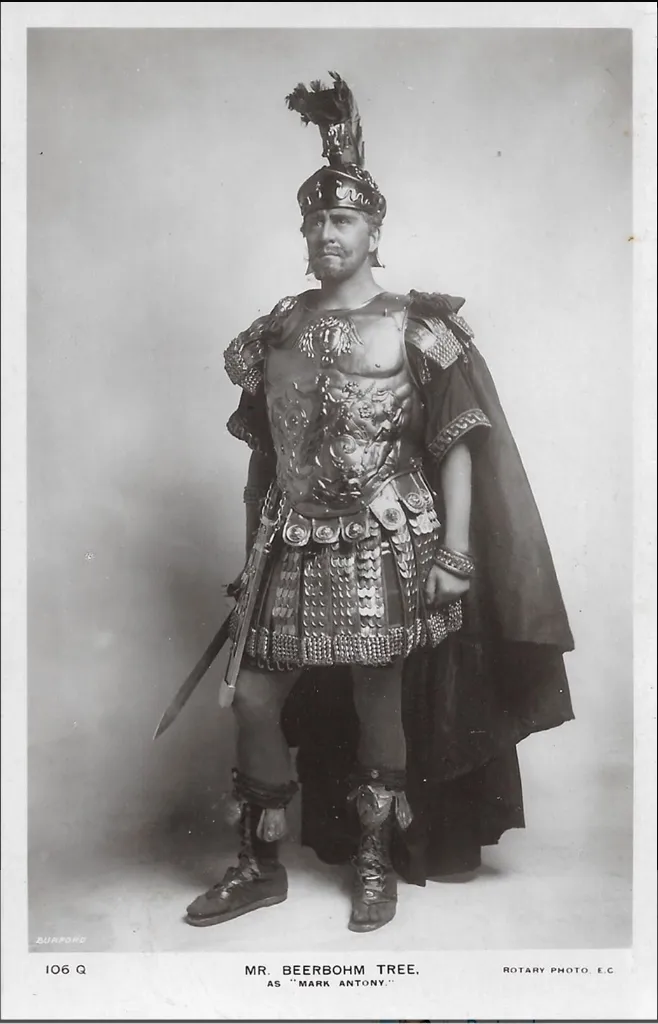
The Roman Forum was not merely a backdrop; it was a character in itself.
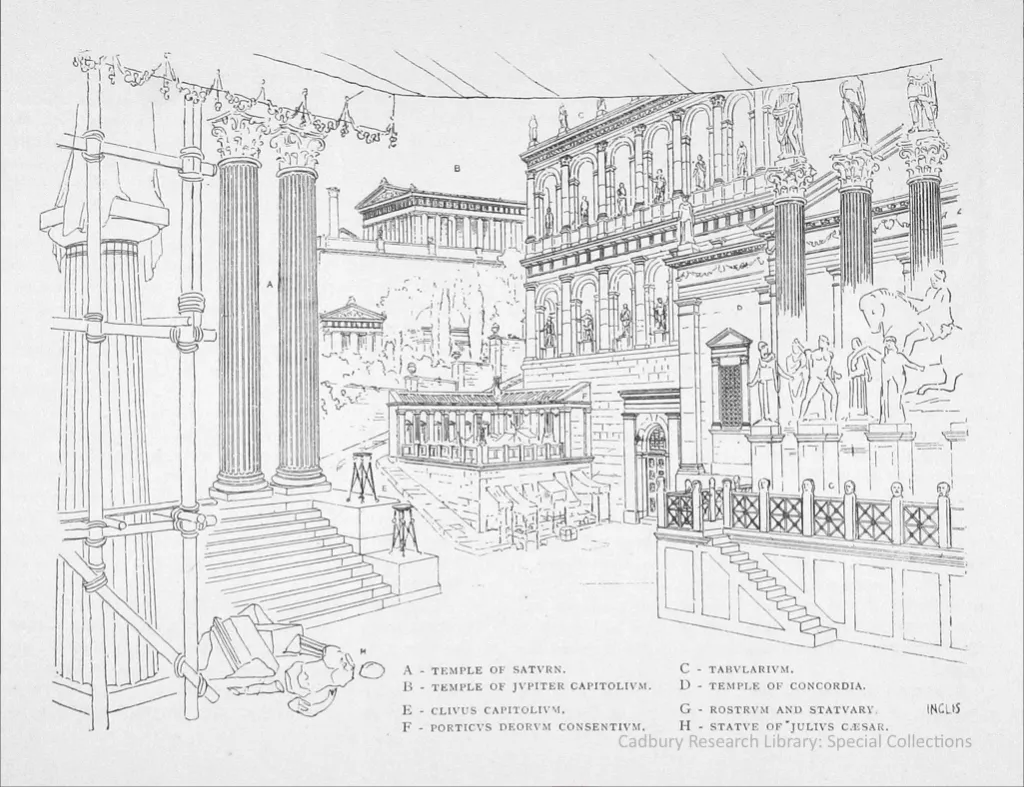
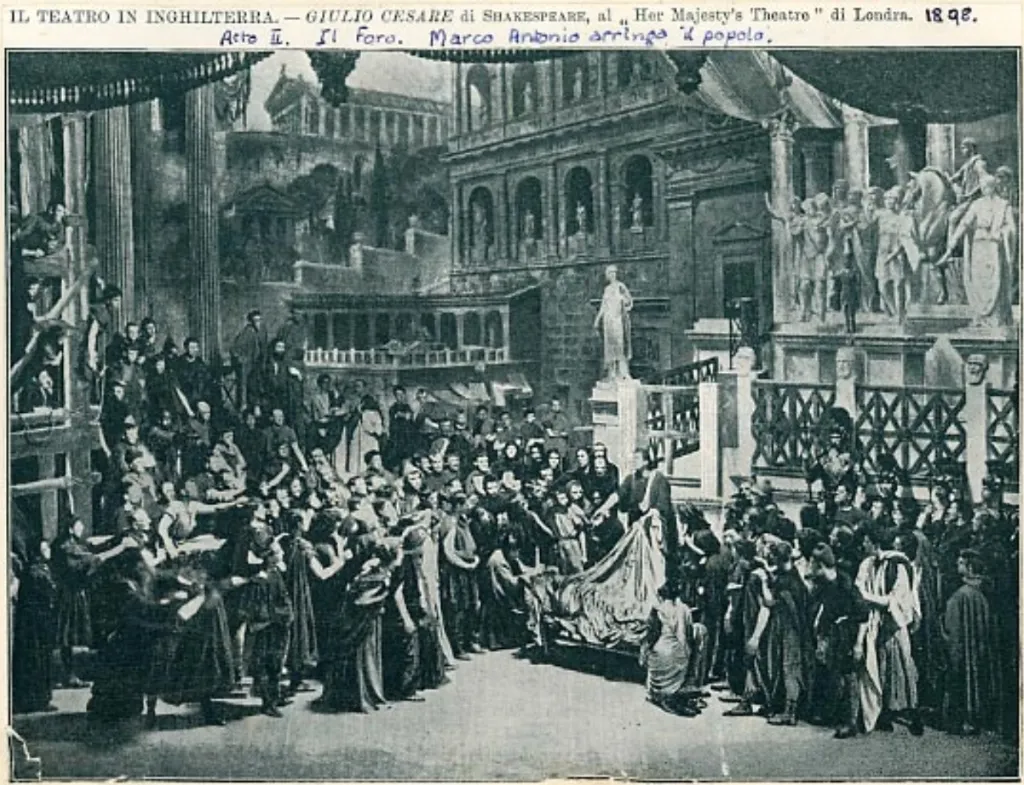
This production proved what was possible when scholarship met spectacle. It attracted the attention of Henry Irving, who ran the Lyceum Theatre with intellectual seriousness. Between 1893 and 1901, Lawrence Alma-Tadema designed for five major theatrical productions, alternating between these two titans.
Each production drew from the same well of accumulated knowledge. Cymbeline (1896) required ancient Britain and Rome. King John (1899) marked a departure into medieval England, armor, and castle architecture. This production was famously filmed, preserving a brief, flickering snippet of the "Death of King John" scene within his sets—the first Shakespeare ever captured on motion picture.
When Fashion Follows the Forum
There is a particular strangeness to cultural influence. You paint a toga with archaeological precision—consulting ancient sculpture, measuring the drape of wool—and three years later, Liberty's on Regent Street is selling "Coriolanus tunics" to Edwardian women who want to look like Ellen Terry.
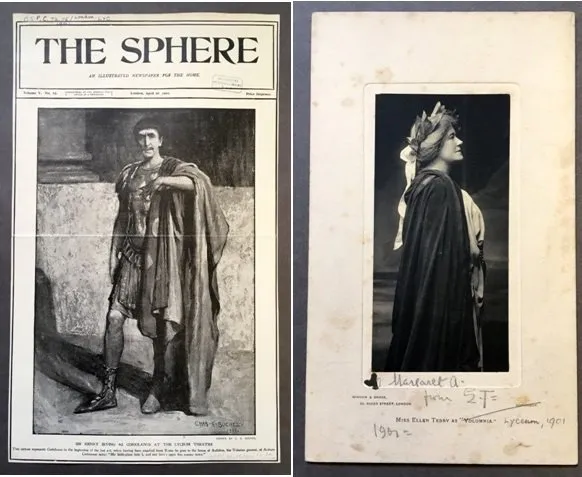
Coriolanus, which opened at the Lyceum in April 1901, was Tadema’s masterwork. Henry Irving had first approached him as early as 1879, and officially commissioned the designs in 1882. The designs sat in a drawer for nearly twenty years—"mothballed" until the 1901 premiere.
_sir-lawrence-alma-tadema__99706.webp)
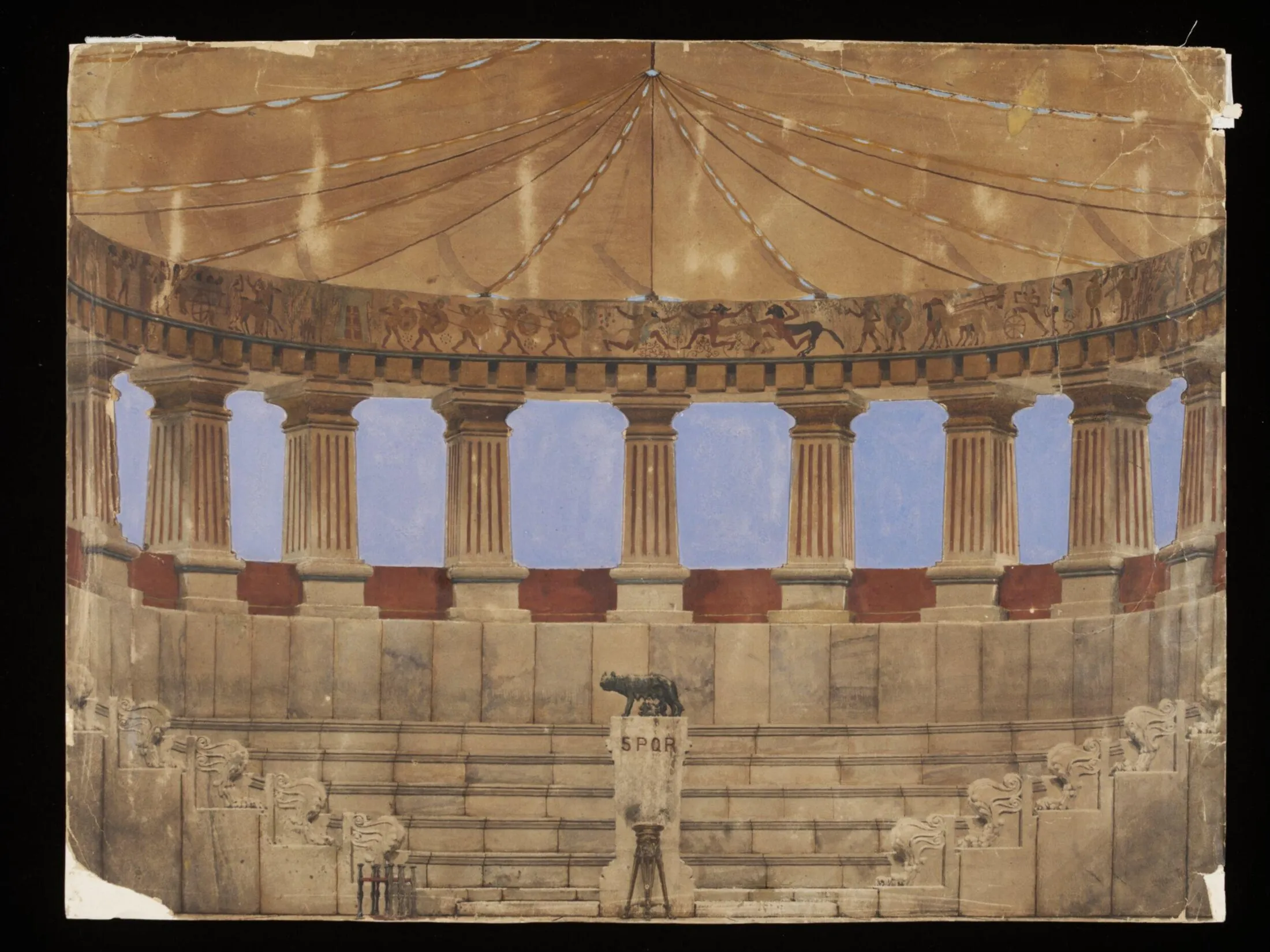
This gave him two decades to refine his research. He calculated the perspective of his sets with mathematical precision, drawing heavily from George Dennis's The Cities and Cemeteries of Etruria. He decided that the "primitive" world of the Volscians should be represented by Etruscan architecture to emphasize the cultural clash.
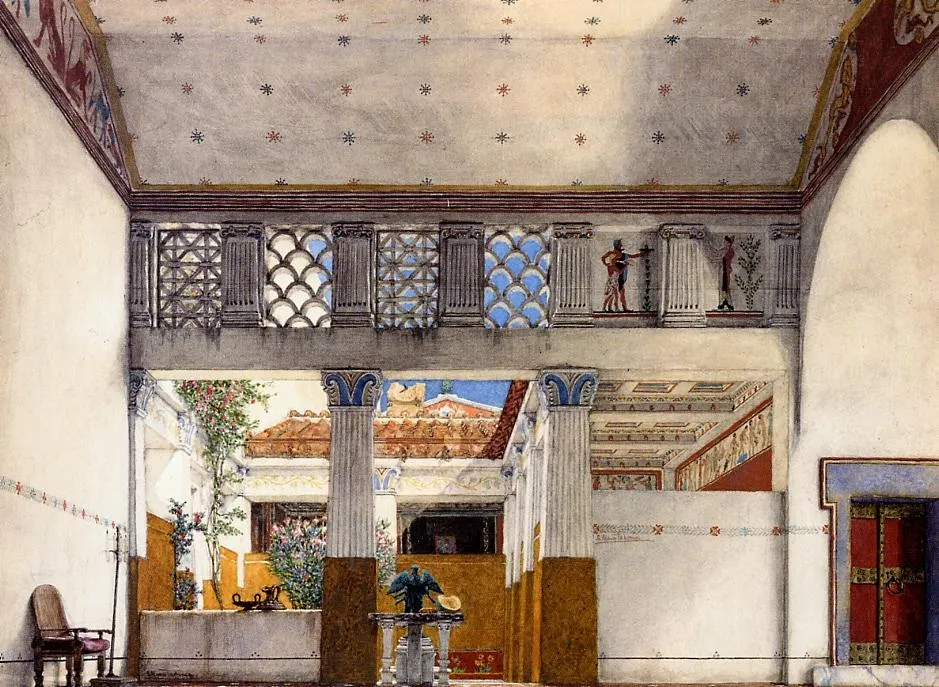
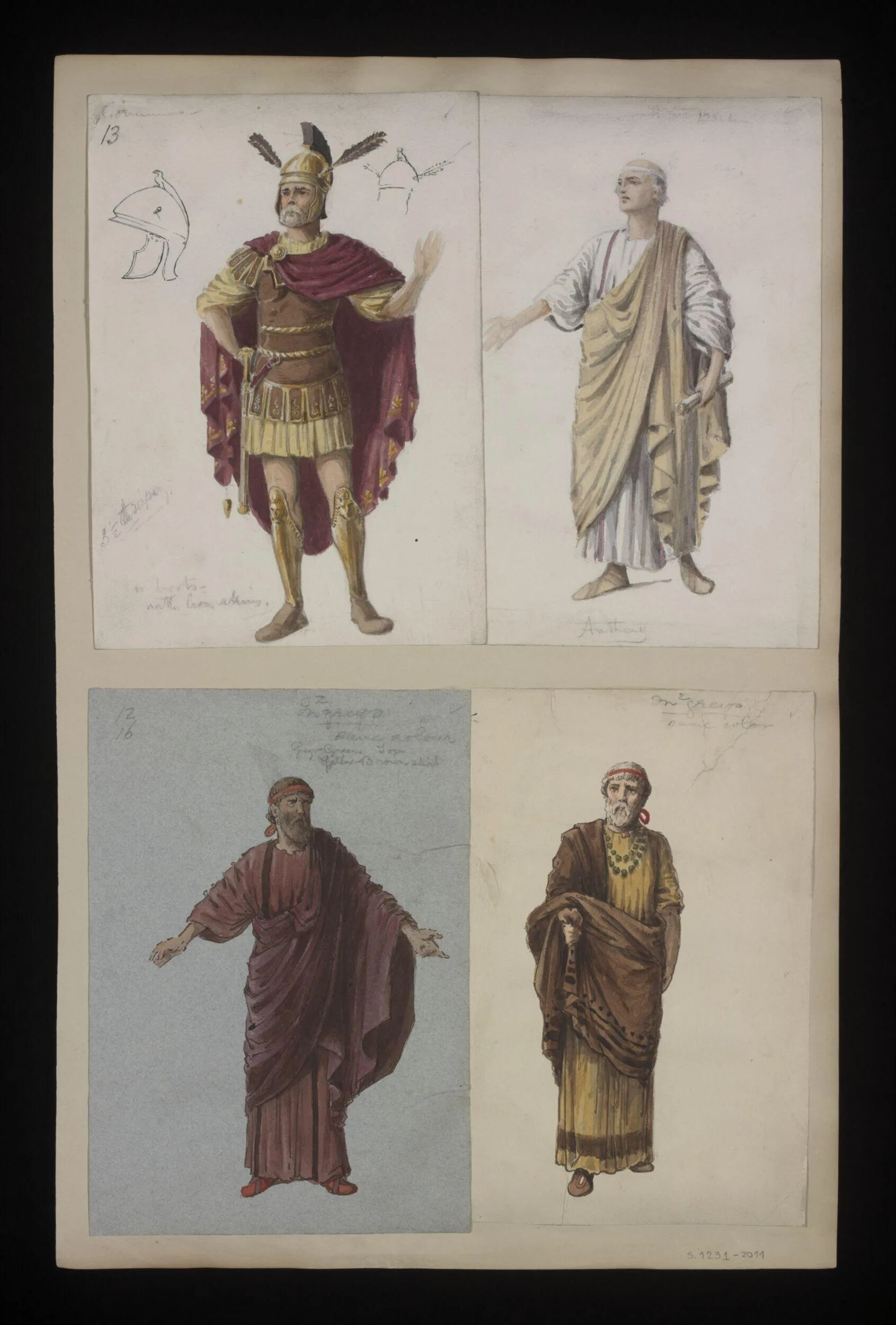
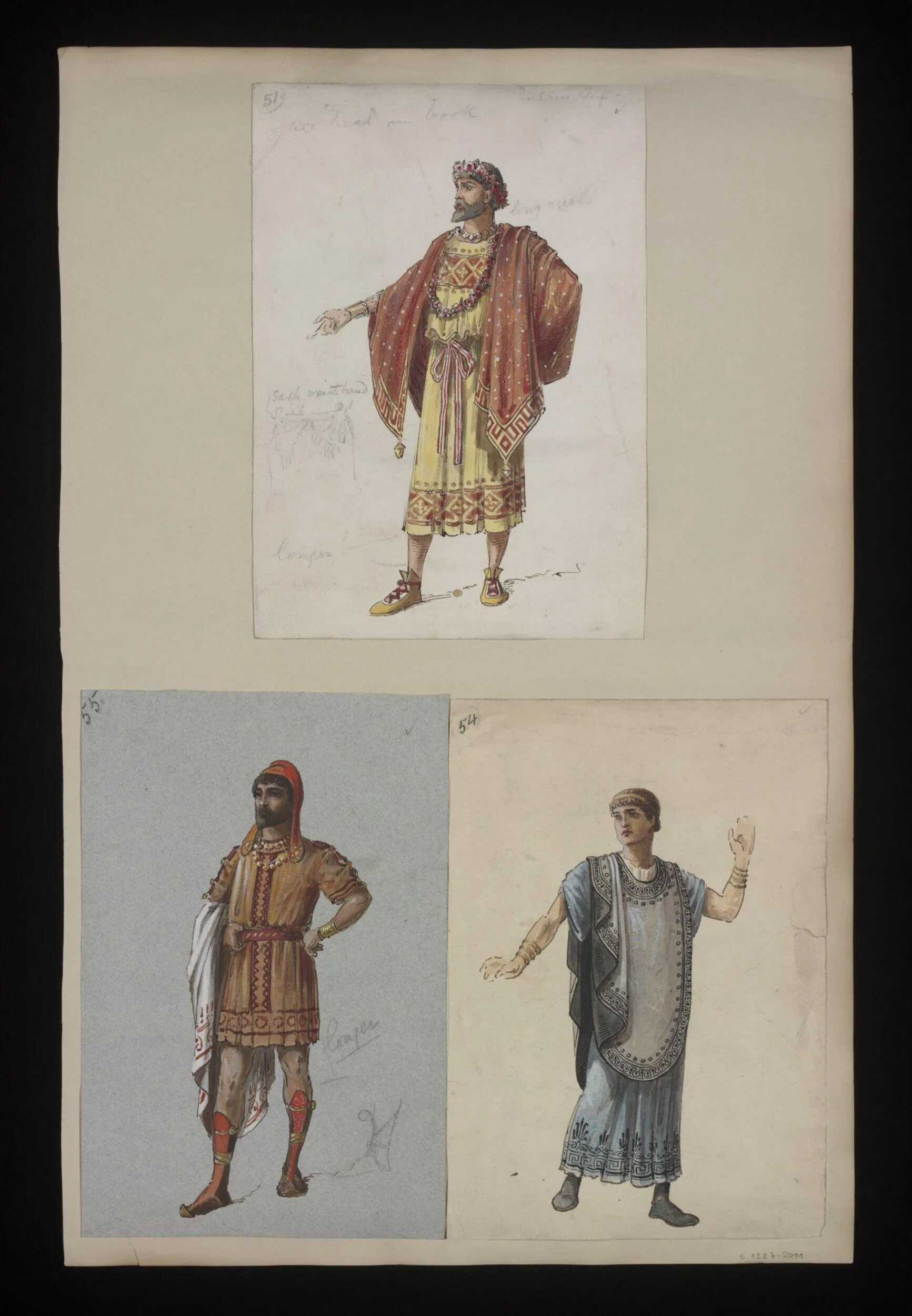
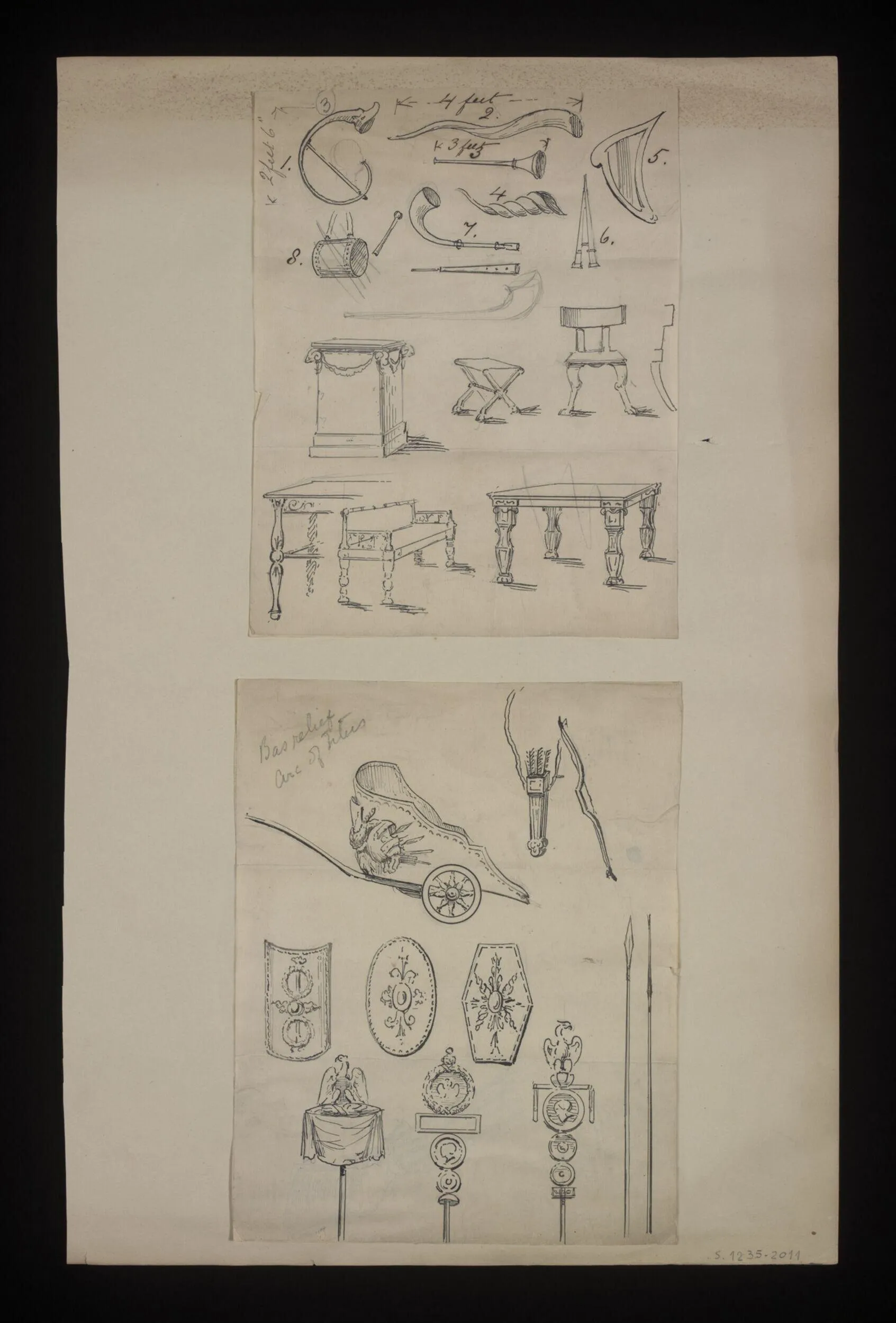
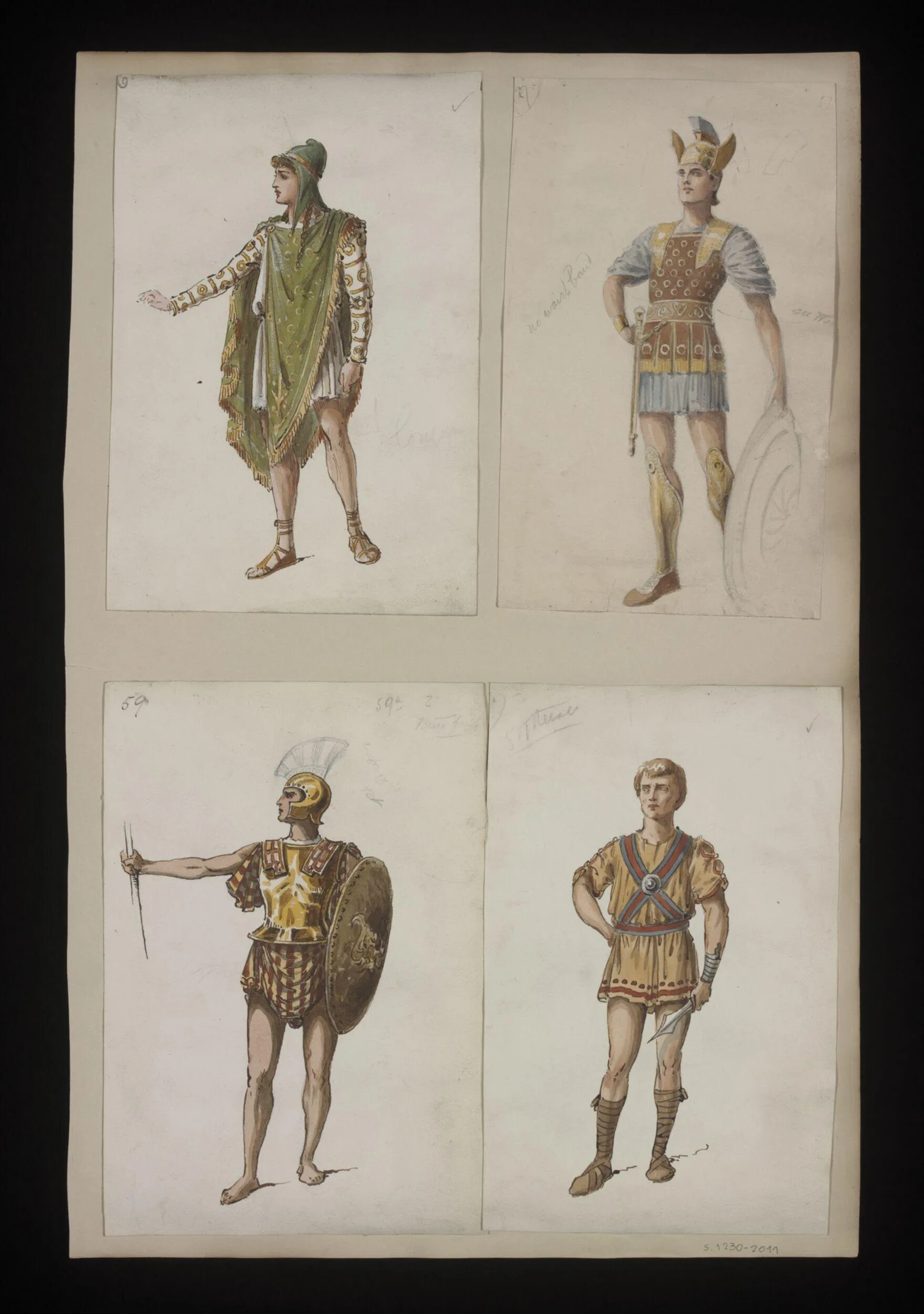
Ten sets. Fifteen scene changes. Every toga, every sword, drawn first in watercolor and annotated with archaeological references. A visit to Coriolanus was, as one critic wrote, "a liberal education in the attire, the furniture, the weapons and the architecture of Rome."
The Lawrence Alma-Tadema Method: Designing History
What did it mean to design history? He began with watercolors, rendered as if they were finished paintings but annotated with marginalia: which museums held comparable examples, which angle of light would best serve the movement. He visited costume workshops to specify the exact weight of a wool toga or the metalwork on a centurion's armor.
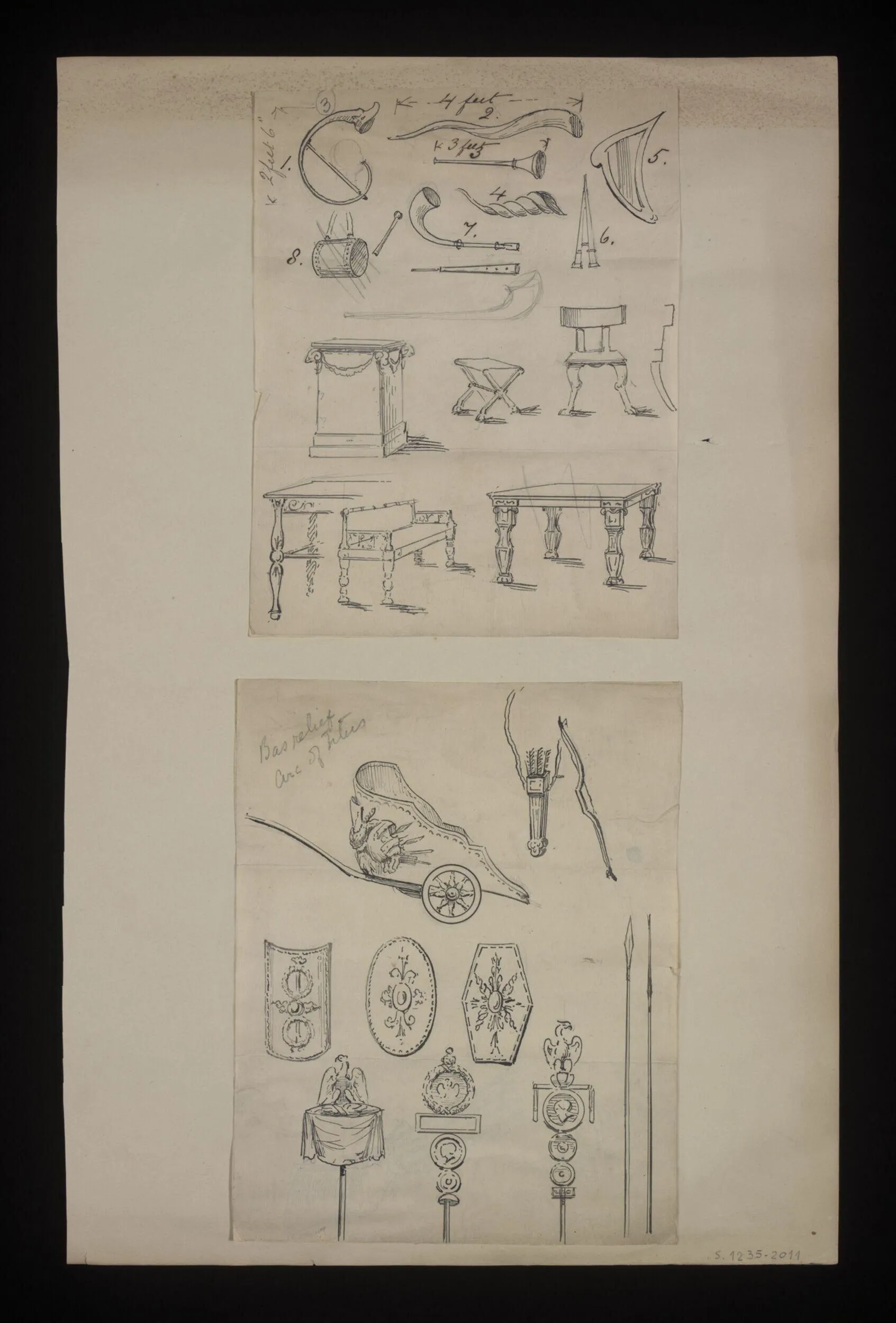
He worked with scene painters to ensure the marble in his sets had the same cool luminosity as the marble in his paintings. This resonance was precisely what convinced the audience.
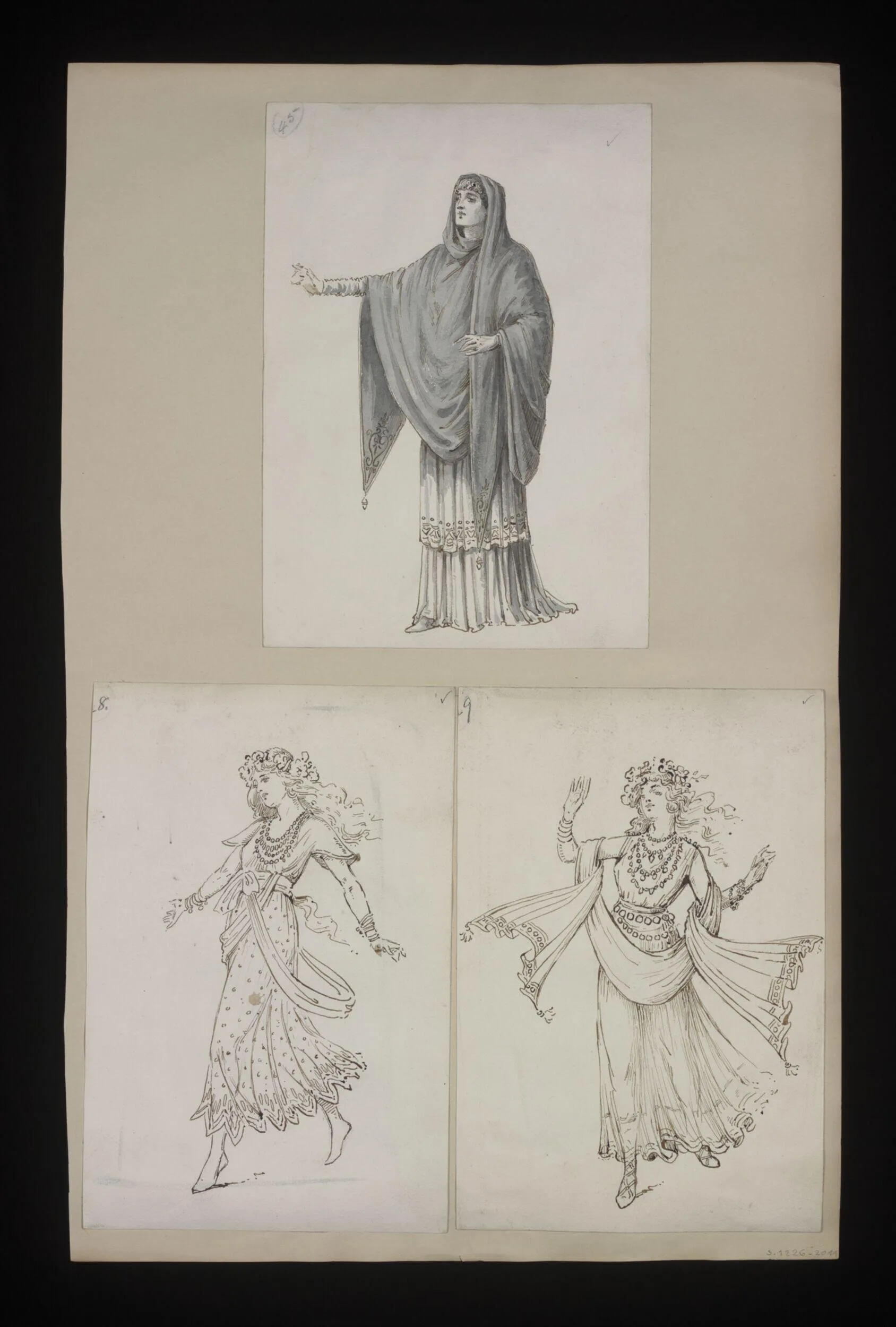
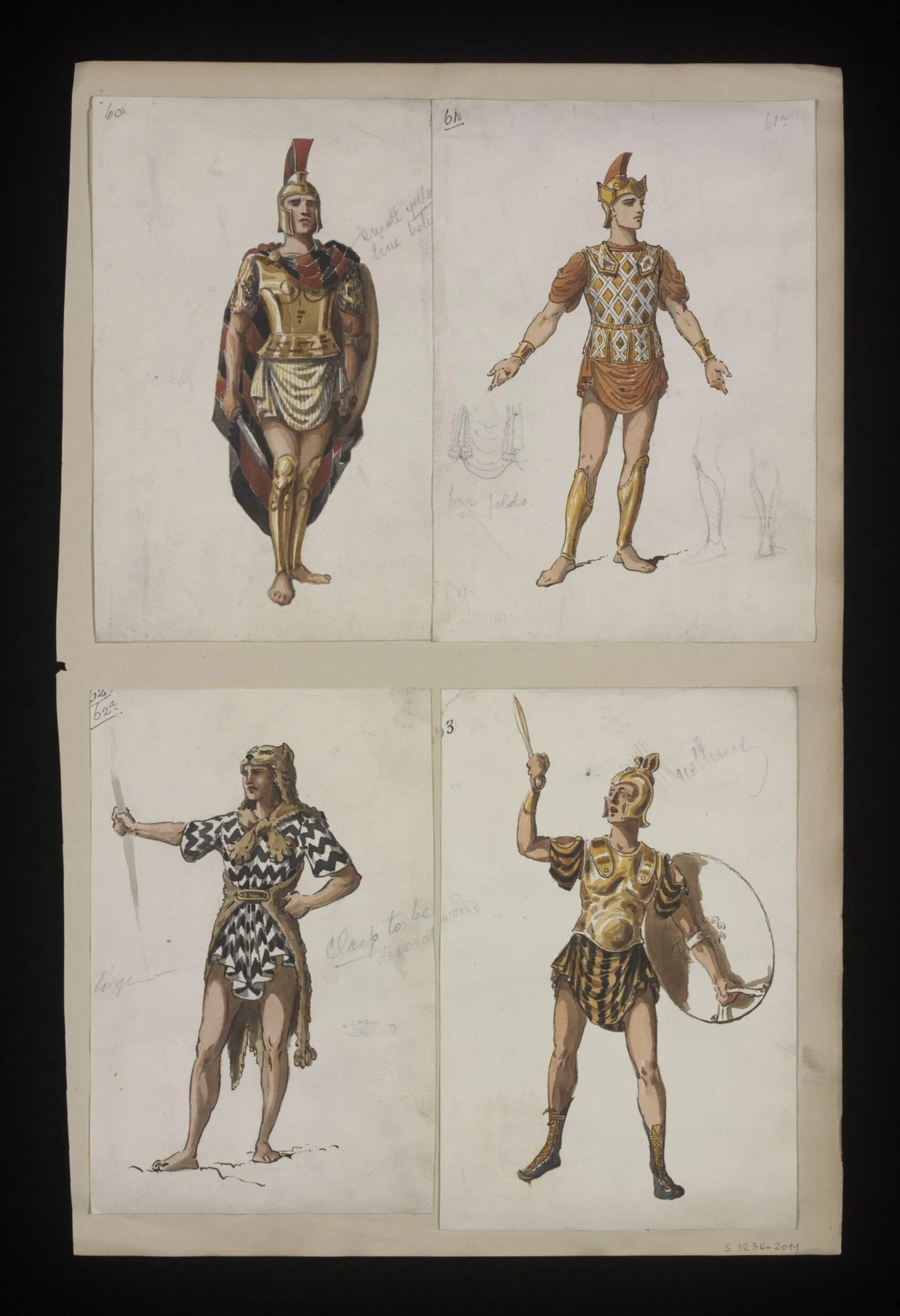
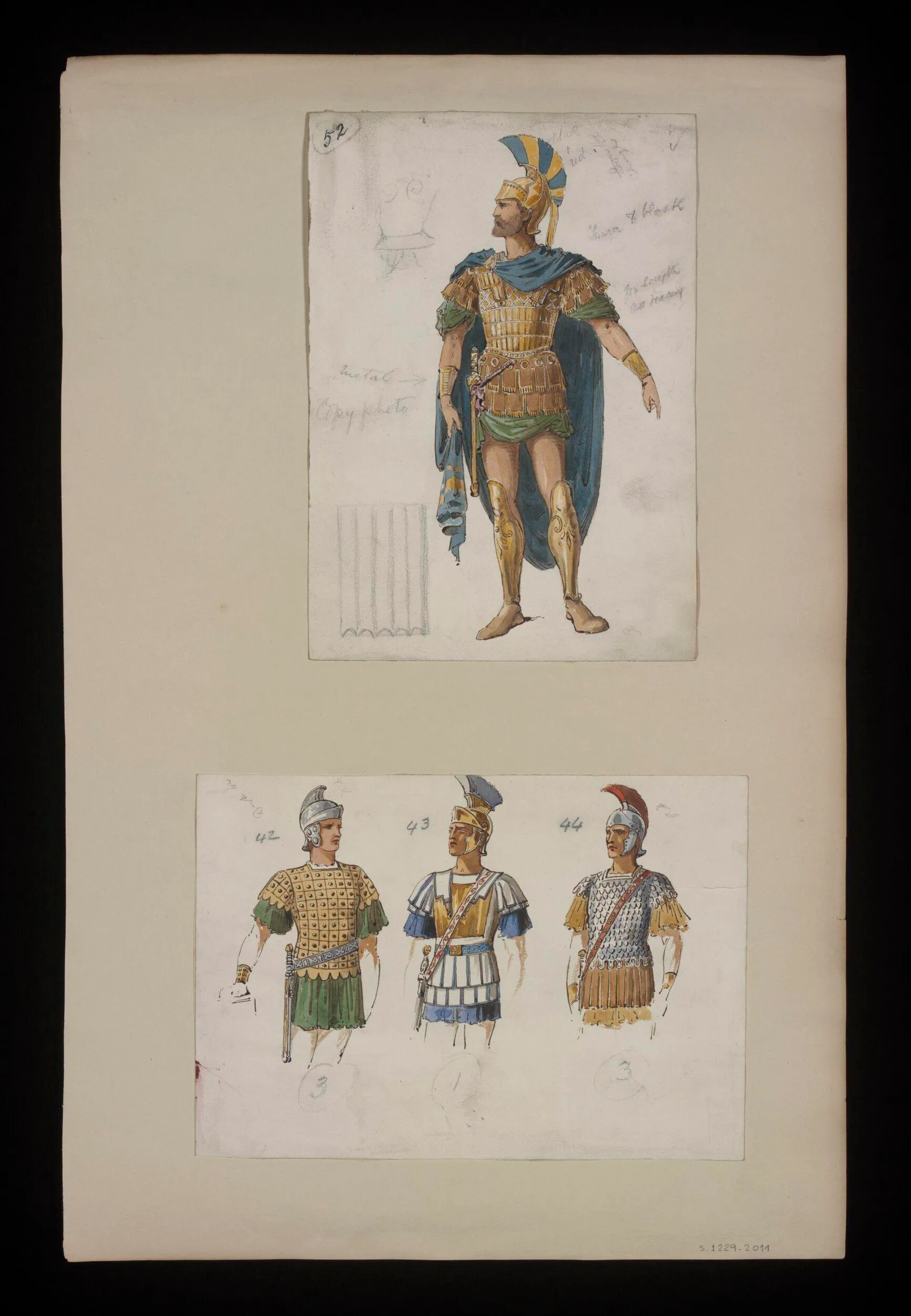
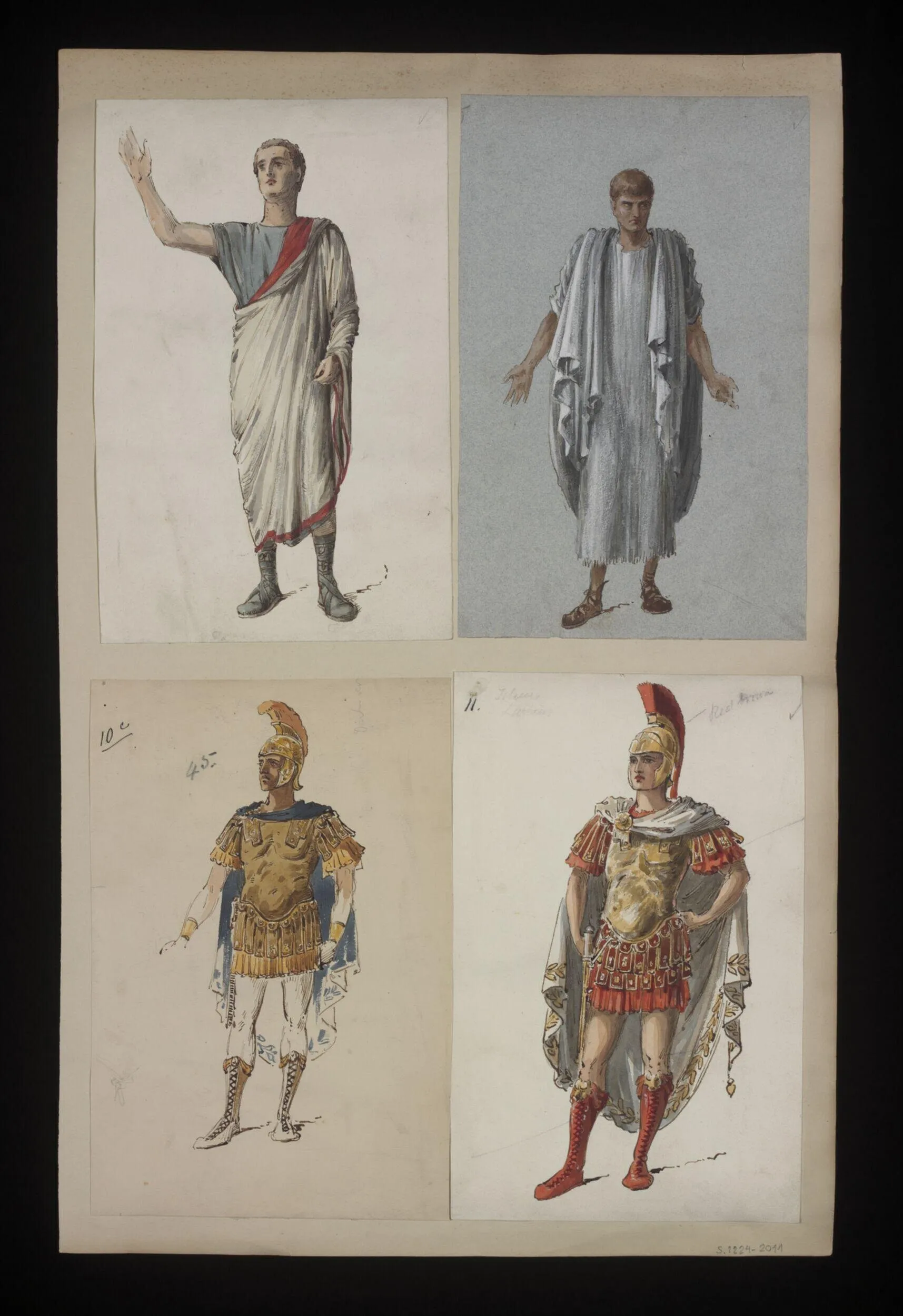
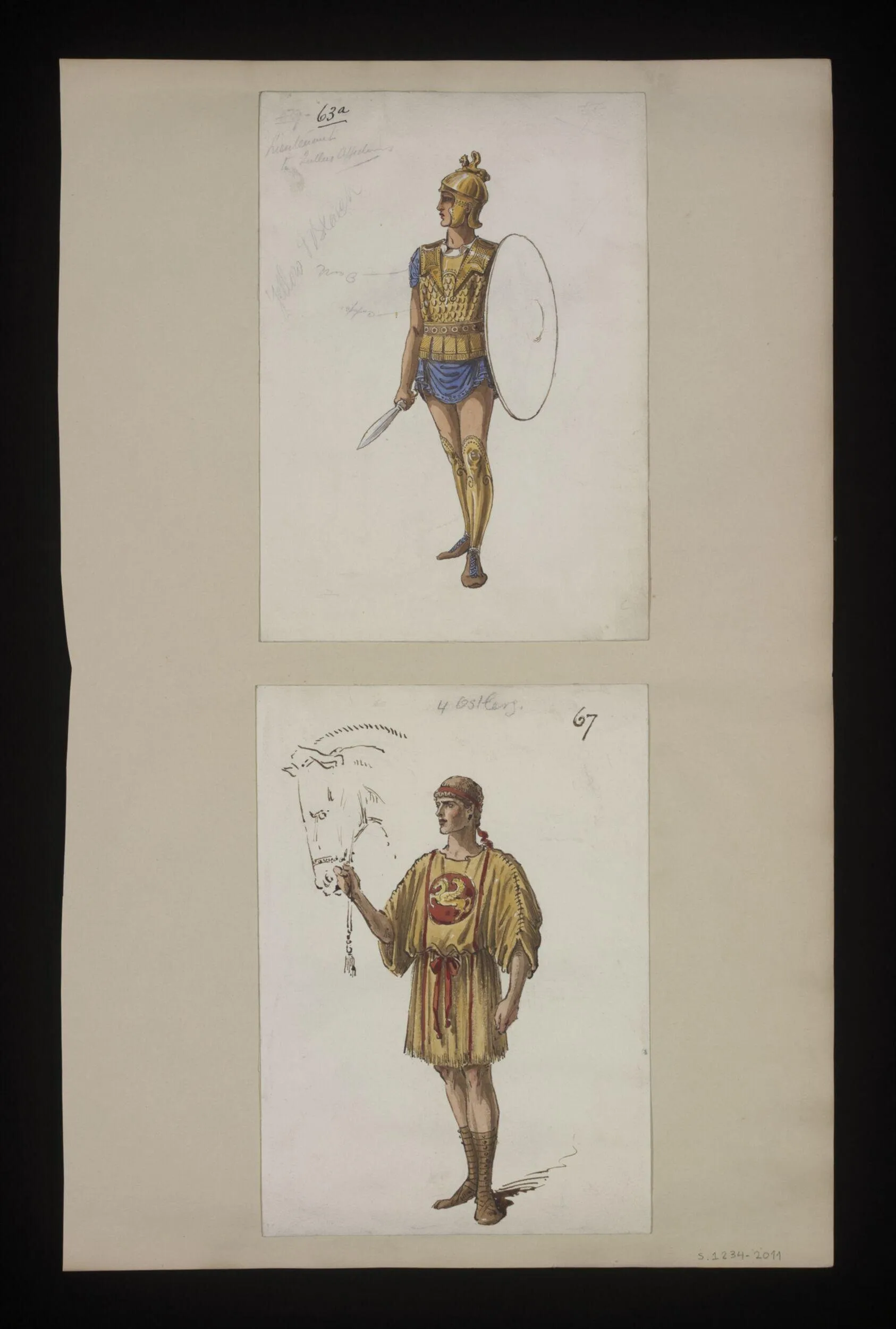
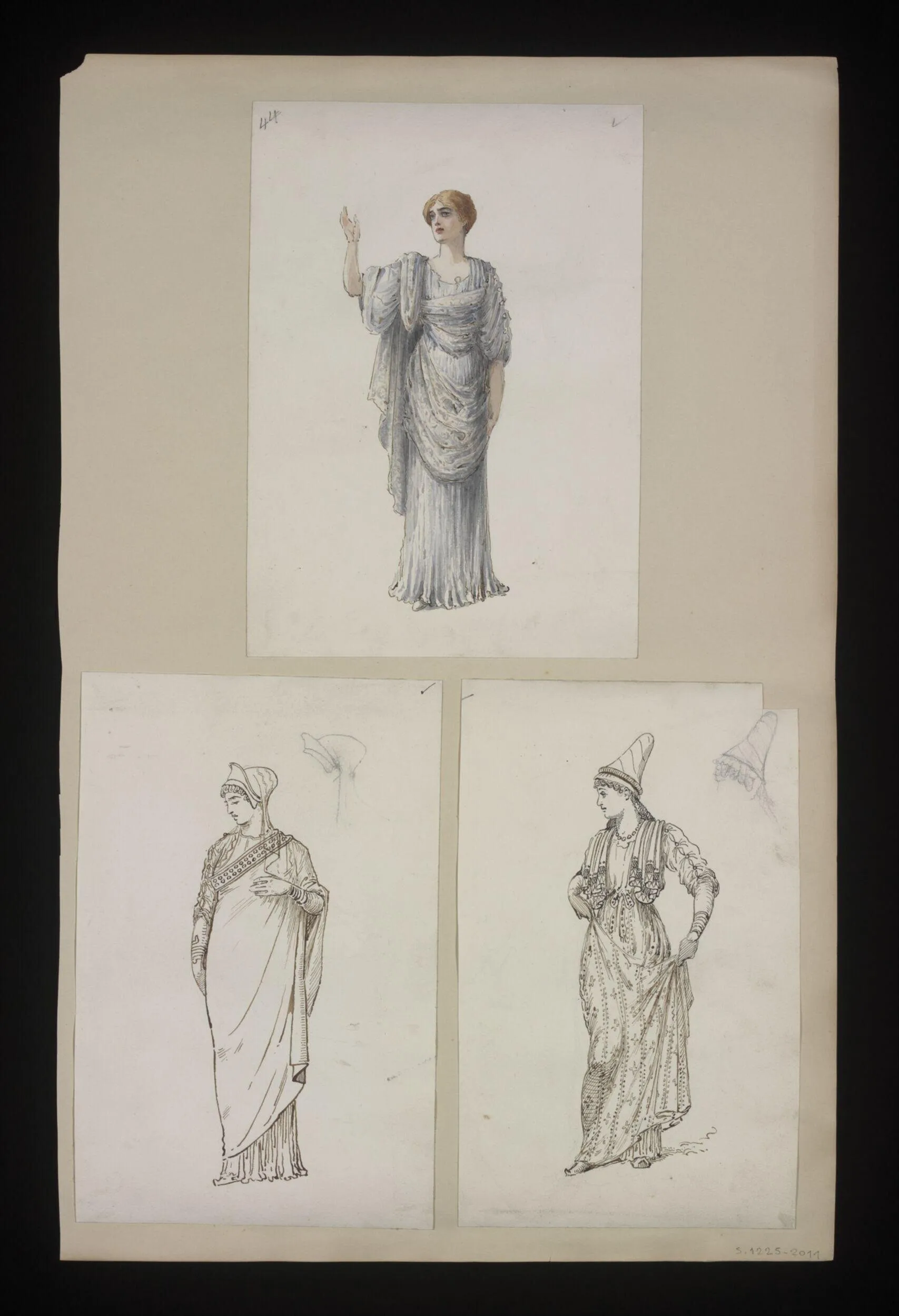
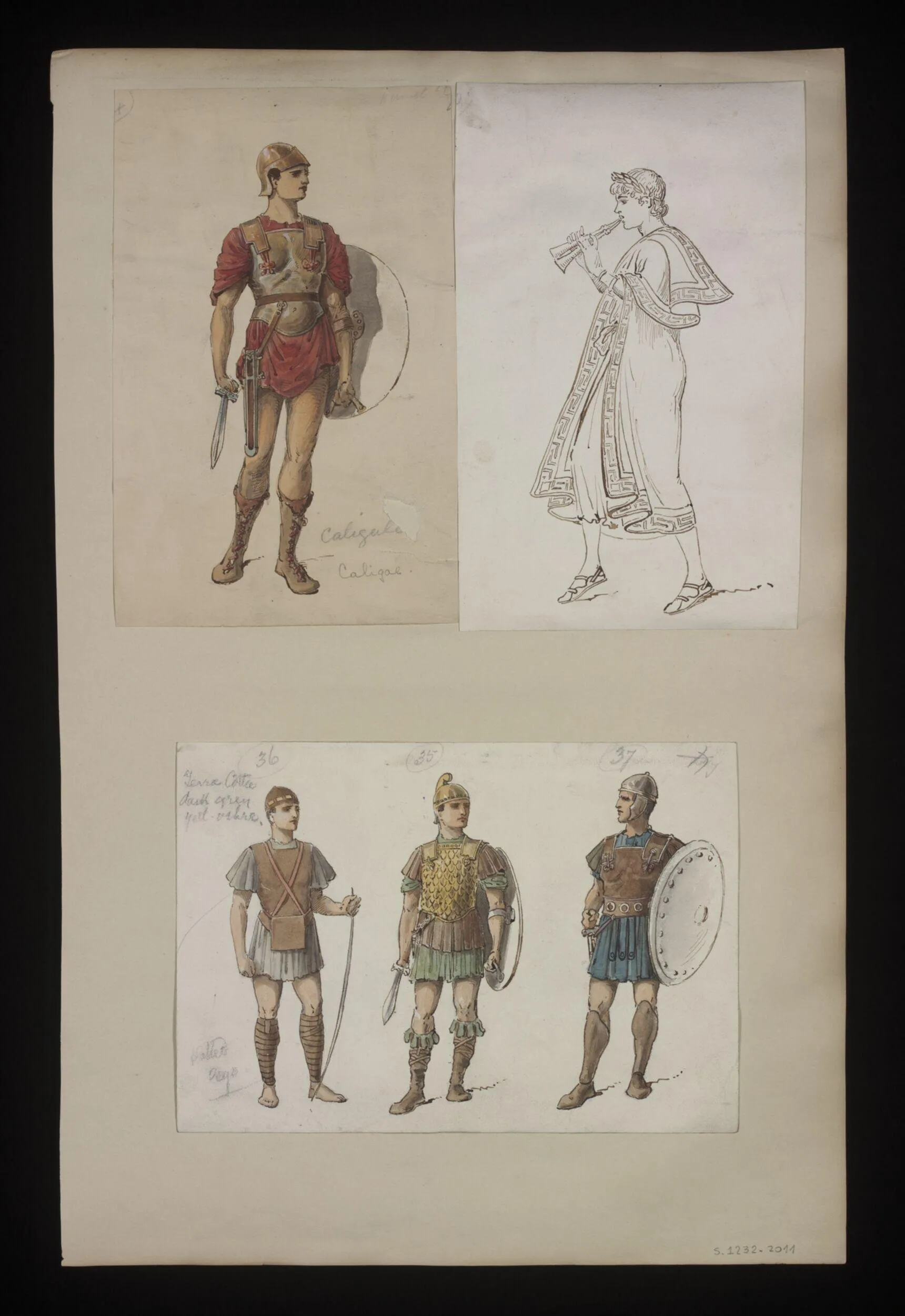
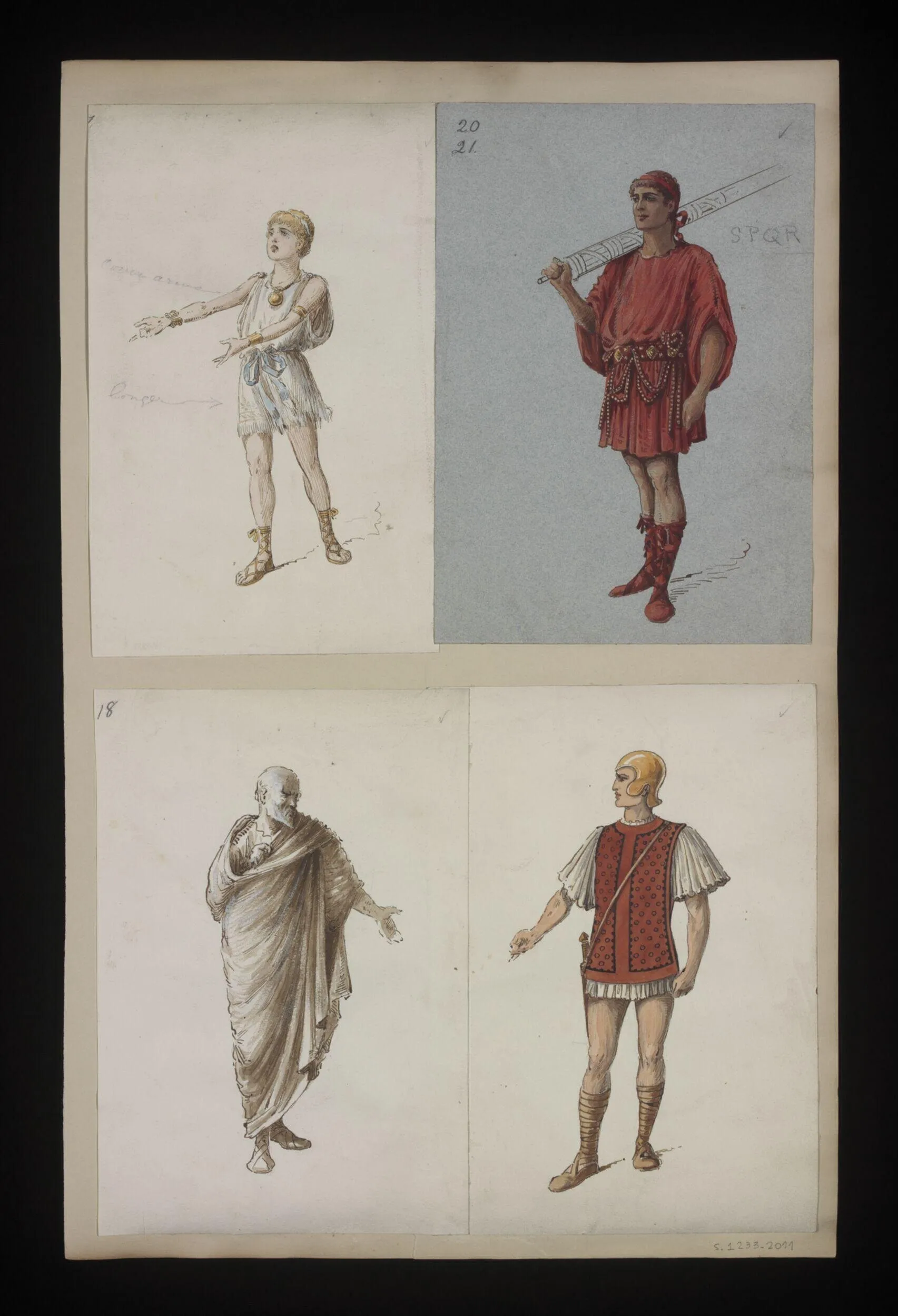
The Complete Record
Between 1893 and 1901, Lawrence Alma-Tadema personally designed five major productions:
1893 – Hypatia (Beerbohm Tree, Haymarket Theatre)
Classical Alexandria. His first venture, recreating the late Roman world of the philosopher Hypatia.
1896 – Cymbeline (Henry Irving, Lyceum Theatre)
Ancient Britain and Rome. A dual archaeological challenge—Celtic mysticism meets Imperial order.
1898 – Julius Caesar (Beerbohm Tree, Her Majesty's Theatre)
The breakthrough. Eight separate sets, 242,000 tickets sold. The forum scene became legendary.
1899 – King John (Beerbohm Tree, Her Majesty's Theatre)
Medieval England. A departure into the Gothic, providing the backdrop for the first Shakespeare film.
1901 – Coriolanus (Henry Irving, Lyceum Theatre)
The masterwork. Ten sets and fifteen scene changes—the culmination of two decades of thought. While he would later provide informal research and library access for Tree’s record-breaking 1910 production of Henry VIII, this remained his final formal design for the stage.
Two Theatres, Two Temperaments
Henry Irving and Herbert Beerbohm Tree could not have been more different. Irving ran the Lyceum with intellectual seriousness, prioritizing the interior life of characters. When he cast Ellen Terry as Volumnia in Coriolanus, the architecture existed solely to frame her performance.
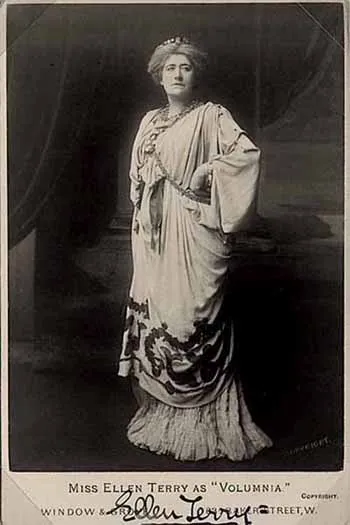
Tree, however, was a showman. He believed audiences came to see. His Her Majesty's Theatre was built for spectacle, often cutting text to make room for visual grandeur. Yet both men needed the artist for the same reason: authority. His name in the program was a guarantee that this was not fantasy—this was history.
This influence was so total that even in the productions he did not officially design—like Tree’s record-breaking Henry VIII in 1910—his stylistic fingerprints were everywhere. Tree would "drop a line" to his old comrade for research, and Tadema would respond with his entire library. The result was 254 consecutive performances of a "Tadema-esque" spectacle that defined the visual past for a generation.
The Inheritance
In 1902, the Lumière brothers were filming in France. Theatre's monopoly on visual spectacle was ending. But the vocabulary of Lawrence Alma-Tadema remained.
When Cecil B. DeMille made The Ten Commandments, he looked to the paintings of Tadema. The composition of crowd scenes, the placement of figures against monumental architecture—all descend from Victorian theatre, which descends from the canvases of Tadema.
The chain is unbroken: from the silent film to the Hollywood epics of Ridley Scott. The marble keeps walking.
What Remains
Her Majesty's Theatre still stands on Haymarket. Today, it is home to The Phantom of the Opera. But the building itself remembers. If you attend a performance there, you sit where Edwardian audiences sat to watch the Rome of Lawrence Alma-Tadema materialize.
The ghosts are layered: actors in researched costumes speaking words written four hundred years ago about events two thousand years past. Theatre is always a haunting.
And somewhere in the V&A, in boxes rarely opened, the watercolors wait. Still precise, still luminous, the marble still cool to the imagined touch. Paper remembering stone.
What if the past could walk among us, not as education, but as encounter?
What if marble could breathe?
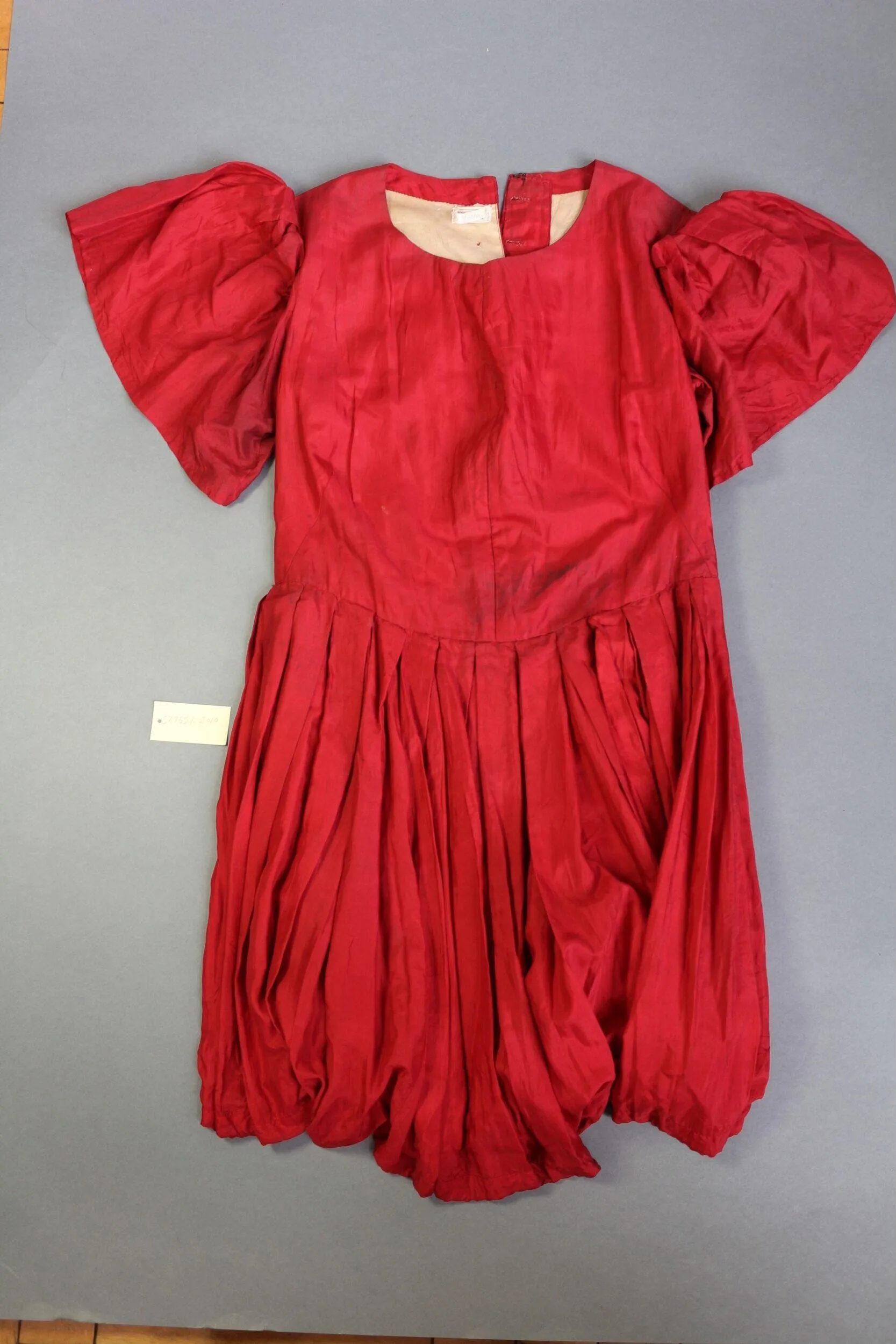
The V&A Museum houses original designs for Coriolanus (1901), including "workshop copies" made by L & H Nathan. Explore the V&A Tadema Theatre Collection here.
Leave a Visiting Card
Consulting the visiting cards...