
It is the evening of December 10, 1902. The Nile is no longer a river; it has become a reservoir. On the deck of a luxury steamer, the clink of crystal and the low murmur of Edwardian victory fills the air. Sir John Aird, the man who had just moved more earth than the Pharaohs, stands beside Lawrence Alma-Tadema, watching the reflection of the stars in the rising water.
This was the "Project of the Century." Aird’s dam was a miracle of engineering, built by 20,000 men over four years of grueling labor. It was a masonry giant that promised a fertile future for the millions living downstream, but it was also a machine that would eventually submerge the temples of the past.
But there was a ghost at the feast.
A few miles away, the Temple of Philae—the "Pearl of Egypt"—was beginning to disappeared. For two thousand years, its sandstone pylons had stood dry and luminous against the desert sky. Now, the water was reaching for the hieroglyphs.
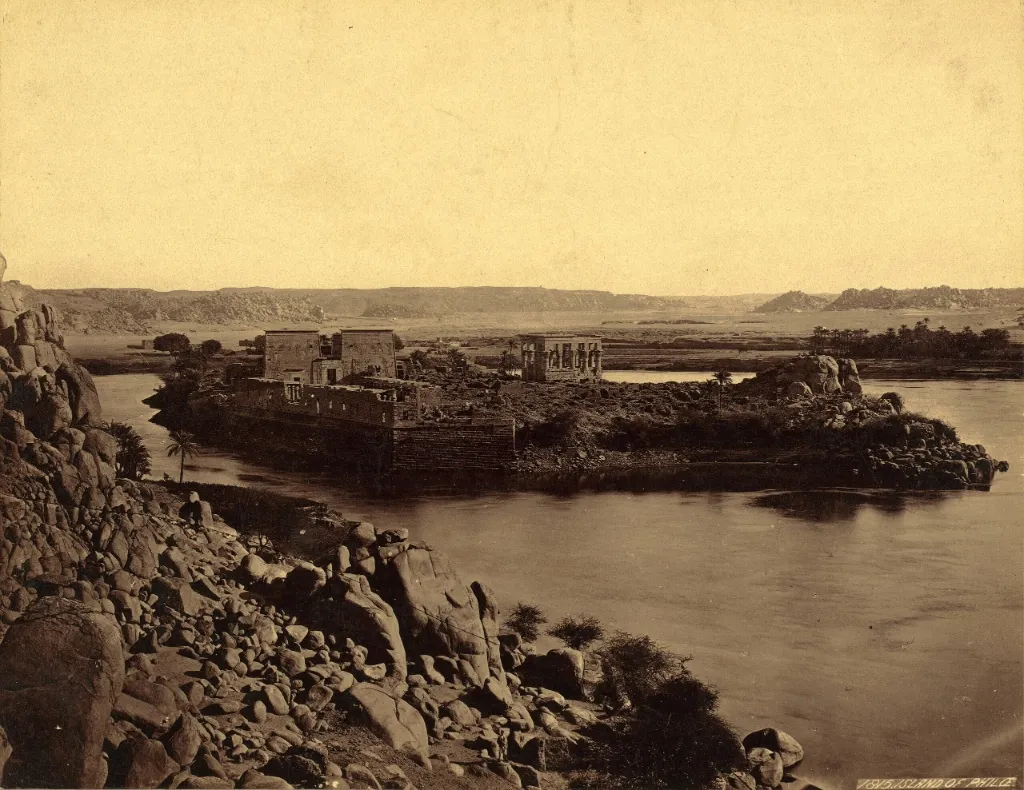
They were celebrating more than just stone and mortar. They were celebrating the stabilization of a nation that was, in 1902, the most complex and lucrative "investment" in the world.
The Ambition of the Khedive and the Cotton Trap
To understand why the water was rising at Philae, one must look back forty years to the smoke of the American Civil War. In the 1860s, when the cotton mills of Lancashire—the very world of Elizabeth Gaskell’s North and South—found their supply of American cotton cut off by the Northern blockade, they turned desperately to the Nile.
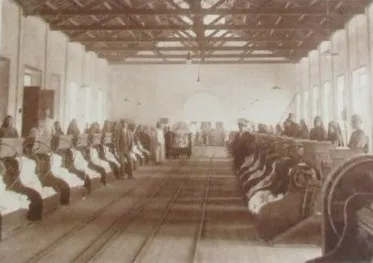
The result was a "Golden Age" for Egyptian Cotton. It was long-staple, stronger, and more luxurious than anything produced in the Americas. Egypt’s ruler, the Khedive Ismail, suddenly found himself with a fortune. He used it with the grandest of ambitions, intending to turn Cairo into "Paris on the Nile." He built palaces, a sprawling Opera House to premiere Verdi’s Aida, and the Suez Canal—the "jugular vein" of global trade.
But the ambition was fueled by a double-edged sword: massive loans from European banks at punishing interest rates. When the American Civil War ended in 1865, the blockade of Southern ports was lifted, and American cotton flooded back into the global market. With this sudden surge in supply, the price of cotton plummeted worldwide. The Khedive, who had borrowed millions based on the assumption that cotton prices would stay sky-high, suddenly saw his profits vanish. He was left with a 21st-century city and a mountain of 19th-century debt he could no longer pay.
The Veiled Protectorate: A Collision of Necessities
By 1882, the British effectively intervened to "protect the investment." This was more than a matter of colonial expansion; it was a cold-eyed defense of two specific assets.
1. The "Jugular Vein" (The Suez Canal)
Opened in 1869, the Suez Canal had fundamentally rewritten the geography of power. It transformed the route to India—the source of Britain's global wealth—from a months-long voyage around the tip of Africa into a direct cut through the Egyptian desert.
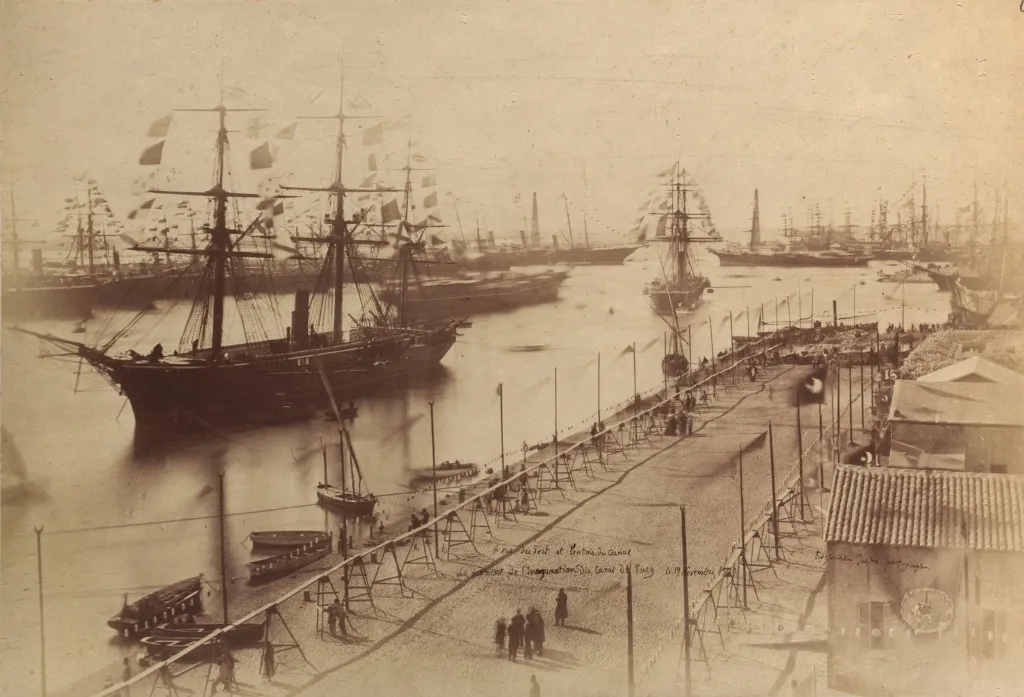
By 1882, 80% of the canal’s traffic was British. The UK had already bought a 44% stake in the canal in 1875 when the Khedive was desperate for cash, making them the largest shareholder. To the British, the canal was the "jugular vein" of the Empire; if a nationalist government took control and threatened to "strangle" that shortcut, the Empire itself might bleed out.
2. The Bondholders (The Cash) The second investment was literal currency. British and French bankers had lent the Egyptian government massive amounts of money for "modernization"—the palaces, railways, and grand projects of the previous decades. By 1882, half of Egypt’s entire national revenue was being siphoned straight to Europe just to pay the interest on these loans.
The Egyptian people, led by a Colonel named Ahmed Urabi, revolted against this system. They did not see why they should starve to pay off the interest of London bankers. Britain "invaded" to crush Urabi’s nationalist uprising, restore the authority of a compliant Khedive, and ensure that the debt-repayment checks kept arriving in London exactly on time.
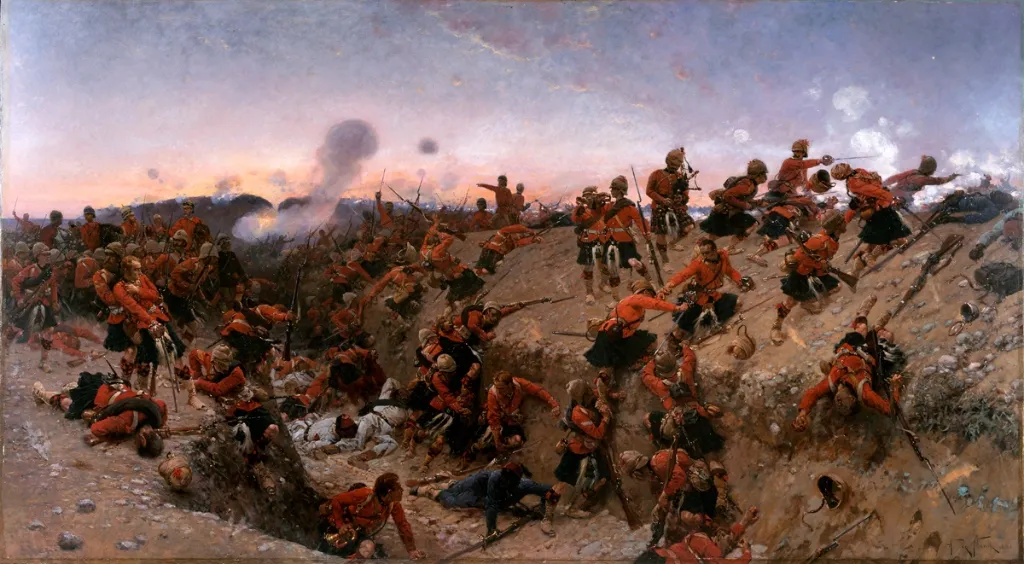
This was the "Veiled Protectorate." Egypt remained nominally independent, but under the leadership of Lord Cromer, British "advisers" oversaw every level of the bureaucracy. To the British, this was a project of restoration and "fiscal order." To others, it was the conversion of an entire nation into a debt-repaying mechanism.
This was the atmospheric pressure on the deck of the steamer in 1902. The Aswan Dam was the crown jewel of this "Efficiency." It was the machine that would ensure the cotton crop never failed, guaranteeing that the international debt would be paid and the Lancashire mills would stay humming. In this light, the drowning of the Temple of Philae was not an act of malice, but a tragic, bureaucratic priority. It was a choice between the preservation of ancient color and the stabilization of a modern empire.
The Artist as Witness: The Archive of a Lost World
Lawrence Alma-Tadema moved through this landscape as a guest of the very man who had built the mechanism of destiny. He was Sir John Aird's guest of honor, sailing on Aird's boat, eating Aird's food. Yet, he cannot have been blind to the irony.
As an artist whose entire career was built on the obsessive reconstruction of the past, the sight of Philae sinking must have been a profound violation. While the engineers celebrated the dawn of a new, industrial Nile, Tadema was documenting the twilight of the ancient one with the frantic precision of a man who knows the end is coming.
His documentation was not merely observational; it was forensic. The Tadema Portfolio now held at the University of Birmingham reveals the depth of this preservation effort:
- XAT/1/31/2/1: A meticulous "Sketch plan of Island of Philae," capturing the layout before the waters rose.
- XAT/1/35/2/16: Detailed "Sketches of Egyptian ornament" at the Philae Temples.
- XAT/1/31/1/19-28: A suite of photographs (numbers 8668 to 8677) capturing the general views and colonnades of the temple in their dry, luminous state.
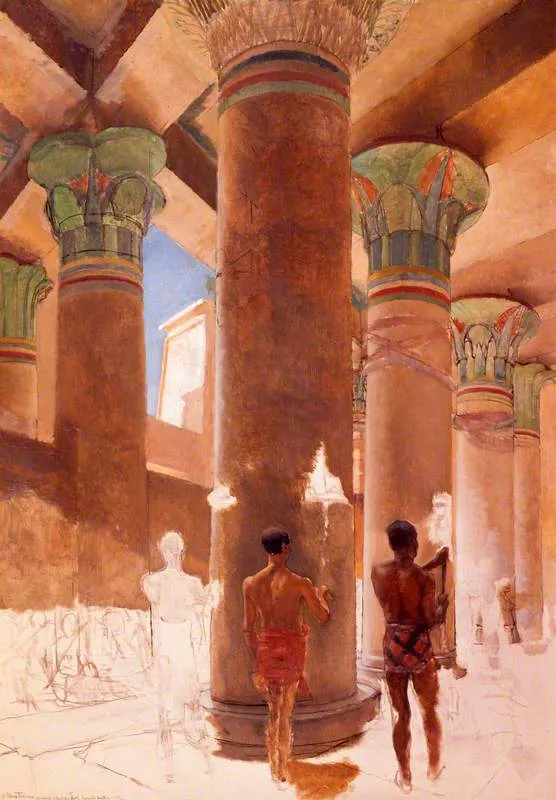
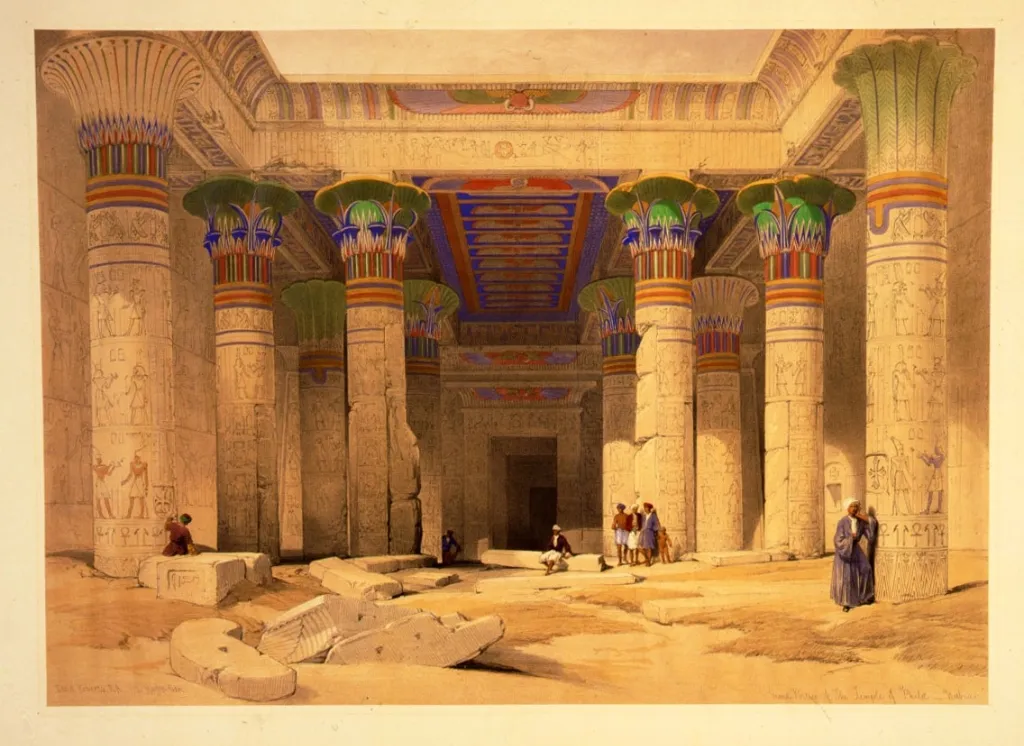
Tadema saw Philae in its final, colorful hours. Before the dam, the temple reliefs were still coated in the vibrant reds, blues, and yellows of antiquity, preserved by the bone-dry air of the desert. He was one of the last humans to see the temple as the ancients saw it—a luminous record of a landscape that was about to be scrubbed by the water.
Perhaps this internal conflict explains why it took him two years to complete The Finding of Moses. He wasn't just painting a scene; he was wrestling with the memory of a place he knew was being destroyed by the very patron who had commissioned the work.
The Seasonal Bath
Faced with the impending drowning of the "Pearl of Egypt," the archaeological community pleaded for a solution. But the options in 1902 were brutal.
Relocating the temple was impossible. The technology to dismantle and reassemble 40,000 tons of delicate stone simply did not exist. Even if the engineering had been possible, the economics were not. Egypt was in receivership, its treasury managed by British accountants whose sole mandate was to pay off the national debt. To spend millions of pounds moving "old stones" when the goal of the dam was to generate revenue would have been unthinkable to Lord Cromer's administration.
So, a strange compromise was struck. The British agreed to lower the planned height of the dam so that the temple would strictly be submerged for only part of the year.
This created a bizarre "Half-Life" for the temple:
- Winter & Spring (The Submersion): From December to June, when the dam was holding back water for the cotton harvest, the reservoir was high. The temple was mostly submerged, but never completely invisible. The tops of the massive pylons always rose above the water like islands. During these months, Victorian tourists hired boats to row into the flooded courtyards, floating eye-level with the capitals of the columns.
- Summer (The Emergence): From July to October, leading up to the annual Nile flood, the sluice gates were opened. The water dropped, and the temple emerged completely from the river—silt-covered but walkable—allowing archaeologists and travelers to explore the dry stones.
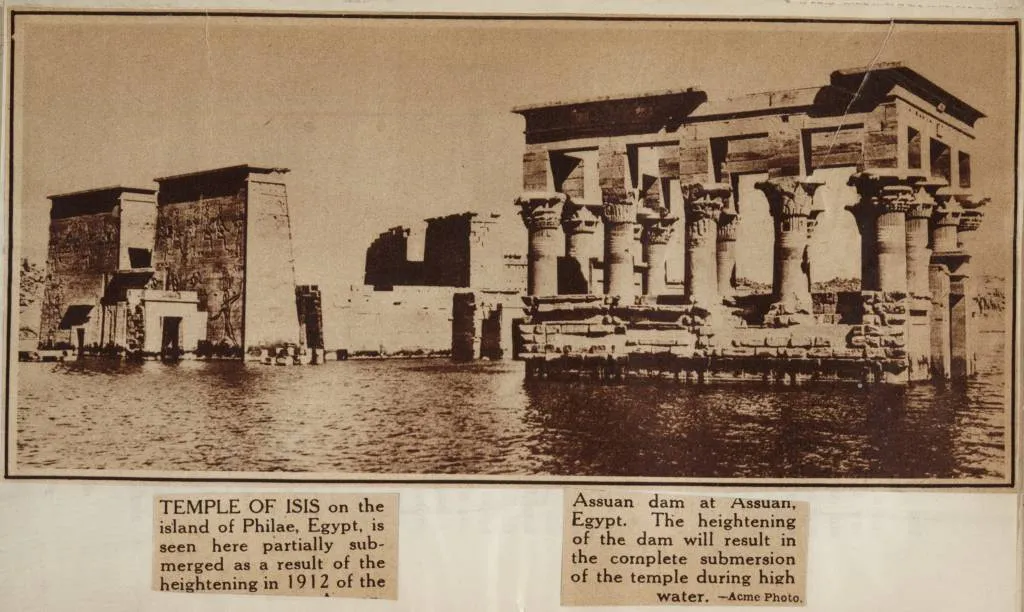
Paradoxically, this repeated drowning saved the stone while it destroyed the soul. Constant submersion would have dissolved it; constant dryness would have cracked it. But the annual freshwater bath washed away the destructive salts, leaving the monochromatic "sandstone ghost" we see today.
Aird's Private Penance
It is easy to look back with judgment, but the actors in this drama were bound by the rigid logic of their time. Lord Cromer, the British Consul-General, was not acting out of malice toward art, but out of a strict administrative mandate to balance Egypt's books. His priority was the stabilization of a bankrupt economy, and in that calculus, cotton yields outweighed ancient sandstone.
Sir John Aird, in turn, was the builder hired to execute that vision. Yet, he seems to have felt the weight of the trade-off. While his left hand built the wall that would drown the temple, his right hand wrote the checks to Alma-Tadema to preserve its memory. He was a man caught in the machinery of progress: building the future with engineering while desperately trying to buy back the past with art. His commission of The Finding of Moses was, perhaps, a private penance—a way to ensure that even if the real Nile was tamed and grayed, the painted Nile would remain forever blue.
The Echo of Agilkia
If you visit the Temple of Philae today, you are walking through a resurrection, not a survivor.
In the 1960s, the construction of the Aswan High Dam threatened to bury the site permanently under 60 meters of water. There would be no seasonal emergence; the loss would be total. So, in 1972, UNESCO staged an epic engineering opera to match the scale of the Pharaohs.
Engineers built a massive steel coffer dam around the original island and pumped the water out, revealing the muddy, drowning monuments for one final inspection. Then, they cut the temple into 40,000 stone blocks, some weighing as much as 25 tons.
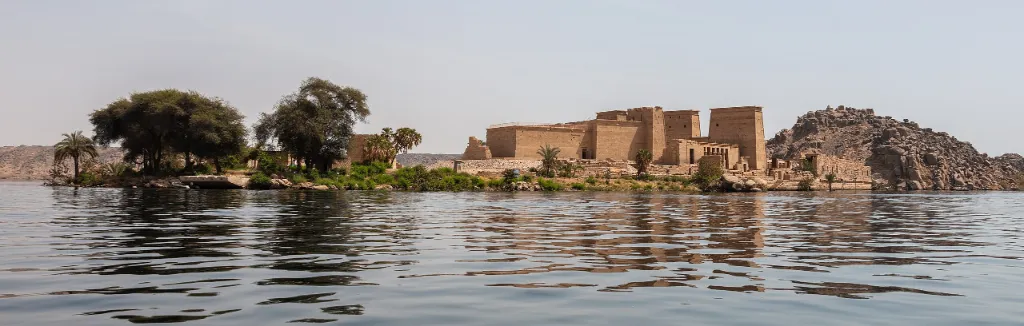
They didn't just move the temple; they moved the context. They identified a nearby granite outcropping—Agilkia Island—which stood 13 meters higher than Philae. But Agilkia was the wrong shape. So, with a violence that would have shocked the ancients, they used explosives to blast the top off Agilkia, reshaping the entire island to match the contours of the original Philae. It was a "stunt double" island, terraformed to fool the gods.
Between 1977 and 1980, the 40,000 blocks were reassembled on this new stage like a giant 3D jigsaw puzzle. It is flawless, preserved, and safe.
But the paint is gone. The colors of the Pharaohs—the vibrant blues and reds that Alma-Tadema recorded in 1902—were the first casualties of the 1902 dam. The water had long since scrubbed the stone clean.
When we look at Tadema’s Egyptian works, we are seeing more than just history; we are seeing the last luminous records of a world that was sacrificed for the industrial hunger of a new century. The marble remains cool to the touch, but the colors have long since returned to the river.
Leave a Visiting Card
Consulting the visiting cards...